Wellness Routines That Encourage Mindful Living
Emily Ward September 30, 2025
Mindful living is no longer a niche idea—it’s becoming central to how people shape their daily routines. Two trends rising fast in 2025—silent walking and sleepmaxxing—offer simple yet powerful ways to cultivate awareness, reduce stress, and recharge. This article explores how to integrate these routines (and more) into your life.
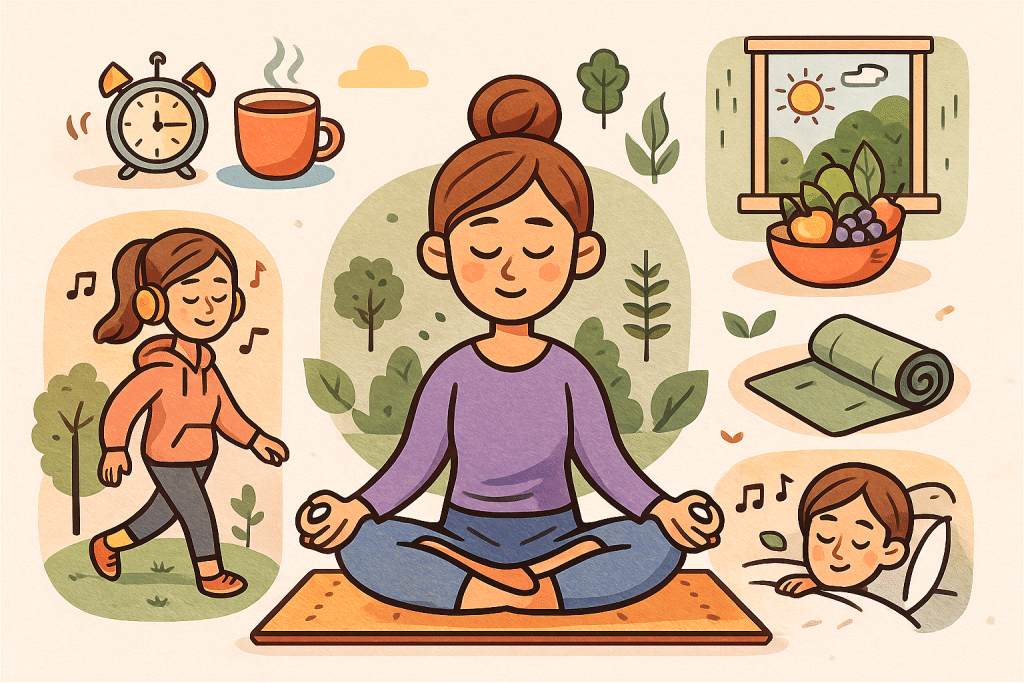
What’s Hot in Mindful Living Right Now
The Wellness Landscape in 2025
Wellness is no longer about occasional spa days or fitness fads. Younger consumers now view wellness as a continuous, personalized practice rather than episodic indulgence.
Within that shift, mindfulness, mental health, and holistic lifestyle integration are among the fastest‑growing subcategories.
A few trend signals to watch:
- Personalization & data: Apps, wearables, and AI are being used to tailor wellness plans to how your mind and body behave.
- Blending mental & physical routines: Rather than separating “meditation time” from “workout time,” many new routines combine breathwork, gentle movement, and body awareness in one flow.
- Low-barrier mindfulness: Practices that require no equipment, minimal time, or no “special place” are gaining ground (for example, silent walking).
- Sleep as wellness: With burnout and stress rampant, better sleep is being framed not just as recovery but as a core pillar of mindful living. This is where sleepmaxxing comes in.
In short: people are seeking wellness routines that can sit inside ordinary life—not in a bubble away from everything.
Introducing Two Emerging Routines
Let’s look more closely at the two routines gaining traction: silent walking and sleepmaxxing.
Silent Walking: Mindfulness in Motion
Silent walking is exactly what it sounds like—taking a walk without music, podcasts, or screens, allowing your attention to rest on your surroundings, feelings, breath, or inner pace.
Why it’s resonating now:
- It’s accessible—you don’t need special gear or space.
- It counters constant stimulation—giving your mind a “break” from media or noise.
- It can act as a reset: mental clarity, reduced agitation, improved mood. One writer reported feeling calmer and more present after doing it for a week.
Practical tips:
- Start with 5 to 10 minutes in a safe, walkable setting (park, quiet street, corridor).
- Leave your phone off or put it away.
- Walk at a normal, gentle pace. You don’t need to “power walk.”
- Allow your senses to roam: notice sounds, surfaces, shifts in air or body balance.
- If intrusive thoughts arise, gently refocus on walking and environment.
Over time, you can extend your walks or add variation (e.g. nature trails). This becomes one of the wellness routines that encourage mindful living by weaving awareness into movement.
Sleepmaxxing: Optimizing Your Rest
Sleepmaxxing is a social-media-coined trend (especially on TikTok) in which people apply multiple “hacks” or techniques to maximize both the duration and quality of sleep. These go beyond traditional sleep hygiene.
Some common approaches:
- Environmental tweaks (optimal room temperature, blackout curtains, white noise)
- Tracking and adjusting sleep cycles via wearables
- Using red-light or other circadian-altering lighting
- Timing evening routines (digital sunset, wind-down rituals)
- Supplements or microdoses (though these should be approached cautiously)
- Avoiding stimulants or heavy meals before bed
Pros & cautions:
- Many hacks overlap with mainstream sleep hygiene, which has an evidence base.
- But combining multiple hacks may introduce complexity, anxiety, or diminishing returns. Some practices are experimental and lack robust clinical validation.
If you try sleepmaxxing:
- Begin with foundational habits: consistent sleep/wake schedule, dark quiet space.
- Introduce one tweak at a time—so you can monitor its effect.
- Use wearable metrics (e.g. sleep stages) but don’t let them provoke stress.
- Be cautious with supplements or invasive tools—consult a medical professional.
If done thoughtfully, sleepmaxxing can become part of your wellness routines that encourage mindful living, because quality rest deeply influences mental clarity, emotional balance, and energy for daily awareness.
Building a Mindful Living Routine: Framework & Examples
Here we combine several approaches (including the two above) into a holistic routine you can adapt. These are examples—not rules—you can tailor to your context, constraints, and preferences.
Foundational Principles (Before Routines)
- Start with intention. Before adopting a habit, ask: What aspect of awareness or balance do I want to strengthen?
- Consistency beats intensity. It’s better to walk silently 5 min daily than 60 min once a week.
- Iterate, don’t perfect. Try small changes, observe their effect, and refine.
- Let routines support life, not override it. A mindful routine is there to enhance—not burden—your day.
Sample Daily Structure with Mindful Routines
| Time | Possible Routine | Purpose for Mindfulness |
|---|---|---|
| Morning (upon waking) | One minute of stillness (sit quietly) + 50 small jumps (viral TikTok morning trend) | Create a moment of awareness before daily busyness begins |
| Mid-morning break | 5–10 min silent walking | Reset & recenter attention |
| Midday | Mindful eating (slow, chew, notice flavors) | Reconnect body and senses to routine |
| Afternoon slump | Microbreathwork (4–6 deep breaths) | Regulate nervous system, reduce stress |
| Evening | Digital wind-down + low-light ambiance + single sleepmaxxing tweak | Prepare body for rest, reduce screen shock |
| Before bed | Body scan or short guided meditation (5–10 min) | Transition mind into restful state |
You can sequence or adjust these routines based on your work, location, or energy rhythms.
Example Routine Variations
- Weekend nature walk + silent walking: Longer walks in green settings amplify the effect.
- “Mindful micro‑moments” at transitions: Before entering a meeting, pause 10 seconds and notice your breath.
- Scent / sensory ritual: Use a drop of essential oil or candle to cue presence.
- Journaling/reflective prompts: After silent walking or before bed, jot a few words about what arose.
Why These Work (Science & Psychology)
Mindfulness + Movement: Synergy
Mindful movement (such as walking, yoga, or gentle stretching) has been shown to engage attention, regulate mood, and reduce rumination. A study on mindfulness and exercise found they influence overlapping pathways in stress regulation and emotional balance.
Silent walking taps into that synergy: you’re in motion, but the focus returns you inward.
Sleep & Mental Health
Sleep disruption is a known risk factor for mood disorders, concentration issues, and resilience. Optimizing sleep helps support the neural and hormonal systems that foster calm, clarity, and emotional balance. Sleepmaxxing is a modern offshoot of this principle—though novelty doesn’t guarantee safety.
Environmental Psychology
How you organize your surroundings can influence mindset. A study on indoor environment modifications (using natural materials, lighting, and user-led changes) showed that participants felt better mood, agency, and connection with their space.
That means your bedroom design, walking route, or even where you pause for breathwork matters.
Mindfulness Training Programs
Mindfulness-based stress reduction (MBSR) is one of the best studied programs. It combines meditation, body awareness, and gentle yoga to reduce stress and improve quality of life.
Your routines (silent walking, breathwork, sleep rituals) can be viewed as fragments or complements of such structured programs.
How to Begin: A 4‑Week Starter Plan
You don’t need to overhaul your life overnight. Here’s a simple progression.
- Week 1
- Try a 3‑5 minute silent walk each morning.
- Choose one sleepmaxxing element (e.g. blackout curtains or consistent wake time).
- Week 2
- Extend silent walking to 7–10 minutes.
- Add a 2-minute breathing pause in the afternoon.
- Week 3
- Try mindful eating at one meal (slow bites, no screen).
- Introduce a nighttime routine (e.g. 5 min body scan).
- Week 4
- Assess which routines feel most helpful.
- Keep what works; drop or adjust what doesn’t.
- Consider stacking habits (e.g. silent walk → journaling) in flow.
Tip: Keep a simple log (date → what you tried → how you felt) so you can see patterns or changes.
Pitfalls, Adaptations & Safeguards
- Perfectionism & pressure
It’s easy to turn routines into rigid chores. If you miss a minute, don’t turn it into guilt. Presence > perfection. - Overloading
Trying too many “hacks” (especially in sleepmaxxing) at once can overwhelm or cause stress. One change at a time is safer. - Context constraints
If your environment is loud, unsafe, or cramped, silent walking may need adaptation (e.g. indoor corridor, lobby, garden). The principle remains awareness. - Data anxiety
With sleep trackers, it’s easy to fixate on metrics. Use them as guides—not harsh judges. - Medical caution
If you have sleep disorders, mood disorders, or medical conditions, consult a health professional before adopting new sleep approaches.
Why These Are More Than Fads
- They reflect a deeper shift: people no longer want to escape life; they want to be more present within life.
- These routines are modular and scalable: you can adapt them to a 5-minute break or a whole vacation.
- They bridge the gap between mindfulness (traditionally inward) and action (movement, rest, design).
- Emerging research and survey data point to mental wellness, mindfulness, and integration as some of the biggest growth areas in wellness.
By treating them as living habits rather than rigid dogma, they can evolve with you.
Wrapping Up & Next Steps
If you want to build wellness routines that encourage mindful living, starting with silent walking and a gentle sleepmaxxing approach gives you a foundation in movement and rest. Layer in minute practices (breathwork, mindful eating) and environment tweaks over weeks.
Key actions to take today:
- Schedule a silent walk—just 5 minutes, no phone.
- Pick one sleep tweak you can implement tonight (e.g. blackout curtains, nighttime light dimming).
- Track how you feel before and after for a week (energy, mood, clarity).
- Iterate—keep what helps, drop what burdens.
With time, these routines become not chores but anchors—moments of awareness embedded in everyday life.
References
- Sawyer, H., & Colleagues. (2023). Mindfulness: Strategies to implement targeted self‑care. PMC. https://pmc.ncbi.nlm.nih.gov
- Allen, J. G., & Colleagues. (2021). Mindfulness‑based positive psychology interventions: Effects on well‑being and psychological health. BMC Psychology. https://bmcpsychology.biomedcentral.com
- Sparacio, A., et al. (2024). Self‑administered mindfulness interventions reduce stress: Evidence from a multi‑site study. Nature Human Behaviour. https://www.nature.com/articles/s41562-024-01907-7

 Gardening Techniques That Support Sustainable Growth