Gardening Techniques That Support Sustainable Growth
Thomas Blake September 30, 2025
Home gardeners today are increasingly seeking ways to contribute to climate solutions while producing food or beauty. This article explores gardening techniques that support sustainable growth—especially carbon gardening and regenerative practices—so you can build a resilient, climate-smart garden that gives back to the earth and your community.
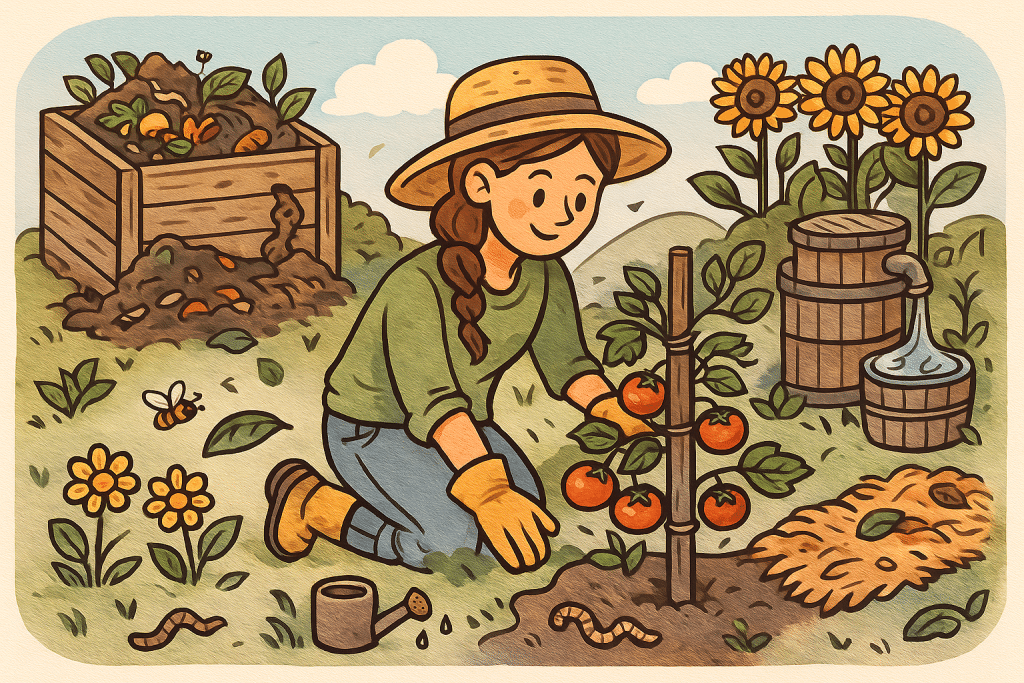
Why “Carbon Gardening” and Regenerative Practices Are Trending Now
The Climate Imperative in Your Backyard
As global attention intensifies on carbon emissions and climate change, even home gardens are being reimagined as tiny climate tools. The concept of carbon gardening refers to designing, planting, and managing gardens in ways that sequester carbon in soil and plants rather than releasing it into the atmosphere.
Meanwhile, regenerative gardening—a subset of permaculture, organic, and agroecological practices—is gaining momentum in mainstream gardening circles. The core idea is to heal and build soil, support biodiversity, and capture carbon through plant‑soil interactions.
In 2025, gardening trends show that more home gardeners are prioritizing sustainable, climate-resilient gardens: native plants, minimal input designs, water-saving strategies, and soil health are rising in priority.
Thus, “gardening techniques that support sustainable growth” is not just a slogan—it’s an opportunity to align your garden with ecological goals, rather than working against them.
Core Principles of Gardening Techniques That Support Sustainable Growth
Before we dive into techniques, it helps to understand the philosophical framework behind sustainable gardening. Below are principles to guide your decisions.
- Let soil biology do the work. Rather than trying to dominate soil with chemicals and heavy digging, let microbes, fungi, worms, and roots manage structure, fertility, and nutrient cycling.
- Minimize disturbance. Avoiding tilling or turning the soil protects networked fungal networks, microbial communities, and soil organic matter.
- Always keep soil covered. Bare soil loses moisture, erodes, and releases carbon. Mulch, cover crops, or permanent living cover help preserve soil integrity.
- Diverse plantings. Mixing species (annuals, perennials, shrubs, herbs) draws on synergy, pests suppression, carbon capture, and biodiversity.
- Close loops. Compost, leaf litter, mulch, biochar, and other organic residues should be cycled back into the soil rather than exported.
- Water and input efficiency. Use techniques like rainwater harvesting, drip irrigation, xeriscaping, or drought-tolerant plants to minimize resource waste.
These principles underpin numerous specific techniques we’ll examine next.
Key Techniques to Apply in Your Garden
Here are high-impact techniques you can adopt. Each supports sustainable growth and contributes to carbon capture, resilience, and lower maintenance.
1. No‑Dig (No‑Till) Gardening
One of the most talked-about methods in sustainable gardening is no-dig gardening. Instead of turning soil, you layer compost, mulch, or organic matter directly on top and let soil life integrate it over time.
Benefits:
- Protects fungal hyphal networks and microbial communities
- Reduces soil erosion and compaction
- Retains moisture and suppresses weeds
- Gradually builds soil organic matter
To start:
- Remove deep perennial weeds.
- Add a thick layer (5–15 cm) of compost, leaf mold, straw, or manure.
- Top with a mulch (wood chips, leaves).
- Plant directly into that layer, making small holes or slits for seeds/seedlings.
- Replenish mulch annually.
If your soil is poor initially, you can also use sheet mulching (a layered “lasagna” of cardboard/newspaper + compost + mulch) and let earthworms and microbes break it down.
Over time, this approach can transform degraded soil into a living sponge that resists compaction and supports plant growth.
2. Cover Crops & Green Manures
Even in non‑farm settings, cover cropping is a powerful tool. Growing plants (such as clover, vetch, rye, buckwheat) during off-season or in fallow periods helps:
- Fix or capture nitrogen (if legumes)
- Suppress weeds and reduce erosion
- Add organic matter when cut down or tilled under
- Keep roots in soil to feed microbes
Studies on regenerative agriculture show positive effects on soil carbon stocks when cover crops and rotations are used.
You can also grow cover crops between beds, in alleys, or in fallow garden patches. When these plants are cut or die back, they release carbon into the soil system rather than into the atmosphere.
3. Biochar + Carbon Materials
Biochar—essentially charcoal produced under limited oxygen—is increasingly recommended as a soil amendment. When applied properly, it can:
- Improve soil aeration and water retention
- Hold nutrients (reduce leaching)
- Sequester stable carbon over long periods
- Stimulate beneficial microbial life
Using biochar in conjunction with compost and organic matter helps it integrate with soil biology rather than becoming inert.
Be cautious: biochar requires careful mixing, pH adjustment, and inoculation in many contexts to realize its benefits.
4. Integrating Trees, Shrubs, and Agroforestry Layers
Sustainable gardens often transcend just annuals and vegetables. Agroforestry techniques (integrating trees or shrubs with crops) or forest gardening concepts bring layered systems that:
- Store more carbon in woody biomass
- Create microclimates and shade, reducing water stress
- Improve nutrient cycling via deeper roots
- Provide yields over many years (fruit, nuts, shade plants)
Agroforestry is particularly relevant in tropical and subtropical climates, enhancing resilience and productivity in small-scale systems.
Selecting nitrogen-fixing trees or shrubs or species with symbiotic fungal associations can further boost soil carbon and fertility gains.
5. Native Plants and Biodiversity‑Enhancing Planting
One of the easiest shifts toward sustainability is favoring native plants (or species adapted locally). These plants:
- Require less maintenance, fertilizer, or irrigation
- Support pollinators, beneficial insects, and wildlife
- Resist local pests and diseases better
- Contribute to ecological connectivity
In 2025, gardening trends emphasize bringing biodiversity home—planting milkweed, asters, mints, and other pollinator-friendly species.
You can create “wild zones” or native hedgerows in parts of your garden to let nature assist you rather than compete against it.
6. Rainwater Harvesting, Drip Irrigation & Xeriscaping
Resource efficiency is a pillar of sustainable growth. Some techniques include:
- Installing rain barrels, cisterns, or swales to slow, collect, and channel storm water
- Using drip irrigation or micro-sprinklers rather than overhead watering to reduce evaporation and runoff
- Adopting xeriscaping—gardening that minimizes water needs, often with drought-tolerant plants and mulched groundcover
Combining harvested water with mulching and plant choice drastically lowers your demand for external water sources, especially vital in dry seasons.
7. Silent Sequestration: Roots Left Intact
Instead of pulling up spent plants fully, cut the above‑ground parts and leave the roots in situ. Over time, they decompose in place, feeding soil organisms and releasing carbon incrementally into soil organic matter.
This method avoids exposing soil and losing carbon, while contributing to the slow buildup of humus.
8. Mixed “Edible Landscaping” / Foodscaping
Blurring the line between ornamental and edible plantings is a growing movement called foodscaping or edible landscaping.
In practice, you replace or augment decorative shrubs and groundcovers with fruiting shrubs, vegetable varieties, herbs, and edible flowers. The result:
- Dual-purpose gardens (beauty + yield)
- Reduced need for separate vegetable beds
- Encouragement for people to appreciate edible plants aesthetically
When combined with the above regenerative strategies, your edible landscape becomes high-function, low-waste, and climate-smart.
How to Build a Garden that Uses These Techniques: A Step‑by‑Step Guide
Below is a suggested workflow to transform an existing or new garden into one that uses “gardening techniques that support sustainable growth”:
| Phase | What to Do | Notes & Tips |
|---|---|---|
| Assessment & planning | Map your garden, note sun, shade, water flow, existing plants | Identify areas suitable for agroforestry, edible landscaping, wild zones |
| Weeding & cleanup | Remove invasive perennials and deep roots | Try to minimize soil disturbance—pull by hand when possible |
| Establish basic structure | Plan beds, paths, water-catchment features, swales | Design to optimize water flow and ease of access |
| Start mulching / cover cropping | Apply compost, leaf mold, or organic layers; sow cover crops | Use sheet mulching if converting turf or low-productivity space |
| Tree/shrub planting | Insert agroforestry or native woody elements | Mulch well around roots, use nitrogen-fixing species as needed |
| Edible/ornamental planting | Incorporate foodscaping plant choices | Use companion planting ideas (e.g., herbs with vegetables) |
| Install water systems | Set up rain barrels, drip lines, waterway channels | Use gravity-fed or solar pumps to minimize energy inputs |
| Add amendments (biochar, inoculants) | Mix compost + biochar or beneficial microbes | Do so gradually and monitor response |
| Ongoing management | Top-dress compost annually, plant successive cover crops, prune judiciously | Avoid bare soil, resist the urge to till |
Here are some additional tips:
- Start small (one bed or section) to test methods.
- Keep detailed logs: what you added, what performed well, and what failed.
- Be patient—soil improvement and carbon gains accrue over years.
- Re-apply mulch and compost annually; it’s a long-term habit, not a one-time “fix.”
- Collaborate with neighbors or community gardens—shared composting, seed swaps, and knowledge sharing amplify impact.
Expected Benefits & Real-World Evidence
Soil Carbon Gains & Climate Impact
A 2023 review of regenerative agriculture found multiple case studies where soil carbon sequestration improved under crop rotations, cover cropping, and lower disturbance.
Another study of enhanced weathering (spreading crushed basalt) in croplands in the U.S. showed 15.4 ± 4.1 tonnes CO₂ per hectare sequestered over four years, along with increased yields.
While home gardens are smaller in scale, the same principles apply: adding organic matter, reducing disturbance, and maintaining continuous root systems help shift carbon into stable soil pools.
Resilience, Lower Input, and Ecosystem Support
Regenerative gardens tend to:
- Require fewer synthetic fertilizers, pesticides, and irrigation as soil fertility and structure improve
- Resist erosion, compaction, and nutrient runoff
- Support beneficial insects, pollinators, and wildlife
- Offer cooling effects, aesthetic and psychological benefits—especially in urban settings
(Gardeners already talk of creating “mini nature zones” at home)
Real‑Life Example
Some gardeners today are converting lawns to clover lawns (which fix nitrogen, need less mowing, and attract pollinators).owscapes or wildflower areas to reduce maintenance and invite biodiversity.
These shifts are emblematic of the broader ethos of using gardening techniques that support sustainable growth—creating spaces that are easier to maintain, more ecologically productive, and climate-beneficial.
Challenges & Mitigation Strategies
Implementing these methods isn’t without hurdles. Here are common challenges and how to navigate them:
| Challenge | Why It Occurs | Mitigation |
|---|---|---|
| Slow results | Soil rebuild and carbon accumulation take time | Measure progress over years, not weeks |
| Initial weed pressure | Mulch layers or no-dig introduce gaps | Weed by hand early, then shade out weed seeds |
| Biochar misuse | Uninitialized biochar can lock nutrients | Pre-charge biochar with compost tea or microbial inoculant |
| Water stress | New systems still need water | Combine with mulching, shade plantings, drought-tolerant species |
| Resistance to change | Habits, aesthetics, neighbors | Start in hidden zones, document results, show the benefits |
Usual garden work (watering, weeding, paths) will still exist, but the long-run goal is to reduce the hidden labor of synthetic inputs, chemical pest control, and soil repair.
How to Measure Success (and Carbon Gains)
Tracking improvements helps motivate and refine your practice:
- Soil organic matter (SOM) / carbon test. Use a local agricultural extension or commercial lab to test baseline and periodic soil carbon levels.
- Soil health indicators. Observe earthworms, mycorrhizal hyphae, soil structure, infiltration rate, and root growth.
- Input reduction. Track how much fertilizer, water, or pesticide you used year to year.
- Biodiversity metrics. Count pollinator visits, species diversity, bird or insect presence.
- Yield or growth success. For edible gardens, track harvests. For ornamentals, monitor plant health and vitality.
- Water usage. Meter mains water used post-implementation versus baseline.
With enough time (2–5 years), many gardeners report meaningful reductions in resource input and visible improvement in soil quality, even if precise carbon gains are subtle at small scales.
Best Practices & Tips to Maximize Success
- Keep the above principles and techniques in view—don’t chase every trend; start with a few.
- Use local knowledge—climate, soil type, native plants matter more than idealized templates.
- Source local compost, leaf litter, wood chips to reduce embodied carbon.
- Use companion planting and beneficial insect attractors (e.g. herbs, flowers) to reduce need for pest control.
- Be iterative: adapt what works, abandon what doesn’t.
- Share your garden and data in local groups to spread learning and community momentum.
- Consider combining with tech: sensors, moisture monitors, or smart watering systems to fine-tune resource use. (Smart greenhouse and IoT systems are already emerging in research.
Future Directions & Innovation in Sustainable Gardening
- Enhanced weathering approaches (adding mineral powders such as basalt) may be adapted in home gardens to speed carbon capture.
- AI / sensor-driven micro‑gardens: combining moisture, temperature, imaging and ML can support optimized plant growth and resource use.
- Soil microbial inoculants and microbial consortia may become more available to accelerate beneficial populations.
- Community carbon gardening networks—neighbors pooling compost, data, native plants, and shared space—may amplify impact at neighborhood scales.
- Continued research into small-scale carbon accounting could make home gardening part of urban carbon credits or climate programs.
Conclusion
Gardening techniques that support sustainable growth are shifting from niche to mainstream. By adopting no‑dig practices, cover crops, agro‑layers, water-efficient systems, and edible landscaping, you can build a garden that produces, nourishes, and sequesters carbon.
This is not a quick “hack,” but a long‑term shift of mindset: seeing your garden not just as decoration or food supply, but as an ecosystem partner. Over time, soil will improve, inputs will fall, and your garden will contribute meaningfully to ecological resilience.
If you begin with just one technique—say, starting no-dig beds with compost and mulch, or planting native pollinator borders—you’ll already be making strides toward sustainable, climate-smart gardening.
References
- Santos, M. et al. (2022). Contribution of Home Gardens to Sustainable Development. PMC – National Institutes of Health. https://www.ncbi.nlm.nih.gov
- Sutcliffe, C. (2024). “Engagement in sustainable horticulture is associated with …” ScienceDirect. https://www.sciencedirect.com
- “Sustainable gardening and landscaping techniques can slow future warming…” (2025). University of Maryland Extension. Extension Publication. https://extension.umd.edu/resource

 Smart Home Devices That Simplify Everyday Life