Wellness Routines That Support Mind-Body Balance
Emily Ward October 2, 2025
In 2025, more people are turning away from purely physical fitness toward routines that nurture both mental clarity and bodily harmony. Wellness routines that support mind-body balance represent a fusion of breathing practices, intentional disconnection, movement, and daily rituals designed to keep your internal systems aligned. Instead of viewing wellness as a checklist of tasks, this approach emphasizes coherence: when your mind and body flow together, resilience, focus, and calm follow.
Below is a guide to emerging trends and practicable routines that help you cultivate that integration — with credible research, clear structure, and approachable steps you can begin today.
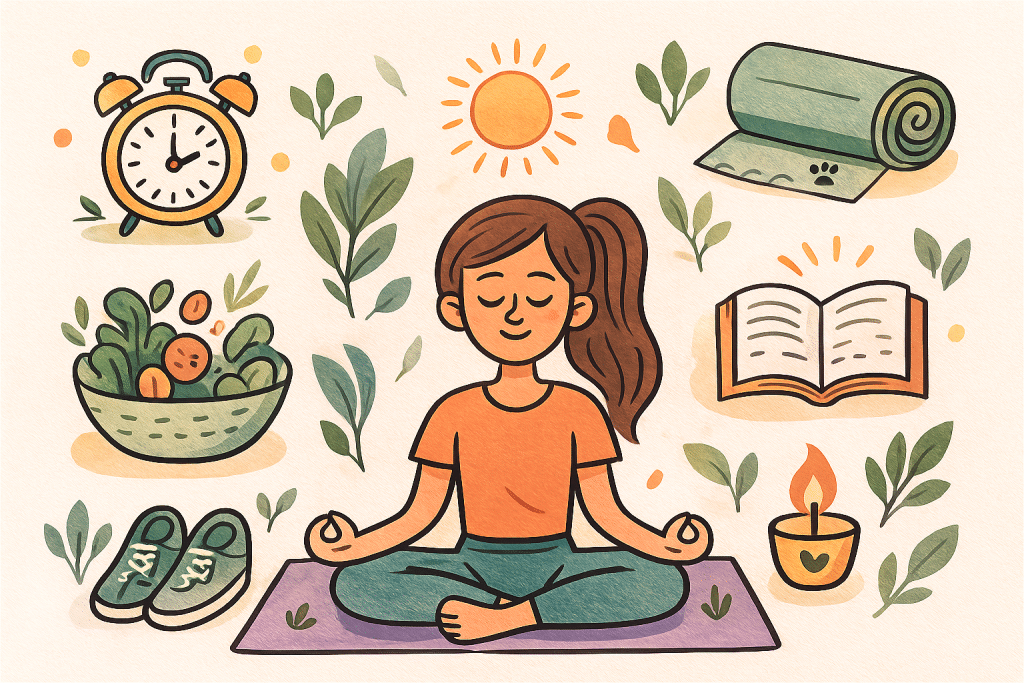
Why Mind-Body Balance Is Gaining Momentum
Wellness in 2025 is shifting from extremes to equilibrium. Audiences (especially millennials and Gen Z) now prioritize routines that are sustainable, scientifically grounded, and tuned to daily life.
At the same time, meta-analyses confirm that breathwork interventions significantly reduce stress, anxiety, and depressive symptoms. This growing evidence has helped breathing practices shift from “alternative” to core elements of mind-body routines.
Given these shifts, wellness routines that support mind-body balance are becoming essential tools, not optional extras.
Core Pillars of Balanced Wellness Routines
Below are the emerging components often included in modern mind-body systems. These routines are practical, adaptable, and grounded in evidence.
1. Intentional Breathwork & Respiratory Practices
Breath control is one of the fastest, most accessible ways to bridge mind and body. Controlled breathing (especially longer exhalation and cyclic sighing) has been shown to produce mood improvements and lower respiratory rate compared to meditation alone.
Additionally, breathwork supports parasympathetic activation and heart rate variability (HRV) through slow-paced breathing, which contributes to stress resilience.
How to include it daily:
- Begin with 5 minutes of cyclic sighing (inhale 3, exhale 6)
- Use a wearable or app to cue regular micro-breath breaks
- Try alternate nostril breathing or guided diaphragmatic practice
2. Digital Detox & Mindful Disconnection
In a world where screens dominate, digital detox practices are emerging as powerful reset tools. The trend “Analog Wellness” predicts that 2025 will see more deliberate logging off and reengagement with low-tech hobbies.
Studies suggest that even brief device abstinence can reduce stress and restore mental clarity.
Practical steps:
- Start your morning with 30 minutes device-free, doing movement or journaling
- Use screen-free zones (bedroom, dining table)
- Do “digital sabbath” windows (e.g., one evening per week)
3. Movement Anchored in Mindfulness
Movement practices that combine body awareness with physical work (like yoga, tai chi, or somatic flow) are resurging because they support both strength and internal calm. These modalities are less about “burn calories” and more about integrity of motion, breath-synchrony, and listening to sensation.
Fitness-wellness forecasts in 2025 project that recovery- and regeneration-oriented modalities (infrared, compression, vibration) will coexist with movement approaches that emphasize coherence over volume.
Tips for integration:
- Add a “movement meditation” session (20–30 min) rather than a full cardio blast
- Use slow transitions and breath awareness during exercise
- Include daily mobility and stretching breaks
4. Daily Rituals That Ground & Connect
Routines that blend sensory habits with reflection help anchor your internal balance. Examples include:
- Morning gratitude journaling
- Grounding rituals (barefoot walking, nature touch)
- Evening rest routines (herbal tea, dimmed lights, gentle breath)
These rituals mark transitions, helping your mind and body reorient. Supporting research suggests that consistent intention-based habits strengthen neuroendocrine coherence.
5. Personalized Biofeedback & Digital Support (Cautiously)
Wearables and biometric feedback tools are now enabling people to monitor HRV, skin conductance, sleep phases, and breathing metrics in real time. These data points can guide your wellness choices if used wisely.
However, caution is advised: the regulatory status of many wellness wearables is not standardized. Misinterpreting feedback can lead to over-optimization stress. Use biofeedback as one input among many, not the sole authority.
Sample Daily Wellness Routine
Below is a sample framework that pulls these pillars together into a coherent, balanced day.
| Time | Focus & Intention | Activity |
|---|---|---|
| Morning awake | Grounding + clarity | 5-min breathwork → hydration → device-free journaling / stretching |
| Midmorning | Movement & circulation | 20–30 min mindful movement (yoga, tai chi, walking) |
| Afternoon | Reset & micro-rest | Take 1–2 micro breath breaks or stretch breaks (5 min) |
| Late afternoon | Embodied movement | Gentle mobility, mindful stretching, or movement meditation |
| Evening | Unplug & settle | Digital detox window (no screens 60 min before bed) + calming ritual |
| Before sleep | Reflection & breath | 3–5 min cyclic sighing or slow breathing, gratitude or intention journaling |
You can adapt times and practices to suit your schedule. The key is consistency and coherence across mind + body signals.
How to Begin & Adapt This System
- Pilot one pillar first: Try daily breathwork for a week to feel the shift.
- Add one ritual or detox habit: For instance, begin with a nightly screen-off window.
- Track subjective metrics: Mood, clarity, stress levels — not only wearable data.
- Adjust to your context: Routines should flex — a chaotic day needs shorter moments, not abandonment.
- Review periodically: Evaluate what works, what drains, and refine.
Resist pressure to adopt every trend. Your body and psyche are your greatest guides.
What’s Next & Emerging Directions
- Studies are linking breathwork not just to mood but also immune and metabolic regulation, indicating deeper systemic impact.
- More wellness platforms are layering AI coaching into mind-body routines, offering personalized prompts and micro-adjustments.
- Analog methods and low-tech rituals (journaling, manual crafts, nature immersion) are being repositioned as counterbalances to digital overload.
As technology and science evolve, the core of wellness routines that support mind-body balance will remain intention, coherence, and grounded integration.
Final Thoughts
Wellness routines that support mind-body balance are not about rigid rules — they are about weaving harmony between your internal systems and external life. By rooting daily practice in breathing, mindful movement, strategic disconnection, and simple rituals, you create a framework that responds to stress, fatigue, or disruption with grace. Begin small, stay curious, and allow your mind and body to learn to move together.
References
- Balban, Y. M. et al. “Brief structured respiration practices enhance mood and reduce negative emotion.” PMC (2023). Available at: https://pmc.ncbi.nlm.nih.gov/articles/
- Fincham, G. W. et al. “Effect of breathwork on stress and mental health: A meta-analysis.” Nature / Scientific Reports (2022). Available at: https://www.nature.com/articles/
- Zaccaro, A. et al. “How Breath-Control Can Change Your Life: A Systematic Review of Slow Breathing.” PMC (2018). Available at: https://pmc.ncbi.nlm.nih.gov/articles/

 Gardening Ideas That Encourage Eco-Friendly Practices