Gardening Ideas That Encourage Eco-Friendly Practices
Thomas Blake October 2, 2025
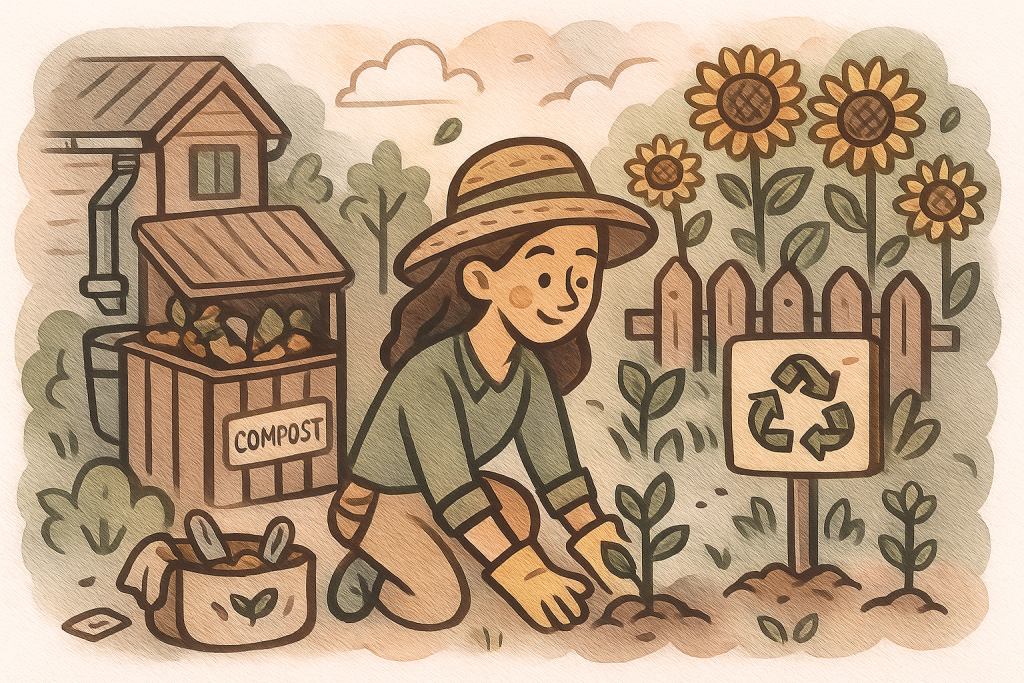
In 2025, gardeners are increasingly focused on sustainability. Gardening ideas that encourage eco-friendly practices are rising in popularity as more people aim to reduce waste, conserve water, and support biodiversity. From regenerative soil methods to native plant landscapes and smart irrigation, these trends help gardens do good for the planet while remaining beautiful and productive.
The Sustainability Shift in Home Gardens
Climate concerns, water stress, and biodiversity loss are pushing homeowners to rethink how they garden. In many landscaping forecasts, sustainable landscaping tops the list of trends for 2025.
Meanwhile, the concept of regenerative gardening — working with soil biology, minimizing disturbance, and building organic matter — is gaining traction for its capacity to sequester carbon and improve ecosystem health.
To turn ideals into action, next are practical gardening ideas and techniques that encourage eco-friendly practices for any scale of garden.
Key Ideas for Eco-Friendly Gardens
1. No-Till and Minimal Disturbance
Avoiding soil tillage preserves soil structure, beneficial fungi, and microbe networks. No-till gardens can slow erosion, increase water retention, and reduce carbon release.
You can apply this by adding organic mulch and planting cover crops instead of digging. Gradually shift beds to no-till over seasons to maintain productivity.
2. Regenerative Soil Building & Composting
A regenerative garden focuses on feeding soil rather than feeding plants directly. Compost, vermicompost, and finished organic matter help rebuild organic content, improving carbon storage, fertility, and resilience.
Composting kitchen waste, using worm bins, or layering “sheet composting” with cardboard, leaves, and green material are all accessible practices that support this cycle.
3. Native & Wild Planting (“Rewilding”)
Using native and regionally adapted plants supports local insects, birds, and pollinators. Landscapes that mimic wild meadows or natural ecosystems reduce the need for fertilizers, mowing, or pest treatments.
Many 2025 trend forecasts highlight wild planting, permeable landscapes, and wildlife corridors as key sustainable directions.
4. Xeriscaping and Water-Wise Design
Xeriscaping — gardens designed to minimize or eliminate irrigation — is becoming more accepted beyond arid zones. Choosing plants suited to local rainfall, using mulches, and grouping plants by water needs all reduce water waste. (See Xeriscaping article)
By reducing turf areas and installing dry-set stone paths or gravel beds, gardens use less water and stay functional in drought.
5. Foodscaping & Edible-Integrated Landscapes
Instead of segregating vegetable patches, foodscaping weaves edible species into ornamental beds. This allows gardens to feed and delight visually at once.
You might plant herbs, berries, or edible flowers alongside ornamentals in harmony, turning more of your garden into productive, sustainable space.
6. Smart Irrigation & Sensor-Driven Watering
Using soil moisture sensors, drip systems, or weather-based controllers ensures water is used only when needed. Smart greenhouses employing IoT systems have shown reliable monitoring of pH, humidity, and temperature.
Especially in constrained water environments, this kind of tech helps align aesthetics with conservation.
How to Start: Green Garden Implementation Guide
Here’s a step-by-step approach to bring these eco-friendly gardening ideas into your own space:
- Assess your site — Soil type, sun exposure, rainfall, slope, and existing plants
- Pick a priority area — One bed or section is enough to begin trialing sustainable practices
- Layer compost and mulch — Build topsoil with organic material
- Plant a mix of natives and edibles — Start with robust species suited to your climate
- Install water-smart irrigation — Use drip tubing, soil sensors, or self-watering containers
- Transition no-till over time — Don’t dig up everything at once; adopt minimal disturbance
- Monitor & adapt — Record which plants thrive, where pests appear, and how water needs change
Repeat in more beds as you gain confidence.
Benefits & Trade-Offs
Benefits
- Reduced water use, chemical input, and maintenance
- Healthier soil ecosystems and improved carbon capture
- Enhanced biodiversity and pollinator support
- More resilient garden performance under climate stress
Trade-Offs / Challenges
- Eco methods may require trial and error initially
- Some native or wild plants grow at their own pace — less instant gratification
- Smart irrigation hardware or sensors have cost and setup requirements
- Perception and neighbors: gardens that look “wild” may conflict with traditional norms
What to Watch in Eco Gardening Trends 2025
Shifting toward eco-friendly practices doesn’t have to happen all at once. The most successful sustainable gardens evolve gradually, as you test methods and learn what works best for your soil, climate, and lifestyle. Here’s a step-by-step approach to bring these eco-friendly gardening ideas into your own space with confidence:
Assess your site
Begin by studying the conditions you already have. Note soil type, drainage patterns, sun exposure throughout the day, rainfall, slope, and the plants that are thriving without intervention. This assessment gives you a baseline for deciding which eco-practices will be most impactful.
Pick a priority area
Rather than tackling the entire yard, choose one bed or section as your trial zone. A smaller test area allows you to experiment with no-till, composting, or native plantings while keeping the rest of your garden stable.
Layer compost and mulch
Improve soil health by building layers of organic matter instead of disturbing the earth with digging. Compost, leaf mold, or grass clippings can be spread as mulch, which feeds soil organisms, retains water, and suppresses weeds naturally.
Plant a mix of natives and edibles
Introduce plants that are adapted to your region’s climate along with practical food crops. Natives reduce maintenance and attract pollinators, while edibles turn your garden into a sustainable food source. Start with hardy, resilient species that can withstand local weather shifts.
Install water-smart irrigation
Replace overhead sprinklers with drip lines, soaker hoses, or soil sensors that deliver water directly to plant roots. This reduces evaporation and ensures that water is only applied when necessary. Self-watering containers can be a low-cost, easy entry point for smaller spaces.
Transition no-till over time
Resist the urge to flip all your beds in one go. Instead, gradually adopt minimal disturbance methods by layering organic matter on top, planting cover crops, and letting earthworms and microbes do the digging for you. Over time, this creates richer, healthier soil.
Monitor & adapt
Keep notes on which plants thrive, where pests appear, and how your soil’s moisture changes with new methods. Monitoring helps you refine your approach, reduce wasted effort, and spot improvements such as increased biodiversity or better water retention.
Once your first bed establishes itself, repeat these steps in other areas of the garden. Expanding gradually builds your knowledge and creates a resilient, eco-friendly landscape without overwhelming you at the start.
Real Garden Examples
- In many regions, backyard gardeners are converting grass lawns into clover lawns, which fix nitrogen, reduce fertilizer needs, and support pollinators.
- Homeowners are replacing annual bedding plants (often grown in peat and low in pollinator value) with edible perennials and wildlife-friendly shrubs — a shift predicted by horticultural authorities for 2025.
- Backyard versions of rain gardens are catching on, where low spots collect stormwater and direct it to native plant zones, reducing runoff and filtering pollution.
Final Thoughts
Gardening ideas that encourage eco-friendly practices are more relevant now than ever. By combining regenerative methods, smart water strategies, native planting, and technological support, gardeners can turn their yards into resilient, low-impact ecosystems. Begin with one bed, experiment thoughtfully, and over time your garden can become a force for ecological restoration, beauty, and productivity.
References
- The Garden Continuum. “How Regenerative Gardening Will Help Fight Climate Change Now.” Available at: https://www.thegardencontinuum.com/how-regenerative-gardening-will-help-fight-climate-change-now
- EarthEasy. “Climate Change & Regenerative Gardening.” Available at: https://learn.eartheasy.com/guides/help-fight-climate-change-with-regenerative-gardening/
- Make Gather Grow. “The Regenerative Urban Garden I: No-Till Gardening.” Available at: https://makegathergrow.com/blog/regenerative-no-till-gardening

 Smart Finance Tools That Support Long-Term Goals