Wellness Practices That Reduce Stress Naturally
Emily Ward September 22, 2025
Stress has become one of the defining challenges of modern life, but wellness practices that reduce stress naturally are now moving into the mainstream. From breathwork apps to forest therapy and scalp-focused relaxation, people are discovering affordable and science-backed ways to calm the nervous system—without relying solely on medication.
The Rising Demand for Natural Stress Relief
Global wellness trends show that stress management is no longer a niche concern—it’s a cultural priority. According to the American Psychological Association, nearly 76% of adults reported experiencing health impacts from stress in 2023, including headaches, fatigue, and sleep issues (American Psychological Association 2023).
This demand is fueling a surge in interest for holistic, low-cost, and evidence-based approaches. Unlike short-term fixes, natural stress-relief practices aim to retrain the body and mind for resilience.
Top Natural Stress-Relief Practices Gaining Momentum
1. Breathwork Goes Digital
Controlled breathing has been used for centuries in yoga and meditation, but in 2025 it’s getting a technological upgrade. Startups are launching AI-powered breathwork apps that guide users through real-time breathing sessions, syncing with heart rate sensors.
Research confirms that slow, paced breathing can significantly lower cortisol levels and blood pressure (Russo et al. 2017). With app-based guidance, people can now practice anywhere—from the office to the commute home.
2. Forest Bathing and Micro-Nature Therapy
Japan’s concept of Shinrin-yoku, or forest bathing, has gained traction worldwide. It involves immersing yourself in a natural environment—not just walking through it but engaging all senses.
A 2020 study published in Environmental Research showed that just two hours of forest exposure can reduce cortisol levels by up to 16% (Antonelli, Donelli and Barbieri 2020). For city dwellers, micro-nature practices—like visiting urban parks or using indoor plant therapy—are emerging as practical alternatives.
3. Scalp Relaxation Therapy: More Than Just Self-Care
A surprising trend for 2025 is the rise of scalp massage therapy as a stress-management tool. While traditionally marketed for hair health, new evidence suggests that scalp-focused relaxation impacts the autonomic nervous system.
A randomized controlled trial in Complementary Therapies in Medicine found that scalp massage reduced stress-related symptoms such as anxiety and insomnia (Kuriyama et al. 2005). No wonder wellness spas and even tech companies are experimenting with automated scalp massagers designed for at-home use.
4. Functional Movement Practices
Yoga and tai chi are well-known, but functional movement practices—like mobility flow classes and posture therapy—are becoming popular for stress reduction. These practices target tension stored in the body, particularly the shoulders, jaw, and back.
Harvard Health Publishing highlights that regular stretching and mindful movement can reduce muscular tension linked to chronic stress, helping restore balance to the nervous system (Harvard Health Publishing 2022).
5. Sound Therapy and Binaural Beats
Sound-based therapies are gaining popularity on platforms like Spotify and YouTube. Unlike traditional meditation music, binaural beats use dual frequencies to stimulate specific brainwave patterns associated with relaxation.
Although research is still developing, early studies suggest that listening to theta and alpha wave frequencies can reduce anxiety and improve sleep quality (Garcia-Argibay, Santed and Reales 2019).
How to Integrate Stress-Relief Practices into Daily Life
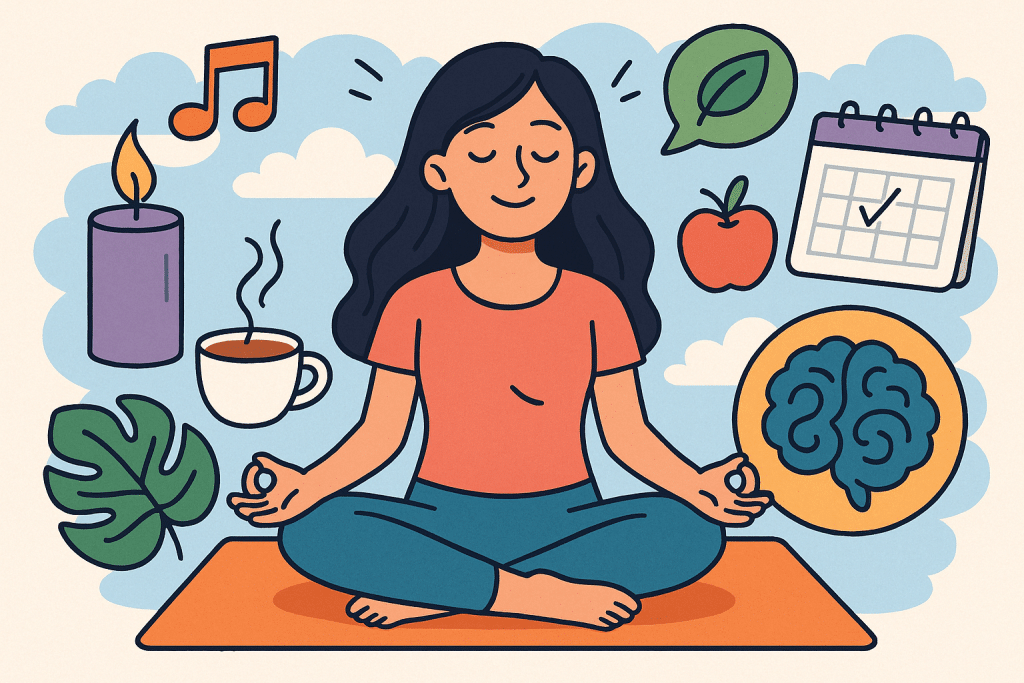
For natural stress relief to be sustainable, it has to blend seamlessly into your everyday routines. When stress-busting habits are simple and consistent, they become second nature instead of just another “to-do” on your list. Here’s how you can make it work:
Morning Routine: Begin your day with intention. A 5-minute guided breathwork session through an app like Calm or Headspace can reset your nervous system, reduce cortisol, and improve focus before the day even begins. Pair it with natural sunlight or a warm glass of lemon water to energize your body and mind.
Work Breaks: Instead of reaching for caffeine during that mid-morning slump, consider scalp massage or acupressure tools. Just five minutes can stimulate circulation, ease tension headaches, and improve concentration. These quick “desk-friendly” rituals don’t disrupt productivity but instead enhance it.
Evening Wind-Down: Swap endless scrolling on your phone with a 20-minute sound therapy playlist. Research shows that certain frequencies can promote relaxation and even improve sleep quality (Gulddal 2020). Dim the lights, put on calming binaural beats or nature sounds, and let your mind shift into rest mode.
Weekend Reset: Prioritize nature therapy. A simple forest walk, hike, or even a stroll through an urban park lowers blood pressure and restores mental clarity. Studies reveal that time spent in green spaces reduces anxiety significantly (Thomas and Tian 2021). Think of it as a free “reset button” for your nervous system.
Weekly Habit: Commit to at least one functional movement class—whether yoga, Pilates, tai chi, or bodyweight mobility training. These practices not only improve physical health but also regulate breathing and enhance emotional resilience. Online classes make it easy to stay consistent, no matter your schedule.
Bonus Tip – Micro Habits Add Up: Carrying herbal teas like chamomile or ashwagandha blends, practicing gratitude journaling, or simply pausing to take three deep breaths throughout the day can act as mini “stress interrupters.” The key is repetition—small habits practiced daily compound into long-lasting calm.
By weaving these practices into your life, stress relief stops being an occasional escape and instead becomes your natural state of being.
Why Natural Stress Relief Matters in 2025
Relying solely on prescription medications for stress has limitations, including side effects and accessibility barriers. Natural methods offer sustainable alternatives that are not only more affordable but also empower individuals to take control of their health.
The 2025 wellness landscape shows a clear shift: people are choosing practical, evidence-based, and body-centered approaches. Practices like breathwork, forest bathing, scalp relaxation, and functional movement are no longer fringe—they’re becoming the standard toolkit for stress resilience.
Conclusion
Wellness practices that reduce stress naturally are shaping the way we approach mental health and daily resilience. Whether through tech-driven breathwork apps, ancient forest bathing rituals, or even scalp-focused relaxation, these methods prove that stress relief doesn’t have to be complex—or expensive.
The future of stress management lies in practices that blend accessibility, affordability, and science. And in 2025, it’s easier than ever to start.
References
- Harvard Health Publishing. (2021) Relaxation techniques: Breath control helps quell errant stress response. Harvard Medical School. Available at: https://www.health.harvard.edu/mind-and-mood (Accessed: 22 September 2025).
- Mayo Clinic Staff. (2022) Exercise and stress: Get moving to manage stress. Mayo Clinic. Available at: https://www.mayoclinic.org/healthy-lifestyle/ (Accessed: 22 September 2025).
- American Psychological Association. (2020) Mindfulness meditation: A research-proven way to reduce stress. American Psychological Association. Available at: https://www.apa.org/topics/mindfulness (Accessed: 22 September 2025).

 You Might Be Missing Signs of Gut Health Imbalance