Gardening Techniques That Promote Healthy Growth
Thomas Blake September 26, 2025
If you want a garden that performs, not just looks pretty, you’ll want to learn new gardening techniques healthy growth gardeners are using in 2025. This article will walk you through cutting-edge methods like microbiome engineering, no-dig systems, microbial inoculants, and smart soil technologies—so your plants become stronger, more resilient, and more productive.
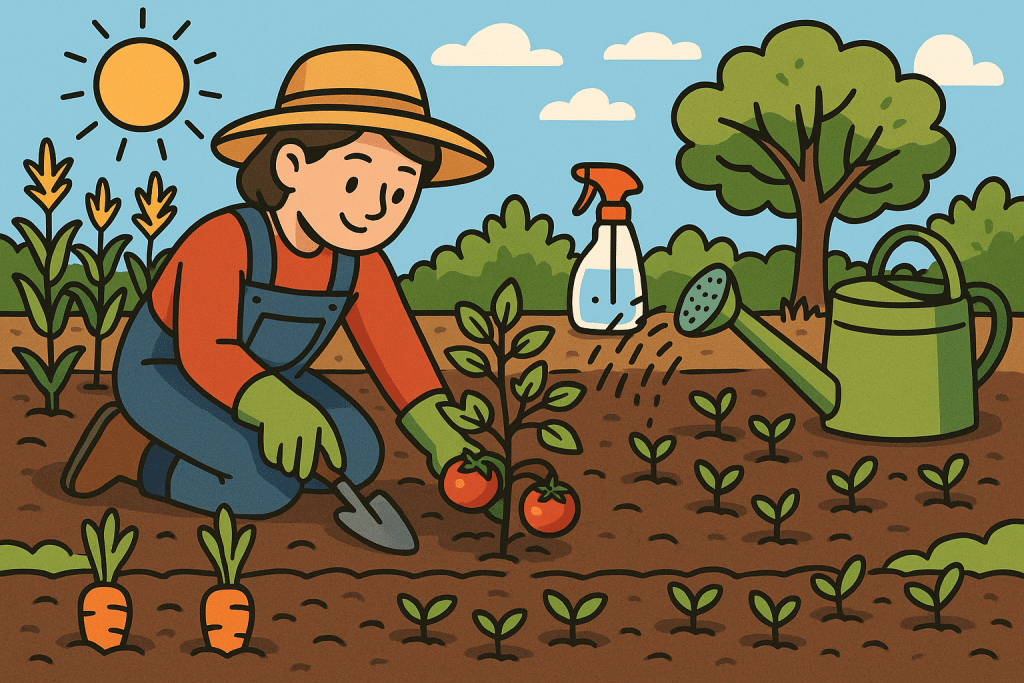
Why the microbiome is the new frontier in gardening
Modern gardeners increasingly realize that plants don’t grow in isolation—they live within a bustling ecosystem of microbes, fungi, bacteria, and protozoa. Restoring or manipulating that microbial community is proving to be one of the most promising strategies to boost plant health.
The science behind soil microbial communities
- Soil biota (bacteria, fungi, archaea) play key roles in decomposing organic matter, cycling nutrients (nitrogen, phosphorus, potassium), and producing phytohormones.
- A richer, more diverse soil microbiome tends to suppress pathogens and enhance plant resilience.
- Microbiome engineering or manipulation (inoculating beneficial microbes, encouraging certain groups in situ) is emerging as a powerful technique in both agriculture and gardening.
One recent advance: researchers have demonstrated a method to encapsulate plant-growth promoting bacteria (PGPB) in stable formulations so they can survive storage and then be applied safely to plants—even alongside fertilizers or conventional treatments.This means gardeners might soon access probiotic mixes specifically tailored to their soils.
In short: managing the microbiome turns the soil into your ally rather than a passive medium.
Four breakthrough gardening techniques healthy growth (2025 trendsetters)
Here are four of the freshest approaches that serious gardeners are adopting right now to promote healthy growth:
- No-dig / no-till / sheet mulching systems
- Microbial inoculants and microbiome engineering
- Electroculture / bioelectric stimulation
- Smart soil sensors and controlled environment support
I’ll describe each, how to implement, pros & cons, and tips to integrate them together.
1. No-dig and sheet mulching: preserve the soil network
What it is
No-dig (sometimes called no-till for gardens) means you avoid turning over the soil. Instead, you build fertility at the surface, using mulches and organic layers. Sheet mulching is a variant: layering cardboard or paper + compost + mulch to “smother” weeds while building soil.
Why it promotes healthy growth
- It preserves fungal hyphae networks and microbial habitats that would be disrupted by digging.
- It retains soil moisture, reduces erosion, and encourages earthworms and macrofauna.
- It helps build a stable, living soil surface that supports nutrient cycling.
How to get started (step by step)
- Remove large perennial weeds if needed (by hand).
- Lay down a barrier (cardboard, newspaper) to suppress weeds.
- Add a 5–15 cm layer of well-rotted compost or leaf mold.
- Top with a thicker organic mulch (wood chips, straw, leaf litter).
- Plant directly into the mulch (slit, move aside layer).
Challenges & tips
- In early years, weed pressure can be stronger since you’re not disturbing weed seeds.
- Mulch materials must be free of herbicide residues.
- Use nitrogen-rich amendments (e.g. composted manure) early on to balance carbon heavy mulches.
No-dig systems dovetail nicely with microbial strategies—if you stop disrupting the soil, you allow beneficial microbes to establish.
2. Microbial inoculants, microbiome engineering, and encapsulation
What it is
This technique introduces beneficial microbes (bacteria, fungi) into the soil or onto seeds/plants to enhance nutrient uptake, disease suppression, or stress tolerance. More advanced versions involve designing microbial consortia based on soil tests, or engineering the microbiome in situ.
Emerging innovations
- Encapsulation/stabilized formulations: As mentioned, encapsulating beneficial microbes helps them survive storage and field conditions.
- Seed microbiome modulation / flower spray inoculation: Coating or spraying beneficial microbes at reproductive stages to ensure colonization.
- In situ microbiome engineering: Instead of introducing new microbes, you tailor the existing soil community through amendments, cropping patterns, or carbon additions.
Steps to implement
- Begin with a soil microbial baseline (if possible, send a soil test or microbial diversity test).
- Choose a reputable inoculant suited to your plant types (e.g., mycorrhizal fungi, nitrogen-fixing bacteria, phosphate solubilizers).
- Follow the manufacturer’s instructions (dosage, timing, application method).
- Combine with no-dig or minimal disturbance to protect inoculated microbes.
- Add organic matter and support microbial growth (mulch, compost teas).
Notes & caveats
- Local soil and climate conditions can affect success—what works in one region might not in another.
- Inoculants are more effective when the existing soil community is weak or degraded.
- Repeated applications may be necessary in early years until the soil stabilizes.
The convergence of no-dig systems + microbial inoculants + stabilized formulations is arguably the hottest frontier in gardening techniques healthy growth right now.
3. Electroculture and bioelectric stimulation: low-energy stimulation
What it is
Electroculture (sometimes called electroculture gardening) uses low-level natural electric currents or coils in soil or near plants to leverage the Earth’s electromagnetic field, purportedly stimulating root growth, nutrient uptake, and pest resistance.
This technique has gained attention online in gardening communities. (For instance, Better Homes & Gardens has covered the trend.)
How practitioners apply it
- Bury copper or other metal rods in the ground connected to wire loops or antennas.
- Use metal spiral coils or antennas near root zones.
- Some setups harness atmospheric electricity (e.g. lightning rods) or passive antennas.
Potential benefits and skepticism
- Advocates report faster growth, stronger root systems, reduced pest incidence.
- Scientific validation is limited, and results are anecdotal in many cases.
- It’s best used as a supplement, not a replacement, to sound soil methods.
If you like experimenting at your garden’s edge, electroculture can be combined with no-dig and microbial systems. But treat it cautiously until more rigorous trials confirm effectiveness.
4. Smart soil sensors, AI, and controlled environment support
What it is
Integrating digital tools—soil moisture sensors, pH sensors, temperature probes, nutrient sensors, and AI or IoT systems—to monitor and adjust garden conditions in real time.
Recent research demonstrates this even in aeroponic greenhouses for disease detection and irrigation control using IoT + AI.
Another innovation: multimodal data integration frameworks combining imagery, environmental sensors, and time-series models to predict stress in indoor gardens.
How to apply in a garden setting
- Install a soil moisture + pH sensor to collect real-time data.
- Use weather APIs and sensor data to schedule watering/fertilization optimally.
- Use small-scale AI or rule-based systems to flag stress (underwatering, overwatering).
- In greenhouse or shade-house settings, combine sensors with ventilation and shading controls for precision.
For home gardeners, off-the-shelf sensor kits (e.g. TDS / EC probes, Bluetooth-enabled soil sensors) are increasingly accessible.
Why it supports healthy growth
- Avoids under- or over-watering, which stresses plants and weakens their microbiome.
- Helps in detecting early disease stress or nutrient imbalances before visible symptoms.
- When combined with microbial systems, precision watering ensures optimal moisture for beneficial microbes.
Integrating techniques into a cohesive plan
Using one technique in isolation can help, but combining them yields synergy. Here’s a sample roadmap for a gardener wanting to adopt these methods gradually:
| Phase | Focus | Actions |
|---|---|---|
| Phase 0: Baseline | Assess your current soil and garden | Soil fertility/microbe test (if available), observe drainage, weed pressure |
| Phase 1: Transition | Begin no-dig / sheet mulching | Lay down cardboard → compost → mulch layers, plant directly |
| Phase 2: Microbiome boost | Introduce inoculants | Start with general beneficial microbes (mycorrhizal blends, rhizobia) |
| Phase 3: Support & stabilize | Reduce disturbance, feed microbes | Add compost teas, organic amendments, avoid synthetic chemicals |
| Phase 4: Monitor & fine-tune | Install sensors, experiment | Add soil sensors, apply electroculture trials selectively, adjust irrigation |
Throughout, track growth, pest incidence, plant vigor, and soil health signs. Over multiple seasons, you should see better root development, fewer disease outbreaks, and stronger plants.
Practical tips and pitfalls to watch out for
- Avoid overapplication of fertilizers: Chemical nitrogen or phosphorus at high levels can disrupt microbial communities.
- Choose inoculants wisely: Use those adapted to your region or soil type; a “one-size-fits-all” product rarely works well everywhere.
- Be patient: Healthy soil and microbiome balance often take 1–3 seasons to really stabilize.
- Balance carbon and nitrogen: When mulching heavily with high-carbon material (leaves, wood chips), supplement nitrogen to prevent nitrogen lock.
- Maintain moisture: Beneficial microbes thrive with moderate, steady moisture; don’t let soil dry out completely.
- Avoid frequent disturbance: Try to minimize weeding or turning of soil in key zones.
- Record your interventions: Note down what you try, and observe differences. Gardeners become better by iteration.
Case studies and emerging research you should know
- In plants, researchers have succeeded in encapsulating PGPB to protect them during storage and co-application with agrochemicals, increasing their practical usability.
- The plant microbiome technology review highlights new delivery systems (like flower-spray inoculation) and encourages in situ microbiome engineering via cropping and amendments.
- Agricultural practice studies using machine learning show that how we fertilize and till dramatically shapes microbial community assembly—meaning our management choices directly influence microbial health.
- A nature article calls for reinforcing microbiome–crop symbioses, including using beneficial microbes from wild relatives to strengthen cultivated crops.
These cases underscore that what you do above ground (mulching, rotation, disturbance) has deep effects below the surface.
Summary and next steps
In 2025, the frontier of gardening techniques healthy growth lies at the intersection of soil microbiome management, no-dig systems, precision monitoring, and selective new technologies like electroculture. If you apply these thoughtfully—and iteratively—you can reshape your soil from a passive medium into a living foundation for plant vigor, nutrition efficiency, and resilience.
References
- Royal Horticultural Society. (2022) 10 tips to grow healthy plants. Available at: https://www.rhs.org.uk (Accessed: 26 September 2025).
- University of Minnesota Extension. (2021) Soil preparation for home gardens. Available at: https://extension.umn.edu (Accessed: 26 September 2025).
- U.S. Department of Agriculture (USDA). (2023) Watering and irrigation practices for sustainable gardens. Available at: https://www.nrcs.usda.gov (Accessed: 26 September 2025).

 Smart Finance Practices That Encourage Savings