Nutrition Habits That Boost Energy and Focus
Emily Ward October 2, 2025
If you’re hunting for nutrition habits that boost energy and focus, you’re in the right place. In 2025, new research and trends are reshaping what “brain food” really means — not just fueling the body, but sharpening mental performance. This article explores emerging strategies, backed by science, to help you eat smarter and stay sharp.
Why Nutrition Matters for Mental Energy and Focus
It’s not just about caffeine or sugar. Your daily diet influences brain metabolism, inflammation, neurotransmitter availability, and even the gut‑brain axis — all of which affect your ability to concentrate, resist mental fatigue, and maintain energy through the day.
- A recent review on the “dynamic influence of nutrition on prolonged cognitive performance” shows that bioactive components in food (e.g. antioxidants, flavonoids, fatty acids) modulate neural function across the lifespan.
- Nutritional interventions (e.g. multinutrient supplementation, targeted diets) show promise in delaying cognitive decline and preserving attention in clinical populations.
- New imaging and biomarker work is beginning to reveal how specific nutrient profiles correlate with “slower brain aging” phenotypes.
Given this, the question is: what nutrition habits actually move the needle for energy and focus — especially in everyday life?
The 2025 Trend: Precision Nutrition & Personal Brain Fuel
One of the most talked‑about trends is precision nutrition for cognition — designing your diet based on your genetics, metabolic profile, microbiome, and lifestyle to optimize mental performance.
- Precision nutrition is now being applied to managing cognitive impairment, tailoring diet plans to individual metabolic and genetic markers.
- More broadly, global nutrition initiatives emphasize personalized diets and gut health as central pillars for wellness and brain resilience in 2025.
- In the wellness/food trend space, “kitchen medicine” and functional foods are rising in importance, as consumers expect more from the foods they eat (i.e. not just calories, but mental & metabolic benefits).
So one shift is away from one‑size‑fits‑all “brain foods,” toward your brain’s ideal foods — based on your unique biology.
Let’s go through several nutrition habits that align with this trend, and that are emerging as effective for boosting energy and focus.
1. Balance Low‑GI Carbohydrates + Healthy Fats for Steady Fuel
Many people assume carbs are the enemy of mental clarity — but in reality, glucose is the brain’s primary fuel. The trick is how you deliver it.
Why this works
- Low glycemic index (GI) carbohydrates provide steady energy without spiking blood sugar and crashing, which disrupts concentration.
- Pairing low-GI carbs (e.g. whole grains, legumes) with healthy fats (e.g. olive oil, nuts, avocado) slows absorption and supports mitochondrial health in neurons.
Habit in practice
- Start your day with oats, quinoa, or steel-cut grains rather than refined cereals.
- Swap white rice or white bread for whole grains or mixed-grain options.
- Add a small amount of nuts, seeds, or fatty fish (for omega‑3s) at meals to slow digestion and support brain cell membranes.
2. Prioritize Antioxidant‑Rich, Polyphenol Foods
Compounds like flavonoids, carotenoids, and polyphenols help modulate oxidative stress, support blood flow in the brain, and protect against inflammation — all of which boost mental performance.
- Observational studies consistently show that antioxidant-rich diets (for instance, the MIND diet) track with better memory and global cognition.
- In particular, diets that combine the Mediterranean, DASH, and brain‑health principles (i.e. MIND diet) are rising in research interest.
Habit in practice
- Eat a variety of colorful vegetables and berries daily: think spinach, kale, blueberries, and purple cabbage.
- Use spices with high polyphenol content (e.g. turmeric, cinnamon, rosemary).
- Include green tea, dark chocolate (≥70 % cocoa), or other plant-based sources in moderation.
3. Adopt Time‑Oriented Eating (Intermittent Fasting / Time Windows)
There’s growing interest in how when you eat affects brain energy far beyond what you eat.
- Some research suggests intermittent fasting or restricted eating windows help improve mitochondrial resilience and brain metabolic flexibility (i.e. ability to switch between glucose and ketone fuel) — though data in humans is still emerging.
- Nutritional cognitive neuroscience is beginning to examine how feeding schedules influence brain aging and neural energetics.
- In cognitive decline prevention, controlled trials are exploring how limiting energy intake or adopting fasting patterns may influence brain biomarkers and memory outcomes.
Habit in practice
- Consider a modest, sustainable time window (for example, eat within an 8–10 hour window) vs. extreme fasting.
- Start gradually (e.g. delaying breakfast by 1 hour or finishing dinner earlier).
- Monitor how your energy and alertness feel — this isn’t one‑size‑fits‑all.
4. Leverage Strategic Caffeine + Co‑nutrients
Caffeine is well known for boosting alertness, but pairing it with the right co‑nutrients maximizes benefit and minimizes side effects.
- A recent trial of a functional energy shot (with caffeine + ginseng + vitamins + taurine) improved cognitive performance and reduced mental fatigue better than placebo.
- But caffeine alone is limited: it tends to improve vigilance but has inconsistent effects on higher executive tasks.
- Tyrosine (a precursor of dopamine) and L-theanine (in green tea) are among co‑nutrients studied to smooth caffeine’s effect and reduce jitters.
Habit in practice
- If you take caffeine (coffee, tea), pair with protein or a small fat to slow absorption and avoid crashes.
- Consider modest daily doses (e.g. 50–100 mg caffeine) rather than megadoses.
- Use L-theanine (~100 mg) alongside caffeine to promote calm alertness rather than jitteriness (especially in sensitive individuals).
5. Focus on Gut Health & Fiber (“Fibremaxxing” Goes Mainstream)
In 2025, gut health is becoming a central pillar for mental energy and brain resilience. One rising trend is fibremaxxing — consciously increasing fiber intake for microbiome support and downstream brain benefits.
- Fiber and gut health link with mood, stress, inflammation, and even mental energy in emerging wellness literature.
- Microbiome–gut–brain interactions can modulate neurotransmitter production (e.g. short chain fatty acids) and reduce neuroinflammation.
- Experts are touting fibremaxxing (adding legumes, seeds, pulses, whole grains) as a sustainable, pro‑brain trend.
Habit in practice
- Aim for a minimum of 25–35 g of fiber daily (gradually increase if low currently).
- Rotate plant sources: beans, lentils, oats, chia, flaxseed, psyllium, whole grains.
- Hydrate well — fiber needs water to assist digestion and avoid bloating.
6. Regular, Small Protein Boluses Throughout the Day
Proteins (especially amino acids essential for neurotransmitter formation) act as steady building blocks for brain chemicals like dopamine, norepinephrine, and acetylcholine.
- In older adults, adequate protein is strongly associated with better memory and lower cognitive impairment risk.
- Amino acids like tyrosine are specifically studied for their cognitive effects under stress or fatigue.
- Precision nutrition frameworks often emphasize distributing protein intake evenly rather than consuming most at one meal.
Habit in practice
- Instead of one big protein lunch, split protein across meals/snacks (e.g. Greek yogurt mid-morning, nuts mid-afternoon, lean protein in dinner).
- Use a mix of plant and animal sources (if your diet allows) to diversify amino acid profiles.
- Pair protein with fiber and fats to slow absorption and sustain energy.
7. Mind Your Micronutrients — Don’t Let Deficiencies Drag You Down
Even if your macronutrients are well balanced, lacking in certain vitamins and minerals can blunt your mental energy.
- Biomarker studies show that nutrient profiles rich in omega‑3s, carotenoids, B vitamins, and antioxidants correlate with slower brain aging.
- The “Nutritional Cognitive Neuroscience” field is investigating how deficiencies in vitamins (e.g. B12, D, E) and metals (e.g. magnesium, zinc) correlate with cognitive decline.
- Observational and interventional evidence supports the idea that supplementing where needed (e.g. B vitamins + omega‑3) may yield cognitive benefits, though context matters.
Habit in practice
- Get a periodic blood panel (if possible) to check levels of B12, vitamin D, iron, magnesium.
- Emphasize foods high in these nutrients: fatty fish, eggs, leafy greens, nuts, seeds, whole grains.
- Use moderate, evidence-based supplementation if a deficiency exists (consult a health provider).
Putting It All Together: A Sample Daily Framework
Here’s how you might stack multiple habits into a focused, practical day:
| Time | Habit | Food Ideas |
|---|---|---|
| Morning (within eating window) | Low-GI + protein | Overnight oats with chia, berries, nuts, Greek yogurt |
| Mid-morning snack | Protein + polyphenols | Almonds + a small piece of dark chocolate |
| Lunch | Balanced macro + fiber | Mixed grains (quinoa, farro) + beans + veggies + olive oil |
| Afternoon pick-me-up | Caffeine + co-nutrients | Coffee or tea + L-theanine + a protein bar |
| Mid-afternoon | Fiber & gut support | Roasted chickpeas or veg sticks with hummus |
| Dinner | Protein bolus + antioxidants | Salmon + steamed greens + sweet potatoes |
| Eating window close | Light snack (if needed) | Berries + handful of walnuts |
Adjust timing, proportions, and food choices based on your preferences, tolerances, and energy levels.
Tips for Adoption and Troubleshooting
- Gradual change is safer — especially with fiber or time-restricted eating, ramp slowly over weeks.
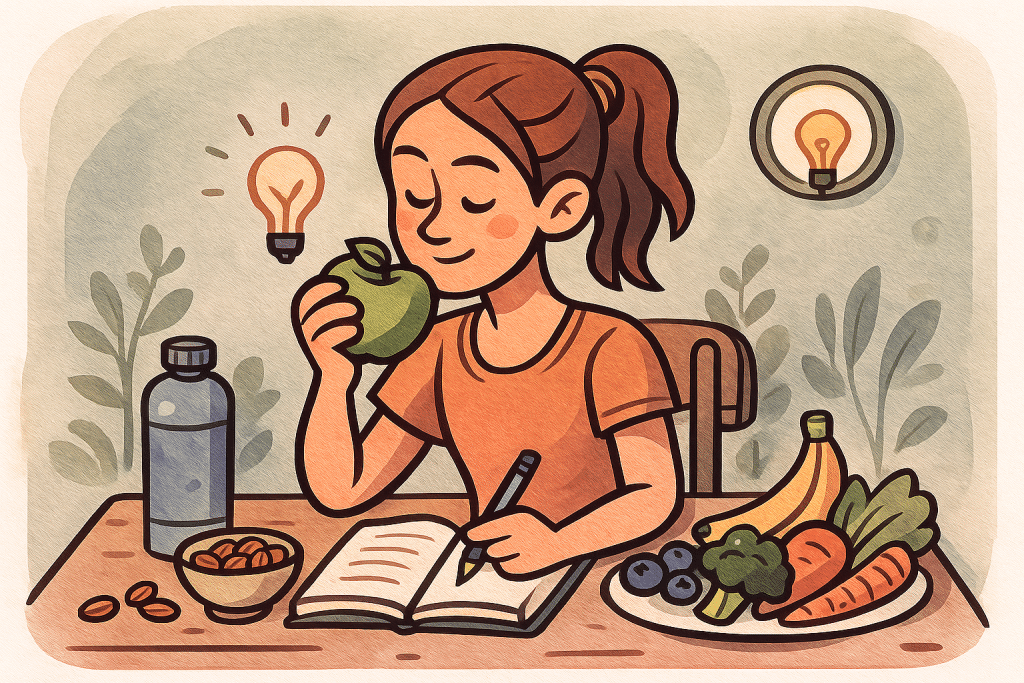
- Track subjective energy/focus — a simple journal (or app) helps you see what works.
- Hydration is essential — dehydration impairs concentration faster than you expect.
- Sleep, stress, and exercise modulate everything — even perfect nutrition can’t fully overcome poor rest.
- Use data wisely — if you get access to biomarker or genetic tests, integrate them thoughtfully; don’t overinterpret one result.
Challenges, Caveats & Research Gaps
- Much of the precision nutrition approach is still emerging; large randomized trials for cognition remain limited.
- There’s no universal “best diet for everyone.” Individual responses vary due to genetics, microbiome, lifestyle, etc.
- Overemphasis on a single “superfood” or megadose supplement is unlikely to outperform a well-balanced dietary pattern.
- Transitioning too fast (e.g. sudden high fiber, long fasts) can cause discomfort or counterproductive effects.
Conclusion
If you adopt nutrition habits that boost energy and focus, you’re not chasing a fad — you’re aligning with a growing wave of personalized, brain‑aware dietary thinking in 2025. By optimizing the timing, macronutrient balance, co‑nutrients, gut support, and micronutrients — with an eye toward your individual biology — you give your brain a more reliable, resilient fuel supply.
Start with one or two habits (e.g. fiber increase or low-GI carbs) and observe how your energy and concentration shift over 1–2 weeks. Over time, layering in more of these strategies can help you move beyond “surviving the workday” to truly thriving in it.
References
- Kim, C., Ham, Y., Kim, H., Lee, J., & Chung, Y. (2024) The dynamic influence of nutrition on prolonged cognitive performance. Current Research in Food Science, 7, pp. 100677. Available at: https://www.sciencedirect.com/science/article/ (Accessed: 2 October 2025).
- Zhang, H., Chen, J., Li, Y., Chen, H., & Sun, H. (2024) Precision nutrition for management of cognitive impairment. Nutrition Today, 59(6), pp. 300–308. Available at: https://journals.lww.com/pn/fulltext/2024/12000/precision_nutrition_for_management_of_cognitive.6 (Accessed: 2 October 2025).
- Zwilling, C. E., Talebi, M., Krajbich, I., & Willis, L. M. (2024) Investigating nutrient biomarkers of healthy brain aging. npj Aging, 10(1), Article 20. Available at: https://www.nature.com/articles/ (Accessed: 2 October 2025).

 Interior Decor Ideas That Maximize Function