Fitness Practices That Support Healthy Aging
Emily Ward September 30, 2025
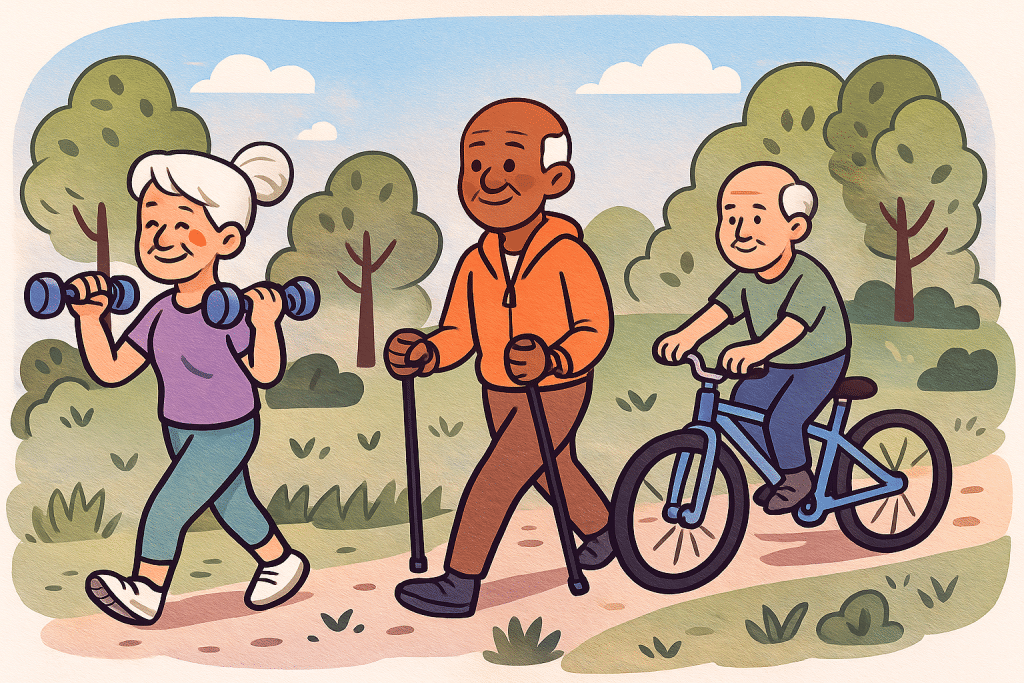
As we age, staying active becomes less about high-impact workouts and more about intelligent, sustainable movement. The trend shifting fitness for older adults: prioritizing low‑intensity movement as a foundation for healthy aging. Let’s explore why this is gaining traction—and how to build your own aging‑friendly fitness routine centered around it.
Why the Shift toward Low‑Intensity Movement?
The Limits of “More Is Better”
For decades, public health messaging emphasized moderate to vigorous physical activity (MVPA) as the core of fitness guidelines. While MVPA has benefits, new research shows that excessive sedentary time can offset gains from intense workouts. In a large cohort of 45,176 women, each increase of 2 hours per day of television‑watching was associated with a 12 % lower odds of “healthy aging,” whereas replacing sedentary time with light physical activity (LPA) had measurable benefits.
Similarly, physical activity across multiple aging cohorts was linked to reduced odds of steep health decline, even when that activity was modest in intensity.
Together, this suggests we must not only “exercise harder” but also move more, sit less.
What Makes Low‑Intensity Movement Powerful?
- It’s highly sustainable over long periods—lower risk of injury, easier to weave into daily life.
- It offers metabolic and circulatory benefits: even modest movement helps insulin sensitivity, blood flow, and vascular health.
- It reduces the cumulative burden of inactivity (i.e. prolonged sitting), which itself is a risk factor for chronic disease.
Recent reports emphasize that increases in everyday movement (e.g., more steps, standing, walking) are linked to better aging outcomes, even among those who don’t hit intense exercise targets.
Thus, an emerging trend in fitness for aging populations is shifting the baseline: low‑intensity movement for healthy aging becomes the foundation, while higher-intensity exercise is a supplement—not the sole focus.
Core Pillars of a Low-Intensity Movement Framework
To make this concept actionable, here are pillars to build your strategy:
1. Incidental Movement: Make It Part of Life
Rather than “scheduling” all your movement, sprinkle it throughout your day. Examples:
- Use stairs instead of elevator (if feasible).
- Walk while on phone calls.
- Park farther away, or get off one transit stop earlier.
- Stand or pace during breaks.
Small efforts compound; 5‑10 extra minutes every hour can shift your daily energy expenditure meaningfully.
2. Walk, Walk, Walk — With Purpose
Walking remains among the most accessible and beneficial low‑intensity movements. A recent study reinforced the multifaceted benefits of regular walking in older adults, including vascular, musculoskeletal, metabolic, and cognitive health.
To enhance its impact:
- Add a purposeful pace for short periods (e.g. 2–3 minutes), then ease off.
- Use Nordic walking poles or hand weights to engage the upper body.
- Vary terrain (grass, slight inclines) to challenge mobility and balance.
3. Mobility, Balance & Joint-Friendly Flows
These are often overlooked but vital components as we age:
- Gentle yoga, tai chi, or qigong sequences focused on joint mobility.
- Balance drills: single-leg stands, tandem walking, gentle heel‑toe walking.
- Dynamic stretching integrated into daily routine.
These preserve range of motion, reduce fall risk, and support independence.
4. Strength + Resistance (as a Companion)
Low‑intensity movement forms your baseline. To counteract age‑related declines in muscle (sarcopenia), adding strength work remains essential.
- Bodyweight exercises (wall push-ups, chair squats, resistance band rows)
- Low-impact machines in a gym (leg press, cable pulls)
- Isometric holds (e.g., pushing hands together)
The aim isn’t bulk, but maintaining functional strength to support mobility and metabolism.
5. Movement Variety & “Micro‑Workouts”
Inject variation and prevent monotony with mini‑sessions:
- 2‑ to 5‑minute “micro workouts” (e.g., calf raises, steps) every hour.
- Gentle active breaks: walking, stretching, mobility flow.
- Alternate domains: walking day, yoga/flow day, strength day.
Variation protects against overuse and keeps motivation fresh.
Emerging Trend Spotlight: Low-Intensity Movement for Healthy Aging in Tech / Wellness Circles
Let’s look at what makes low-intensity movement for healthy aging a trending topic right now:
Integration with Wearables & Behavior Nudging
Wearables and smart devices are better than ever at prompting movement — reminders to stand, mini walking goals, step challenges. As the wellness industry leans heavier into longevity and “movement snacks,” this trend fits naturally into consumer tech.
Research Momentum & Public Health Emphasis
Health bodies are shifting language: instead of “exercise only,” guidance now often says “move more, sit less.” The American College of Sports Medicine sees “fitness programs for older adults” as a top future trend.
Preventive Focus Over Reactive
Rather than waiting for mobility decline, this trend is preventive. It recognizes that low‑intensity movement for healthy aging is not about high performance — it’s about preserving function, vitality, and quality of life.
How to Design Your Personalized Movement Plan
Here’s a step-by-step guide to craft your plan:
1: Audit Your Current Movement
Track for several days:
- Sedentary time (hours sitting)
- Steps per day
- Times you break up sitting
- Any current workouts or walks
This baseline helps set realistic incremental goals.
2: Set Micro Goals to Replace Sedentary Gaps
Examples:
- Every 45 minutes of sitting → get up for 2 minutes.
- Add 1,000 extra steps per day (break into short walks).
- Insert 2 mobility stretches mid‑day.
3: Structure a Weekly Template
| Day | Emphasis | Sample Movement |
|---|---|---|
| Monday | Walk + mobility | 30 min walk, 10 min joint flow |
| Tuesday | Strength | Light resistance band session |
| Wednesday | Active rest / incidental | More walking, standing breaks |
| Thursday | Walk + balance | Walk + 10 min balance drills |
| Friday | Strength | Bodyweight / isometric session |
| Saturday | Longer walk / mixed | 45 min walk + chores with movement |
| Sunday | Recovery / mobility | Gentle stretching, yoga |
4: Progress Gradually & Respect Recovery
- Increase step or movement volume slowly (e.g., 5–10 % per week).
- Monitor joints: low-intensity reduces injury risk, but always listen to your body.
- Reassess every 4–6 weeks.
5: Track & Adjust with Feedback
Use a wearable, journal, or app. Track:
- How often you break sitting
- Steps or movement minutes
- Energy, soreness, sleep
- Functional markers: walking ease, balance, strength
Tune if needed: bump movement, adjust timing, or shift strength focus.
Why This Approach Is Smart for Aging Bodies
Here are key benefits of centering your fitness strategy around low‑intensity movement for healthy aging:
1. Slows Functional Decline
A large review indicates targeted interventions (resistance + movement) can moderate age-related physical decline in muscle, endurance, and mobility.
2. Protects the Cardiovascular System
Physical activity and training help modulate aging effects on vessels and the heart.
3. Supports Brain & Cognitive Health
Movement stimulates neuroplasticity, vascular health, and cognition. Even low-intensity walks and breaking up sitting correlate with improved mental outcomes.
4. Easier Adoption & Consistency
Because risk is low and demands are modest, it’s more sustainable—key for long-term adherence.
5. Compound Gains When Layered
Once foundational movement habits are in place, adding strength, mobility, or moderate exercise yields amplified benefit.
Common Pitfalls & How to Avoid Them
- Waiting for “free time”: If you only plan full-hour workouts, you’ll perpetually fall short. That’s why micro‑movements matter.
- Pushing too much too soon: Even low-intensity work can lead to soreness if unaccustomed. Gradual ramp matters.
- Neglecting balance & mobility: These often are the first casualties as we age—don’t skip them.
- Losing track: Use reminders, habit cues, or wearables to stay on course.
- Rigid plans: Life happens—have fallback micro goals (e.g. 5 minutes walking) for busy days.
Closing Thoughts
The next wave in fitness for older adults isn’t more intensity—it’s smarter movement. Low‑intensity movement for healthy aging may sound modest, but its consistency, accessibility, and cumulative effects make it a powerful foundation. Pairing it with occasional strength, mobility, and balance work gives you a balanced, sustainable strategy to age with resilience.
If you’re ready, I can help you build a printable plan or app-compatible template.
References
- World Health Organization (2022) Physical activity and older adults. Available at: https://www.who.int (Accessed: 29 September 2025).
- National Institute on Aging (2021) Exercise and physical activity: Getting fit for life. Available at: https://www.nia.nih.gov (Accessed: 29 September 2025).
- Harvard Health Publishing (2020) The secret to healthy aging: Exercise. Harvard Medical School. Available at: https://www.health.harvard.edu(Accessed: 29 September 2025).

 Interior Design Solutions That Maximize Small Spaces