Interior Design Solutions That Maximize Small Spaces
Thomas Blake September 30, 2025
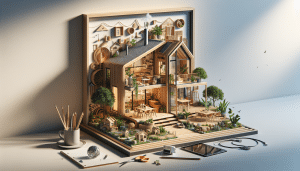
In a world where urban rents rise and plots shrink, micro‑home interior design is going from niche to necessity. This trend adapts bold ideas—from modular walls to furniture that “hides in plain sight”—to extract style and comfort from the tightest footprints.
Why micro‑home interior design is more than a fad
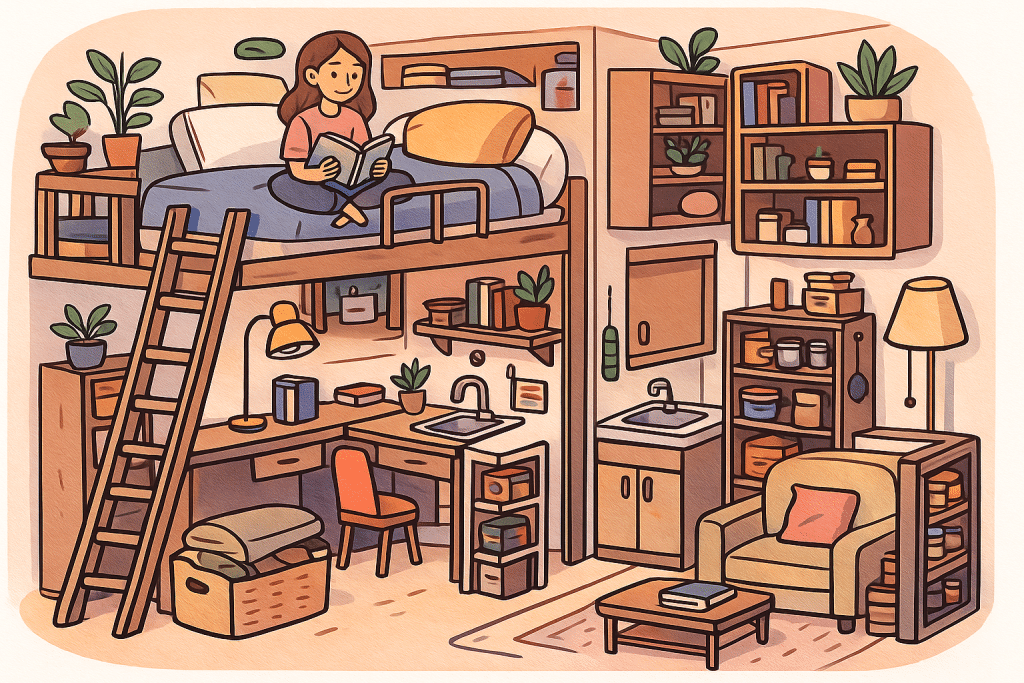
Cities like Tokyo, Singapore, and New York have long dealt with ultra-compact dwellings; now, this style is migrating globally. Designers estimate that up to 50% of new home starts in dense metro zones will fall under 30 m² (≈320 ft²) in some form (studio, micro‑apartment, “co‑living pods”). The challenge: how to make these tiny spaces feel liveable, not cramped.
In 2025, this is not just about squeezing — it’s about evidence‑based strategies combining human factors, technology, and intelligent materials.
We’ll examine four rising trends within micro‑home interior design and then offer a practical roadmap for applying them.
Key trends in 2025 micro‑home interior design
1. Modular / transformable partitions (soft walls, origami panels)
Rigid walls consume valuable space and block light. The new frontier is flexible, reconfigurable partitions. For example, “softwall” panels (lightweight, honeycomb‑structured, foldable) let residents subdivide or open up spaces as needed.
These kinds of partitions allow a studio to shift between “living + dining,” “sleeping + workspace,” or entirely open plan. The flexibility makes micro‑homes far more adaptable to changing daily needs.
2. Hidden and multipurpose furniture
Furniture that disappears or morphs is central to micro‑home design. Think:
- Murphy beds with built-in shelving
- Dining tables that fold into walls or convert from console to table
- Sofas whose backs morph into desks
- Staircases with deep drawers built in
Architectural Digest lists many such “11 stylish space‑saving ideas” that pair aesthetics and function.
The trend: rather than buying “small furniture,” build furniture that shifts roles depending on time of day.
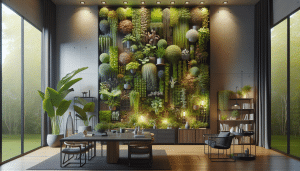
3. Vertical design & ceiling-level systems
When floor area is minimal, the vertical dimension becomes your playground. Use these strategies:
- Floor-to-ceiling cabinetry (with slim profiles)
- Ceiling-mounted rails or tracks (for hanging lighting, plants, or even fold-down tables)
- A mezzanine loft (if ceiling height allows)
- Vertical shelving that wraps corners
These techniques can reclaim “dead zones” that often go unused.
4. Seamless tech integration & concealment
Micro‑homes often depend on a few key devices — but cluttered wires, visible appliances, and bulky hardware contrast sharply with minimal space goals. The trend is to integrate:
- Wireless charging built into tables or counters
- Monitoring and control gadgets concealed in walls or furniture
- Hidden appliances (fridges behind cabinetry, stow‑away HVAC vents)
- Fold‑out or retractable lighting systems
This “jigsaw” approach ensures every object has a place — ideally invisible when idle.
5. Monochrome palettes, controlled accents, and spatial illusion
Color and pattern become powerful tools in micro‑home interior design. A carefully chosen monochrome or tonal palette makes the space feel cohesive; then, accent colors or textures provide points of interest without visual chaos.
Designers in 2025 are applying gradients (e.g. darker walls fading to lighter ceilings) to create illusion of height, and using large mirrors or reflective surfaces to double perceived space.
By avoiding abrupt color boundaries, your room reads as a continuous volume—something critical in very narrow quarters.
Roadmap: How to apply micro‑home interior design in your space
Here’s a step-by-step approach you can adapt for your own compact home or apartment:
| Step | What to Do | Why It Matters |
|---|---|---|
| 1. Audit your usage | Map your daily routines: sleeping, working, cooking, relaxing. Note how many hours you spend in each “zone.” | Helps you allocate time‑based flexibility rather than fixed zones. |
| 2. Prioritize mobility & folding | Choose furniture and partition systems that fold, roll, or reconfigure. | Every inch counts; static furniture constrains your layout. |
| 3. Plan vertically first | Sketch plans from floor up: track ceilings, overhead storage, loft zones. | Vertical usage can triple “usable” space. |
| 4. ‘Hide the tech’ early | Choose appliances, lighting, and wiring systems that are flush, hidden, or cable‑free. | Exposed tech feels bulky and erodes the minimalist feel. |
| 5. Use spatial illusions | Paint ceiling slightly lighter than walls, add mirrors across from windows, use continuous flooring patterns. | These tricks reduce the “boxy” feel. |
| 6. Iterate & live-test | Mock up the layout with cardboard outlines or tape, live with it for a week, then adjust. | Real-life movement reveals flaws you won’t see on paper. |
Examples in action
- A 25 m² micro-apartment was retrofitted with a retractable wall-bed unit that stows by day, revealing a sofa and desk. The overhead track also holds lighting and storage.
- In a Berkeley co-living micro-studio, ceiling-mounted rails carry folding dining tables that slide out at mealtime and tuck away compactly.
- A Swedish design startup is experimenting with modular “bubble pods” inside cabins: each pod can expand for sleep, contract for walkways, all managed by pneumatic structure.
These designs mirror the trend of maximizing space via modular systems, foldable elements, and seamless integration.
Challenges and trade‑offs
Micro‑home interior design isn’t without trade‑offs. Some challenges to keep in mind:
- Cost premium: Custom cabinetry, high‑precision folding mechanisms, and integrated tech often cost more per square meter than standard fittings.
- Mechanical failure risk: Moving parts (folds, pivots, tracks) require maintenance.
- Flexibility vs permanence: Too many movable parts can feel chaotic or fragile.
- Ventilation & building codes: Lofted areas or dense layouts must still meet safety and airflow standards.
Balance is key: pick core mechanisms you trust, and keep non‑movables minimal but stable.
The future: generative design and AI for micro‑spaces
One of the most exciting frontiers is AI generating optimized interior plans for ultra-compact spaces. For example, DiffDesign, a recent controllable diffusion model, aims to produce room layouts (furniture, walls, lighting) based on textual prompts and constraints.
Meanwhile, systems like C2Ideas use large‑language models to support color scheme ideation aligned with user intentions.
Imagine: you input your room dimensions, preferred style (e.g. Japandi, modern minimalism), and desired functions; the AI suggests multiple optimized layout variants. The design becomes a co‑creative process between human and machine.
We may soon see modular homes shipped with “digital twin” plans that auto-optimize interior layouts as occupants’ needs evolve.
Conclusion
Micro‑home interior design isn’t just a response to housing scarcity—it’s a design frontier. By embracing modular partitions, multipurpose furniture, vertical systems, hidden tech, and refined color strategies, you can turn a tiny footprint into a dynamic, comfortable home. And as AI‑aided planning and generative interior design mature, the day when your compact space “updates itself” may be not far off.
References
- Houzz. (2022) 10 Small Space Design Ideas That Really Work. Available at: https://www.houzz.com (Accessed: 29 September 2025).
- Better Homes & Gardens. (2021) Small Living Room Ideas to Maximize Space and Style. Available at: https://www.bhg.com (Accessed: 29 September 2025).
- Architectural Digest. (2023) Clever Interior Design Tips for Maximizing Small Apartments. Available at: https://www.architecturaldigest.com (Accessed: 29 September 2025).

 Emerging Trends in EdTech and Online Learning