Gardening Techniques That Support Sustainable Practices
Thomas Blake September 25, 2025
Regenerative gardening is rapidly becoming the go-to gardening technique for eco-conscious growers seeking to heal soil, boost biodiversity, and reduce carbon footprint. In this article, you’ll learn practical regenerative gardening methods and how to apply them in any space.
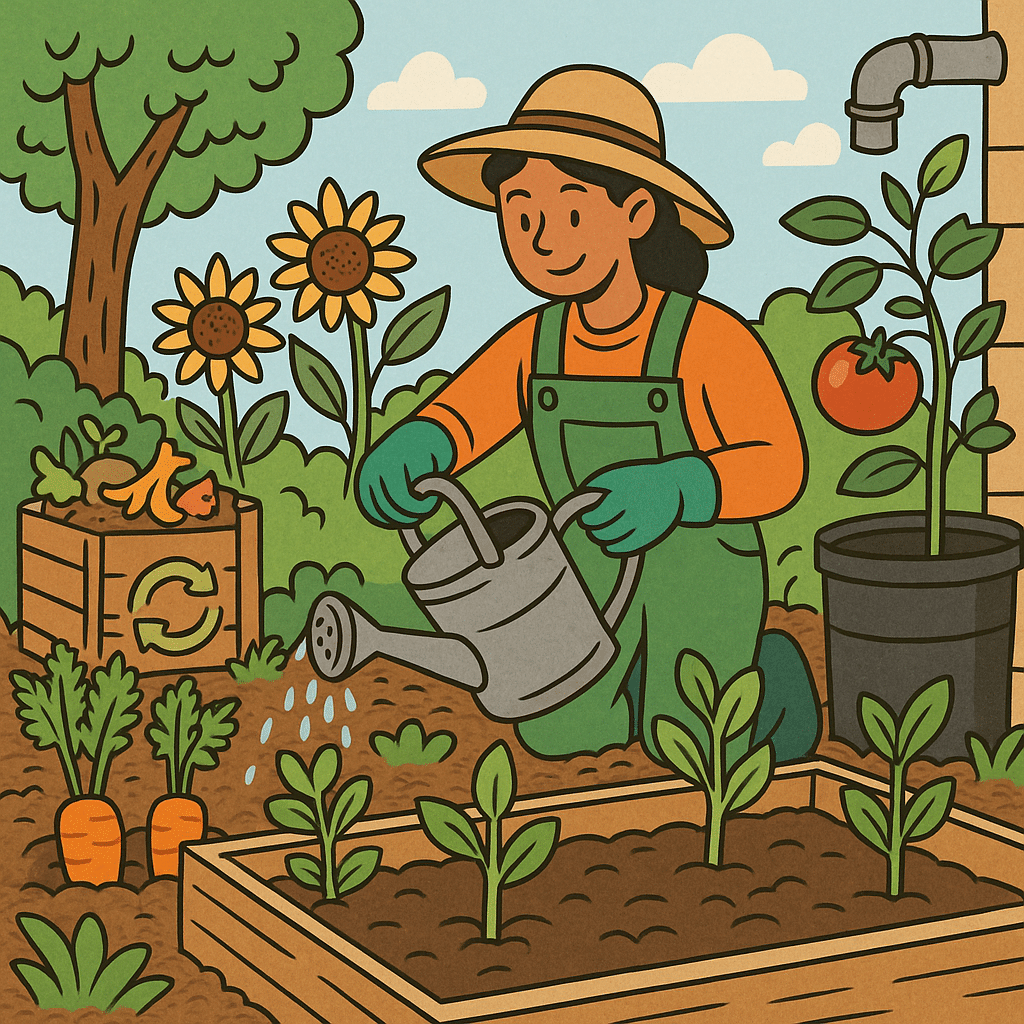
Why Regenerative Gardening Is Gaining Momentum
In 2025, gardeners are shifting from “sustainable” to “regenerative” — aiming not just to reduce harm, but to restore and enrich soil, ecosystems, and community health. Traditional sustainable practices like composting and mulching are now complemented with methods that rebuild soil microbiomes, sequester carbon, and increase resilience to climate change.
According to organic gardening forecasts, techniques such as no-till gardening, cover cropping, and companion planting are among the top trends for 2025. Savvy gardeners increasingly adopt a no-dig or low-disturbance approach to preserve soil structure and life.
Moreover, regenerative gardening supports climate resilience: healthier soil retains moisture better during droughts and reduces erosion during heavy rains. When garden ecosystems function well, they also suppress pests and diseases naturally.
Let’s dive into how you can adopt regenerative gardening at home, even in small or urban spaces.
Core Principles of Regenerative Gardening
Before jumping into the how, it’s helpful to anchor your approach in the core principles that differentiate regenerative gardening from standard organic methods.
- Minimize soil disturbance (no-till or low-till)
- Maintain permanent ground cover or living roots
- Maximize plant and microbial diversity
- Build soil organic matter and fertility naturally
- Design systems that mimic natural ecosystems
These principles are not rigid steps but interlocking ideas; you can begin with one or two and gradually extend to all.
Key Regenerative Techniques You Can Use Now
1. No-Till and Sheet Mulching (Lasagna Gardening)
Instead of turning soil, regenerative gardeners use “sheet mulching” — layering materials on top to suppress weeds, feed soil fauna, and eventually break down into rich soil.
How to do it:
- Mow or cut existing vegetation low (do not dig it out).
- Lay down cardboard or several layers of newspaper as a weed barrier (avoid glossy papers).
- Cover with 5–15 cm of compost, leaf mold, straw, wood chips, grass clippings, and similar organic matter in alternating layers.
- Water well to initiate decomposition.
- Plant through the mulch by cutting “X” shapes in the layers.
This technique suppresses weeds, locks in moisture, and gradually builds soil structure without deep digging.
2. Cover Cropping & Green Manures
Cover crops are planted not for harvest but to cover the soil, fix nitrogen, and feed soil biology when dug back in or terminated on the surface.
- Use legumes (e.g., clover, vetch) to fix nitrogen
- Use grasses (e.g., rye) to build biomass
- Mix species for complementary traits
In small gardens, sow between growing seasons or intersperse with main crops. When the cover crop is mature, cut it down and leave it on the surface (mulch) or lightly incorporate it.
3. Companion Planting and Polycultures
Instead of single rows, regenerative gardening often uses mixed plantings — species that support each other (pest resistance, nutrient cycling, shading). For example:
- Legumes next to heavier feeders
- Herbs that repel pests near vegetables
- Deep-rooted and shallow-rooted plants in combination
This diversity reduces disease cycles and makes the garden more resilient.
4. Perennials & Foodscaping
Regenerative gardens favor perennial plants (fruit bushes, berry vines, herbs) because they require less disturbance and provide steady habitat. Edible landscaping (foodscaping) is a related trend: integrating food plants into ornamental designs to maximize both beauty and yield.
By reducing the area of annual beds and increasing perennial zones, you reduce labor and preserve soil health.
5. Mulching & Organic Matter Management
Mulch is central — straw, wood chips, leaf mold, compost, or local organic waste. It shields soil, moderates temperature, feeds microbes, and suppresses weeds.
Regular addition of compost and organic matter gradually increases soil carbon and structure.
6. Minimal Synthetic Inputs & Pest Management by Design
Regenerative gardening rejects heavy reliance on synthetic fertilizers, herbicides, or pesticides. Instead, issues are handled through ecosystem balance:
- Promote predators (ladybugs, birds)
- Use trap crops or insectary plants
- Rotate or interplant to interrupt pest cycles
The idea: you don’t fight pests with chemicals; you design your garden so pests struggle to persist.
7. Water-Smart Design & Rainwater Harvesting
Healthy soils with high organic matter retain water more effectively, reducing irrigation needs. Combine that with rainwater harvesting (barrels, swales) and drip irrigation, and you build a system that is both regenerative and resilient.
8. Electroculture (Emerging Trend)
One of the more experimental trends gaining buzz is electroculture — using passive electrical or electromagnetic elements (such as copper wires or antennas) in the garden to enhance plant growth, stimulate microbes, and deter pests.
While the science is still emerging, DIY experimenters report some benefits, and it suits regenerative gardens that favor low-input, nonchemical approaches. Use as a supplement, not a substitute, for solid soil-building practices.
Step-by-Step Guide to Transitioning to Regenerative Gardening
Here’s a rough plan you can follow over one growing cycle:
| Phase | What to Do | Tips |
|---|---|---|
| Planning & Observation | Map sun, shade, slope; analyze soil; decide zones | Use garden journals or photos |
| Initial Preparation | Use sheet mulching over old beds; sow cover crops in vacant areas | Do this in off-season or before rains |
| Planting Perennials / Core Crops | Plant foodscaping perennials, fruit bushes, herbs, shade trees | Start small and scale gradually |
| Interplant & Companion Plant | Fill in gaps with legumes, herbs, pollinator plants | Mix in “support plants” as you go |
| Continuous Mulch & Compost Additions | Add organic layer regularly; top up mulch zones | Use local waste materials (leaves, kitchen scraps) |
| Cover Crop Cycles | At off peaks, sow cover crops, terminate them into mulch | Experiment with different species each cycle |
| Monitoring & Adjustment | Watch for pests, soil health, compaction, drainage | Adjust diversity, planting patterns, or water systems |
| Electroculture Experiments (optional) | Install passive copper wire circles or antennas | Monitor nearby plants vs control group |
Benefits & Challenges of Regenerative Gardening
Benefits
- Improved soil health and fertility over time
- Better water retention and reduced irrigation
- Greater resilience to climate extremes
- Carbon sequestration in soil
- Lower chemical inputs and pesticide use
- Enhanced biodiversity above and below ground
- Aesthetic and productive landscape (especially when using foodscaping)
Challenges & Considerations
- Initial labor and planning: laying mulches, preparing zones
- Time to see results: soil improvement is cumulative
- Learning curve: matching species, adjusting microclimates
- Pest issues during transition: disturbed balance can bring pests
- Electroculture remains experimental, so don’t rely on it alone
Case Study: Regenerative Gardening in Urban Backyards
Even small or urban gardens can benefit from regenerative principles.
- Convert a patch of turf to a sheet-mulched garden bed.
- Plant native perennials and fruiting shrubs in a border (foodscaping).
- Use vertical structures or containers for cover crops or legumes.
- Add drip irrigation tied to rainwater barrels.
- Introduce companion planting and insectary plants in tight spaces.
- Optional: install a copper coil or wire in a container to test electroculture effect.
Over time, microhabitats form (soil zones, insect corridors, root networks). What began as a bare patch becomes a living system with far less effort.
Tips & Tricks from Practitioners
- Always leave living roots in the soil — avoid bare fallow patches.
- Use local organic materials (leaves, grass clippings, straw) for mulch to reduce import cost.
- Rotate cover crop species to diversify benefit.
- Harvest and compost weeds before seed set — don’t allow weeds to reseed.
- Observe patiently — regenerative systems respond over seasons.
- Use soil tests and biology assays to measure changes (pH, organic matter, earthworm counts).
- When trying electroculture, keep one “control” plot to compare.
Future Directions & Innovations in Regenerative Gardening
- Smart monitoring systems will integrate sensors, IoT, and AI to track soil moisture, microbial activity, and plant stress, enabling adaptive regenerative management.
- Robot assistants (precision agriculture robots) may help hobby gardeners manage dense, diverse plantings remotely or assist in tasks.
- Hybrid systems combining regenerative techniques with controlled environment agriculture (e.g., greenhouse beds, micro-climates) could expand possibilities in challenging climates.
- Geared community gardens adopting regenerative methods can scale restoration beyond individual lots.
How to Begin Regenerative Gardening in Your Yard
Focus on one bed, choose a sheet mulching method, introduce one or two perennial species, and observe changes season by season. As you gain confidence, expand your system.
References
- Royal Horticultural Society (RHS). (2022) Water-wise Gardening: Sustainable Techniques for the Future. Available at: https://www.rhs.org.uk/advice/profile?pid=171 (Accessed: 25 September 2025).
- United States Environmental Protection Agency (EPA). (2023) Sustainable Management of Landscapes and Lawns. Available at: https://www.epa.gov (Accessed: 25 September 2025).
- Food and Agriculture Organization of the United Nations (FAO). (2021) Agroecology and Sustainable Gardening Practices. Available at: https://www.fao.org/agroecology (Accessed: 25 September 2025).

 Smart Home Devices That Enhance Everyday Life