Wellness Routines That Support Mental Clarity
Emily Ward September 29, 2025
Mental clarity has become a top priority in 2025 as people search for practical routines to manage stress, improve focus, and maintain resilience in an age of constant digital noise. New wellness routines that support mental clarity combine ancient practices with modern science—making them both accessible and effective.
Why Mental Clarity Matters Today
The past few years have shown how quickly stress, uncertainty, and digital overload can cloud decision-making. According to the American Psychological Association, more than 76% of adults report stress-related symptoms like difficulty concentrating, fatigue, and irritability (APA 2023). This makes mental clarity not just a wellness trend but a survival skill in a fast-paced world.
Mental clarity supports:
- Better productivity – clear thinking improves decision-making.
- Resilience – managing stress reduces burnout.
- Emotional balance – sharper focus lowers anxiety levels.
Trend 1: Biohacking for Mental Clarity
One of the fastest-growing movements in wellness is biohacking—using small, science-backed changes to improve focus and energy.
Popular practices include:
- Nootropic supplements – natural compounds like L-theanine and Lion’s Mane mushroom are linked to improved concentration (Solomon et al. 2022).
- Cold exposure – cold plunges and cryotherapy are gaining momentum for boosting alertness and lowering stress hormones.
- Red light therapy – studied for supporting mitochondrial function and reducing mental fatigue.
While biohacking was once niche, the rise of wellness startups has made it more mainstream, with at-home devices and subscription-based supplement kits now widely available.
Trend 2: Digital Detox as a Daily Ritual
The average adult spends more than 7 hours per day in front of screens (DataReportal 2024). Constant exposure overwhelms the brain and impairs focus.
Wellness experts now recommend digital detox routines such as:
- Screen-free mornings – delaying phone use by 60 minutes after waking.
- Blue light blockers – wearing glasses to reduce evening screen fatigue.
- Mindful unfollowing – curating social feeds to eliminate unnecessary noise.
By creating boundaries with technology, people report sharper focus and reduced “mental clutter.”
Trend 3: Breathwork and Nervous System Training
Breathwork is moving beyond yoga classes into mainstream wellness. Practices like box breathing and cyclical hyperventilation are used by CEOs and athletes to improve focus under pressure.
The science is compelling: slow breathing activates the parasympathetic nervous system, lowering cortisol and increasing clarity (Russo et al. 2017). Apps now guide short 5-minute breathwork sessions that can fit into work breaks.
Trend 4: The Rise of “Mental Clarity Diets”
Nutrition plays a huge role in brain health, and 2025 has seen the rise of diets designed specifically for focus and cognition.
Key nutrition shifts include:
- Mediterranean diet – linked to improved memory and reduced cognitive decline (Mancini et al. 2022).
- Intermittent fasting – supports ketone production, which fuels the brain efficiently.
- Low-inflammatory foods – turmeric, fatty fish, and leafy greens reduce brain fog.
Many startups now offer meal kits for brain health, marketing directly to professionals seeking sharper focus.
Trend 5: Micro-Meditations Over Long Retreats
While traditional meditation requires long practice, micro-meditations—1-5 minute sessions—are trending. Platforms like Calm and Headspace now include “focus sprints” designed for workers on tight schedules.
Micro-meditations have been shown to improve executive functioning and lower stress in as little as one week of practice (Tang et al. 2015).
Trend 6: Movement as Mental Clarity Medicine
Exercise has long been linked to mental clarity, but new routines emphasize short bursts of movement rather than long gym sessions.
Current trends:
- Walking meetings – replacing conference rooms with outdoor walks.
- Functional movement flows – mixing yoga, mobility, and strength to keep energy high.
- Dance and rhythm-based workouts – shown to reduce anxiety and boost mood.
These routines highlight that mental clarity is physical as much as it is mental.
Trend 7: Sleep Rituals and Cognitive Hygiene
Sleep has become the ultimate brain performance hack. With over 30% of adults experiencing insomnia (CDC 2023), people are adopting sleep hygiene routines to improve focus the next day.
Common strategies include:
- Smart lighting systems that mimic sunset.
- No-caffeine-after-2PM rules.
- Sleep trackers that provide biofeedback for better recovery.
Studies show that adults who sleep fewer than 6 hours per night are 33% more likely to struggle with mental fog (Watson et al. 2022).
Practical Practical Guide: Building Your Mental Clarity Routine
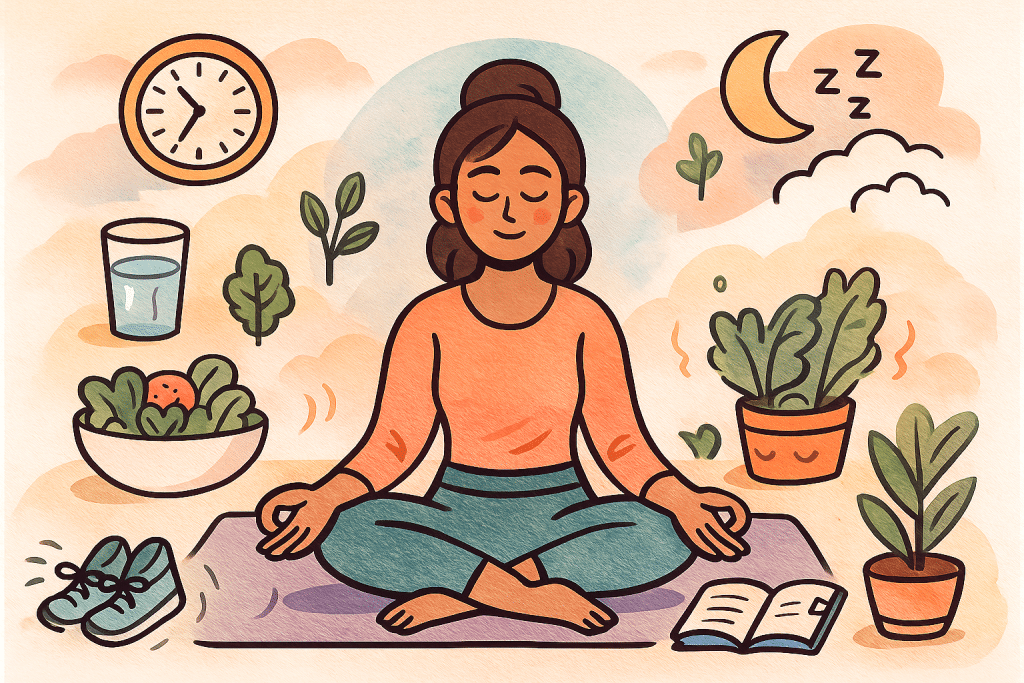
Here’s a step-by-step plan you can follow each day:
- Morning reset. Start the day without screens. Give yourself at least 20 minutes before checking messages so your brain isn’t flooded with stress before it even wakes up. Add 5 minutes of simple breathwork to set a calm baseline.
- Fuel for focus. Eat a clarity breakfast—protein and healthy fats like eggs, avocado, or oatmeal with nuts. Pair it with green tea for steady energy instead of a sugar rush.
- Move often. Every 90 minutes, take a short movement break. Stretch at your desk, walk around, or do a few squats. Small bursts of activity keep blood flowing and prevent mental fatigue.
- Smart boosts. If it fits your health needs, try adaptogens or nootropics such as ashwagandha or lion’s mane. These can support resilience and focus, but only with professional guidance.
- Evening wind-down. Close the day with a micro-meditation or gratitude check-in, then stick to a simple bedtime ritual—dim lights, avoid screens, maybe journal for a few minutes. Consistency helps the brain shift into rest mode.
Linked together, these steps form a full cycle that supports focus, calm, and mental clarity from morning to night.
Looking Ahead: The Future of Mental Clarity in Wellness
The wellness industry is moving towards personalized clarity programs—apps and wearables that suggest routines based on biometrics. Artificial intelligence is already being integrated into wellness platforms to recommend specific sleep, diet, or breathwork adjustments in real-time.
Mental clarity is no longer just about avoiding stress. In 2025, it’s about engineering daily routines that support long-term brain health and productivity.
References
- Harvard Health Publishing. (2021) Mindfulness meditation may ease anxiety, mental stress. Harvard Medical School. Available at: https://www.health.harvard.edu (Accessed: 29 September 2025).
- Mayo Clinic. (2022) Exercise: 7 benefits of regular physical activity. Mayo Clinic. Available at: https://www.mayoclinic.org (Accessed: 29 September 2025).
- National Institutes of Health. (2020) Sleep and mental health. NIH. Available at: https://www.nimh.nih.gov (Accessed: 29 September 2025).

 Gardening Ideas That Boost Seasonal Growth