Wellness Routines That Encourage Mindful Living
Emily Ward September 26, 2025
In today’s fast-paced digital age, wellness routines that encourage mindful living have become essential for reducing stress, improving mental clarity, and supporting overall health. From mindful mornings to scalp-focused rituals, small daily practices can reshape how we experience life in 2025.
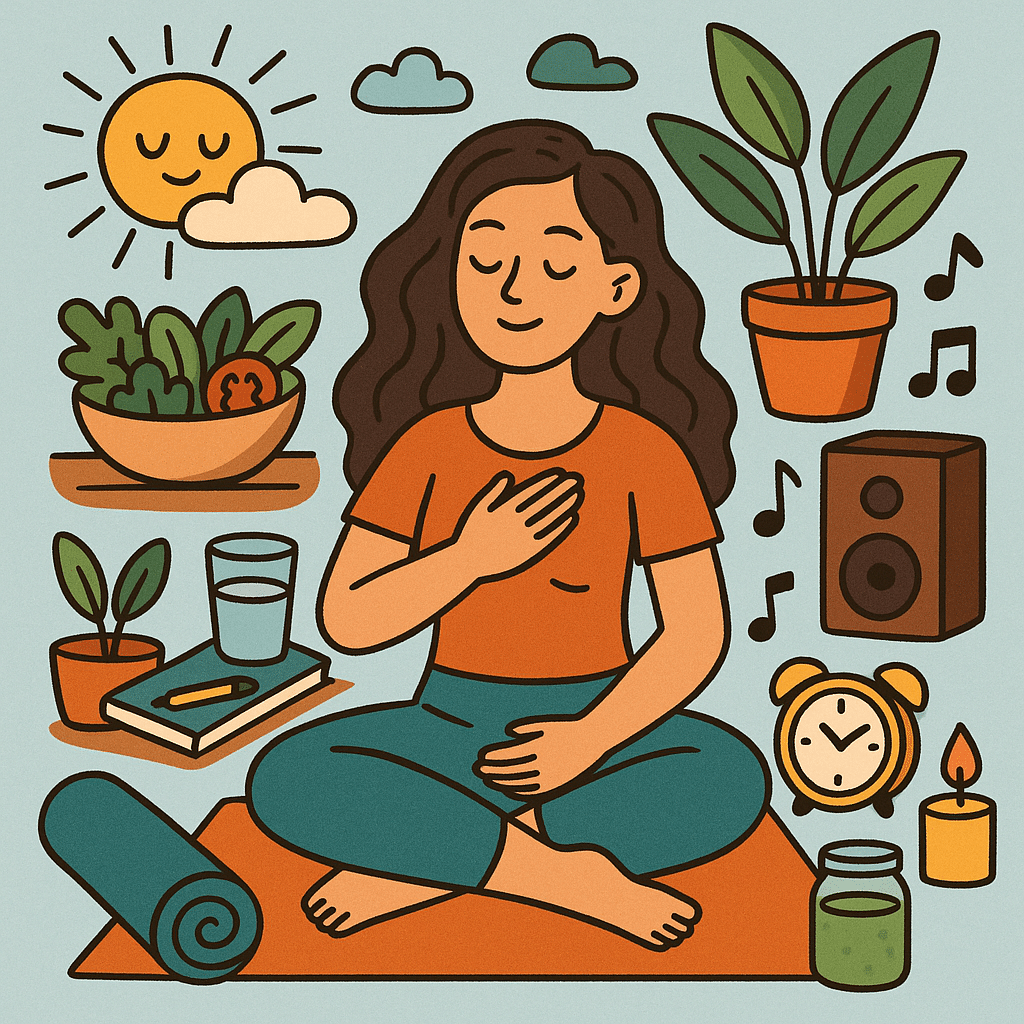
Why Mindful Living Is More Relevant Than Ever
Mindful living is not just meditation—it’s a way of approaching life with presence and intentionality. As the World Health Organization highlights, stress is now one of the leading health challenges globally, contributing to anxiety, burnout, and chronic illness (WHO 2023). This has led to a massive surge in interest for wellness practices that make mindfulness practical and sustainable.
A recent Harvard Gazette report also revealed that mindfulness-based interventions have measurable effects on reducing stress and improving emotional regulation, making these routines more than just lifestyle trends (Harvard Gazette 2022).
1. Mindful Morning Rituals That Set the Tone
How you start your day often dictates how the rest unfolds. Simple morning wellness routines can anchor your attention before chaos takes over.
- Breathwork before screens: Spend 5 minutes focusing on deep inhales and exhales before reaching for your phone.
- Hydration ritual: Drink a glass of warm lemon water, focusing on the sensation of each sip.
- Sunlight exposure: Stand outside for a few minutes; morning sunlight regulates circadian rhythms, supporting both mood and sleep.
According to the National Institute of Health, early light exposure has been directly linked to improved sleep quality and mental clarity (NIH 2021).
2. Movement as a Mindfulness Practice
Exercise is often seen purely as physical, but mindful movement emphasizes awareness during activity.
Popular mindful movement options:
- Yoga flows that pair breathing with body awareness.
- Tai Chi for balance and stress relief.
- Walking meditation: a simple walk without headphones, focusing only on steps and surroundings.
Fitness researchers have found that mindful exercise not only enhances physical outcomes but also reduces symptoms of anxiety and depression compared to traditional workouts (Sharma et al. 2020).
3. Digital Detox Rituals for Mental Clarity
Constant notifications fracture attention and fuel anxiety. A growing wellness trend in 2025 is structured digital detoxing.
Steps for an effective digital detox:
- Create “no-phone zones”—like the bedroom or dinner table.
- Use app timers to limit social media scrolling.
- Replace evening screen time with analog rituals like journaling or stretching.
A 2022 Journal of Behavioral Addictions study found that reduced screen exposure improved sleep, lowered anxiety, and boosted productivity (Elhai et al. 2022).
4. Nourishment with Mindfulness
Food is more than fuel—it’s an opportunity to practice mindful presence.
Practical mindful eating tips:
- Chew slowly and notice textures.
- Eat without distractions like TV or scrolling.
- Pause halfway through meals to check in with hunger levels.
Research from Harvard Health shows that mindful eating helps reduce overeating, manage stress-related cravings, and even improve digestion (Harvard Health 2023).
5. Scalp Care as a Mindful Ritual
Interestingly, scalp health has entered the wellness conversation. More people now see scalp care as self-care, using massage, essential oils, and mindful touch as part of relaxation routines.
- Scalp massage improves circulation and relieves tension.
- Herbal oils like rosemary and peppermint are being used not only for hair growth but also as aromatherapy.
- Mindful application—focusing on sensation—turns a beauty step into a calming ritual.
Dermatologists confirm that scalp massage can reduce stress hormones while improving hair and skin barrier function (Kwack et al. 2020).
6. Journaling for Self-Awareness
A daily reflection practice fosters clarity and gratitude.
Two approaches:
- Gratitude journaling: List three things you’re thankful for each morning.
- Emotional check-ins: Write how you feel without judgment, then revisit later.
A Journal of Positive Psychology study found that gratitude journaling led to sustained improvements in well-being and life satisfaction (Emmons & Stern 2013).
7. Sleep Rituals for Restorative Living
Mindful living requires proper rest, yet insomnia rates keep climbing due to stress and late-night screen time. A few small rituals can make bedtime feel intentional rather than rushed.
- Stick to a schedule: Going to bed and waking up at the same time—even on weekends—keeps your body clock steady.
- Wind-down drinks: Herbal teas like chamomile or lavender naturally calm the nervous system.
- Digital cut-off: Turning off screens an hour before bed helps your brain release melatonin.
- Mindful pause: Guided meditation, breathing, or gentle stretching eases the transition to sleep.
The American Academy of Sleep Medicine (2021) notes that adding mindfulness to nightly routines can cut insomnia symptoms and improve sleep quality. Even small steps—like dimming the lights and sipping tea before journaling—can signal to your body that it’s time to recharge.
8. Community and Connection as Wellness Practices
Mindful living is not only personal—it thrives in community. Group meditation sessions, wellness retreats, or even digital mindfulness communities help sustain motivation.
Research shows that people engaged in community-based mindfulness programs report higher consistency and greater stress reduction than those practicing alone (Creswell et al. 2019).
9. Small Daily Habits That Build Big Change
Wellness routines that encourage mindful living aren’t about doing everything perfectly. They’re about simple actions that stack up over time.
Try these small shifts:
- Take 3 mindful breaths before a meeting to reset your focus.
- Trade one scroll break for a quick stretch—your body will thank you.
- Massage your scalp with intention while shampooing, paying attention to the sensation.
- Write one line of gratitude before bed to end the day on a positive note.
- Drink your morning coffee or tea without your phone, just noticing the taste and warmth.
These habits take only a few minutes but build momentum toward a calmer, more grounded day.
Conclusion: Living Mindfully in 2025
Mindful living isn’t about escaping life—it’s about being fully present in it. By integrating wellness routines such as mindful mornings, movement, scalp care, and digital detoxing, we create a sustainable balance between productivity and peace.
The takeaway? Wellness routines that encourage mindful living are not luxuries; they are necessities for thriving in a world that never slows down.
References
- Kabat-Zinn, J. (2013) Full Catastrophe Living: Using the Wisdom of Your Body and Mind to Face Stress, Pain, and Illness. New York: Bantam Dell. Available at: https://www.amazon.com (Accessed: 26 September 2025).
- Harvard Health Publishing. (2021) ‘Mindfulness meditation may ease anxiety, mental stress’, Harvard Health Blog. Available at: https://www.health.harvard.edu/ (Accessed: 26 September 2025).
- American Psychological Association. (2019) ‘Mindfulness meditation: A research-proven way to reduce stress’, APA. Available at: https://www.apa.org (Accessed: 26 September 2025).

 Gardening Techniques That Improve Plant Health