Smart Home Devices That Enhance Daily Comfort
Thomas Blake October 2, 2025
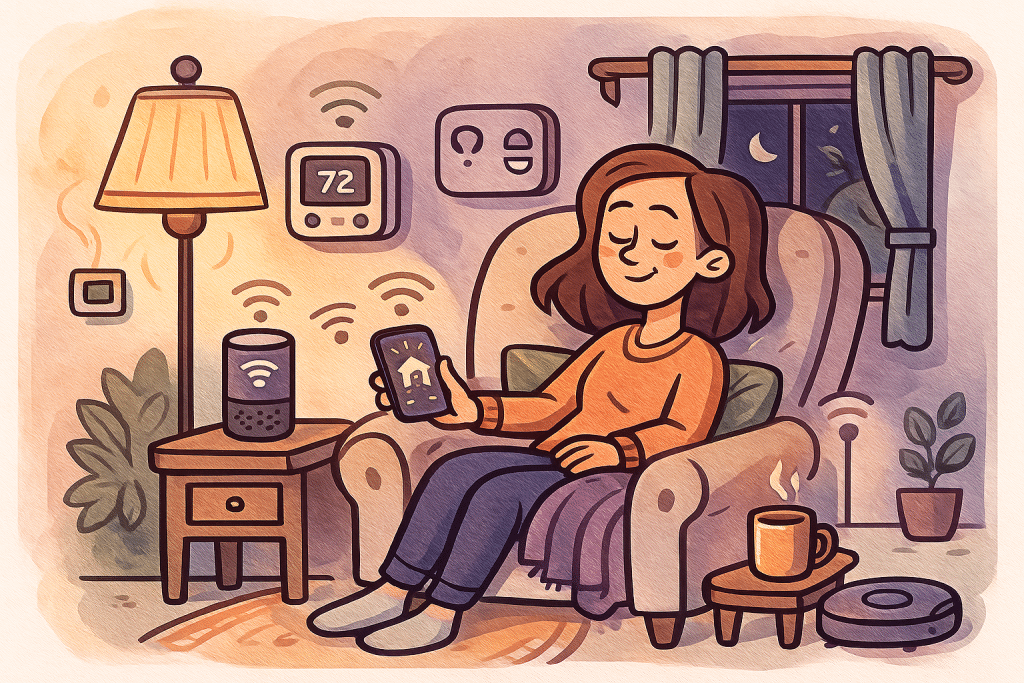
Smart home devices that enhance daily comfort are no longer niche gadgets — in 2025 they’re becoming essential tools for improving your living environment. From AI‑driven thermostats to ambient sensors and integrated air quality systems, these devices adjust your space proactively so you feel better, automatically, all day.
Why Comfort Is the Next Frontier in Smart Homes
Smart home tech has long promised convenience and automation. But the next wave is less about flashy features and more about sensing, adapting, and smoothing your day-to-day life — making your home a more responsive, calmer environment.
In 2025, the smart home market is evolving toward deeper personalization, wellness integration, and seamless interoperability.
According to forecasts, smart home platforms globally will grow strongly, with devices more tightly integrated to deliver comfort, energy savings, health monitoring, and automation in unison.
One key to that shift is using smart home devices that enhance daily comfort — devices not just for automation, but for improving how you feel in your space.
Emerging Trend: Ambient Sensing + Predictive Comfort
One of the hottest trends is the rise of ambient intelligence — environments where devices detect your presence, habits, and preferences, then adjust settings proactively (light, temperature, air) without you issuing commands.
Large language models (LLMs) and AI are being used to blend user preference profiles and sensor inputs, enabling systems that adapt over time. Smart spaces in scholarly work are framed exactly for “enhanced indoor environments” via AI-driven sensing, automation, and contextual responsiveness.
In practice, this means your home might detect that you’ve sat in a reading chair and dim the lights, adjust temperature, or bring in fresh air — all seamlessly.
Key Smart Devices That Enhance Daily Comfort
Here are core categories of devices (and trends) transforming everyday comfort. Each one contributes a layer of responsiveness, health, or ease.
1. AI‑Driven Thermostats & HVAC Integration
Thermostats were among the earliest smart home staples, but now they’re becoming much more intelligent.
- Studies show that smart thermostats adapt to your behavior, optimize energy usage, and can learn preferences over time.
- Some new models include built‑in air quality sensors (VOC, CO₂, particulate matter), giving you dual control of comfort and indoor health.
- Mixing zoning, variable speed motors, and occupancy detection means different rooms can maintain distinct microclimates.
Comfort tip: Use a thermostat that supports multi‑zone control and links with your air quality devices. Let it learn your schedule, then refine it.
2. Air Quality and Climate Monitoring Systems
Comfort isn’t just temperature. Many smart homes now incorporate indoor air quality (IAQ) systems to manage humidity, pollutants, and airflow.
- Smart IAQ monitors can detect VOCs, CO₂, PM₂.₅, humidity, and alert or automate ventilation.
- Purifiers, fans, HVAC vents, and windows can be coordinated for balanced comfort and health.
- Some systems adjust lighting and HVAC together based on perceived “air freshness” (e.g. if air feels stale, boosting circulation or adjusting temperature).
Comfort tip: Don’t just measure — act. If your AQ monitor detects elevated pollutants, have the system trigger circulation or filtration automatically.
3. Smart Shades, Lighting & Thermal Control
Lighting and solar gains strongly affect how warm or cool a room feels. Smart shading and lighting systems are now integrated to contribute to comfort.
- Motorized blinds or shades respond to ambient light, time of day, or sun direction to reduce glare, heat, or brightness automatically.
- Smart lighting systems tune color temperature and brightness through the day to align with circadian rhythms, helping you feel more natural in your environment.
- Combining shading, lighting, and HVAC systems can reduce strain on your thermal controls and create more consistent comfort throughout the day.
Comfort tip: Use scenes or triggers (e.g. afternoon sun enters window) to shade or dim lights automatically — not just manually.
4. Ambient Sensors & Motion / Presence Detection
Sensors embedded in walls, furniture, or appliances can help your home respond more fluidly.
- Some modern appliances (TVs, fridges, speakers) are being used as motion/sound sensors to reduce the need for discrete devices.
- Ambient presence detection allows the system to sense where you are and redirect comfort settings (lighting, airflow) to that zone.
- Over time, the system may learn your habits (e.g. you like cooler air when you settle down to read) and adjust preemptively.
Comfort tip: Ensure your system supports dynamic sensor inputs and can act on them (lights, HVAC vents, etc.).
5. Smart Furniture & Wearables with Environmental Feedback
The frontier of comfort includes furniture (chairs, beds) and wearables that communicate with the environment.
- Emerging smart home prototypes use biofeedback (heart rate, skin temp) to adjust environment — e.g. cooler air when your body temp rises.
- Smart mattresses, chairs, even desks may adjust firmness, temperature, or support based on your physiology or time of day.
- Wearables already track stress, posture, or temperature — next is for them to talk to your smart home environment to fine‑tune comfort.
Comfort tip: If you use health or fitness wearables, choose ones that can integrate with your home system (via APIs, IoT) for feedback loops.
How to Build a Comfort‑First Smart Home (Step by Step)
Here’s a practical guide to assembling components with comfort as the priority.
1: Assess Your Comfort Pains
- What bothers you most? Temperature swings? Stale air? Glare? Sudden drafts?
- Use an IAQ or environmental sensor as a diagnostic tool over a week.
- Note times/rooms where comfort dips.
2: Start with a Smart Thermostat + IAQ Monitor
- Choose a thermostat that supports multi‑zone control, learns behavior, and integrates with sensors.
- Pair with an IAQ monitor that detects VOCs, CO₂, humidity, and links to ventilation or purifier.
- Let the system run in “learning” mode before tuning rules.
3: Add Shading & Lighting Control
- Motorized shades for windows with strong sun exposure.
- Smart lights with tunable color temperature and dimming.
- Link shading + lighting + HVAC so one change can cascade adjustments.
4: Integrate Ambient Sensors & Automations
- Use motion sensors or repurpose existing device sensors (TV, appliances) if they support presence detection.
- Create automations: e.g. when you enter the room, lighting and temp adjust to your preferred “active” mode.
- Over time, refine automations based on usage feedback.
5: Explore Biofeedback & Furniture Integration
- Choose chairs, mattresses, or desktops that support environmental feedback (if available in your market).
- Use wearables that connect to your comfort system to provide real-time user signals.
- Let the system adjust in small increments, not extremes, to preserve comfort and avoid surprises.
6: Monitor, Tweak & Let AI Learn
- Track logs or app insights to see times when comfort dips.
- Adjust thresholds gradually (e.g. target temperature, sensitivity).
- Let learning algorithms help refine settings over weeks.
Considerations, Trade‑Offs & Pitfalls
- Privacy & data: More sensors and ambient data means more personal information. Always check data policies and keep sensitive data local if possible.
- Over‑automation fatigue: Too many triggers may feel overbearing. Leave override options.
- Interoperability issues: Use devices supporting common standards (Matter, Thread) to ensure your system is flexible.
- Hardware capabilities: Older homes may need retrofitting (zoning, wiring) for full integration.
- Edge cases & failovers: Ensure fallback—if sensor or system fails, manual control should still function.
Why This Trend Matters Now
- With more people spending time in their homes (remote work, hybrid lifestyles), daily comfort is a bigger priority than ever.
- Energy and health concerns push smart systems toward holistic solutions (not just gadgets).
- As AI, sensor tech, and IoT maturity improve, these comfort systems shift from experimental to foundational.
- Academic and industry research increasingly frames “smart spaces” as environments optimized for occupant well‑being, not just automation.
Indeed, smart home systems that adapt to your presence, your body, your routines are beginning to define the next generation of home tech.
Conclusion
Smart home devices that enhance daily comfort are at the forefront of home tech in 2025. They go beyond remote control and scheduling — they sense, predict, and respond. From AI thermostats with air quality sensors to ambient presence detection, biofeedback loops, and integrated shading + lighting systems, these devices are making homes more humane and comfortable.
The best approach is gradual: identify your biggest discomfort areas, layer in key devices, link them effectively, and give the system time to learn. Over months, your home should become a more silent, responsive partner in your everyday well‑being.
Would you like me to also suggest specific brands/devices currently leading this comfort trend? Or a shorter take‑home version you could publish immediately?
References
- Li, H. et al. (2025) “A critical review of use cases and insights from a large data set: smart thermostats in home settings,” ScienceDirect. Available at: https://www.sciencedirect.com/science/article/ (Accessed: 2 October 2025).
- Park, Y. et al. (2025) “Smart Home Advancements for Health Care and Beyond,” J Med Internet Res, 2025. Available at: https://www.jmir.org/2025/ (Accessed: 2 October 2025).
- Varol, A., Motlagh, N. H., Leino, M., Tarkoma, S., & Virkki, J. (2024) “Creation of AI‑driven Smart Spaces for Enhanced Indoor Environments — A Survey,” arXiv preprint. Available at: https://arxiv.org/abs/ (Accessed: 2 October 2025).

 Nutrition Habits That Boost Energy and Focus