Steps to Organize Your Home Efficiently
Thomas Blake October 2, 2025
Every home has the potential to be a serene, functional space — if you follow smart, intentional steps. In 2025, steps to organize your home efficiently lean into sustainability, technology, and personal rhythms. From decluttering frameworks to smart storage and habit formation, here’s how to transform your space without overwhelm.
Why Organizing Smartly Matters in 2025
Organizing isn’t just about aesthetics — it’s about mental clarity, efficiency, and energy. Studies show that cluttered spaces increase stress levels, contribute to decision fatigue, and even reduce productivity at work and home. Experts now treat home organization as an essential form of self-care, not just a household task.
According to Better Homes & Gardens, homeowners in 2025 are embracing organization as a way to streamline daily routines and reduce stress in an increasingly fast-paced world. Digital clutter is also a rising concern, with more people realizing that a messy digital life often mirrors physical disarray.
At the same time, tech is entering the home organization space: apps, AI, and digital inventory systems are helping people manage their spaces with efficiency. The growing interest in sustainability means that organizing is also shifting toward eco-friendly solutions, like repurposing storage, reducing overconsumption, and using secondhand materials to build storage systems. If you want your home to feel calm, practical, and aligned with modern life, following smart steps to organize your home efficiently can make all the difference.
Step 1: Clarify Your Vision & Priorities
Before lifting a box or buying a storage bin, decide how you want your home to feel and function. Ask yourself: What spaces stress me most? How do I move through my home on a typical day, from morning routines to evening downtime? What items truly matter to me — whether for sentimental value, practical function, or seasonal use? Setting these priorities will help you avoid “Pinterest traps” where your home looks nice but doesn’t actually suit your lifestyle.
For example, if you cook daily, your kitchen should prioritize counter space and easy access to frequently used tools, not just uniform storage bins. If you work from home, an uncluttered office space may need to take priority over a styled living room. Creating a vision ensures that every organizing decision you make moves toward a clear end goal, rather than being piecemeal or reactive.
Step 2: Declutter Using Intentional Frameworks
Decluttering is the backbone of organization, but the way people approach it is changing. In 2025, rigid minimalism is giving way to flexible systems that balance functionality with personal meaning. According to The Spruce, people are moving away from extreme purges and leaning into intuitive approaches that reflect their individual lives. This means it’s no longer about getting rid of everything you don’t use daily, but instead about creating harmony between what you own and how you live.
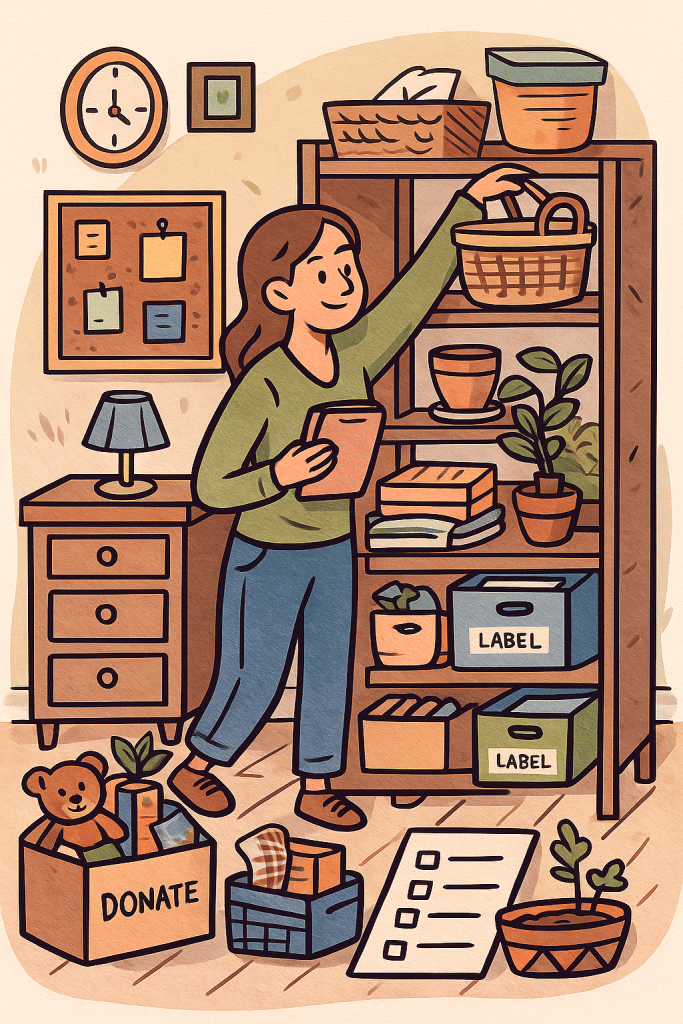
Two popular frameworks stand out: the KonMari method, which encourages keeping only items that spark joy or serve a clear purpose, and the practical purge method, which relies on asking whether you’ve used the item in the last year and whether you could easily replace it if needed. Another growing practice is “sentimental sorting,” where people create designated memory boxes to house keepsakes without letting them dominate living areas. By decluttering gradually — even removing just five items a day — you can avoid overwhelm and build sustainable habits.
Step 3: Zone Your Space with Purpose
One of the most effective organizational techniques is creating zones. Zoning is about grouping items by function and dedicating spaces to particular tasks, which reduces the friction of constantly searching for things. For instance, an entry zone could include hooks for coats, a tray for keys, and a basket for shoes.
A study or work zone should keep desks clear but have drawers or bins for stationery, electronics, and important papers. Evening relaxation zones, like your living room, should be designed for calm, with easy access to books, blankets, or hobby materials while minimizing visual clutter. Closed storage options, like cabinets or bins, help zones stay tidy, while labeling ensures consistency.
Experts note that while open shelving has been trendy for years, it often becomes clutter-prone and is increasingly being replaced by hybrid systems with both open and closed storage. In other words, zoning doesn’t mean displaying everything — it means making every zone intuitive and functional.
Step 4: Apply Smart Storage that Serves & Disappears
Storage isn’t just about hiding things; it should enhance both function and aesthetics. One of the top home organization trends for 2025 is storage that doubles as décor. According to Living Etc, homeowners want furniture and storage systems that look stylish but also minimize clutter. This includes multi-purpose furniture like ottomans with hidden compartments, benches with lift-top storage, and coffee tables that double as workstations.
Built-in shelving with hidden cabinets is increasingly popular, offering the clean look of custom design while keeping clutter out of sight. In kitchens, drawer inserts and appliance garages are in high demand, helping homeowners keep counters clear while still making tools easily accessible. Eagle Woodworking’s 2025 kitchen survey revealed that minimizing countertop clutter is now a top priority for homeowners.
In bedrooms, under-bed drawers or rolling bins are a practical way to maximize storage while keeping essentials close. Smart storage isn’t about over-buying containers — it’s about selecting the right solutions that blend with your space and actually reduce clutter rather than creating more of it.
Step 5: Use Technology & Digital Tools Wisely
Technology is increasingly integrated into home organizing, but it’s important to use it strategically. Smart home systems, for instance, can help manage routines, from reminding you to clear mail piles to labeling storage zones with QR codes for quick inventory access. Apps can track pantry items, wardrobe pieces, or seasonal decorations, reducing duplicate purchases and wasted time. Voice assistants are also being used to log items or provide quick recall for where things are stored.
According to Better Homes & Gardens, organizing apps and AI-driven tools are among the most popular additions to homes in 2025. However, it’s crucial to avoid “tool overload.” Adding too many apps or trackers can create digital clutter that defeats the purpose of simplifying your home. The best approach is to use tech for high-friction problems — like food waste or misplaced tools — and leave low-maintenance zones analog.
Step 6: Establish Daily Habits & Routines
Even the best organizational systems will fail without daily habits. Long-term efficiency is built on small routines. Experts recommend incorporating micro-habits like doing a 5-minute scan each evening to return items to their places, or dedicating a Sunday afternoon to a weekly reset. Seasonal rotations also help maintain order, such as swapping out wardrobes, décor, and linens quarterly. Monthly reviews ensure that items remain relevant, especially for high-traffic zones like kitchens or home offices.
Building routines doesn’t have to feel rigid; instead, they should fit into your lifestyle. For example, if you watch TV every evening, fold laundry during an episode. If mornings are chaotic, prepare a launch zone near the door the night before with bags, coats, and shoes ready to go. By making organizing a habit rather than a project, your home will remain efficient without requiring massive overhauls.
Step 7: Iterate, Personalize & Adapt Over Time
Finally, remember that organization isn’t a one-time project. Life changes, families grow, work shifts, and hobbies evolve — and your systems need to adapt with you. Experts predict that in 2025, people will increasingly rely on intuition to guide their organizing rather than following rigid systems.
Review your setup every few months and ask: Is anything unused? Do certain areas feel awkward or inefficient? Is my home still supporting the way I live today? If not, adapt — don’t abandon the system. A flexible mindset ensures that your home evolves with you rather than holding you back.
Sample Room-by-Room Execution
Here’s how these steps can be applied room by room:
| Room | Key Focus | Action Steps |
|---|---|---|
| Entryway | Catch-all control | Install hooks, trays, and baskets. Create a “launch zone” for shoes, coats, and bags. |
| Kitchen | Workflows & surfaces | Declutter appliances, use drawer inserts, add pull-out shelves, and keep countertops clear. |
| Closet | Capsule + visibility | Rotate seasonally, group by category, use slim matching hangers, and add labeled bins for accessories. |
| Home office | Functional calm | Eliminate excess paper, digitize files, zone supplies, and use cable management systems. |
| Living room | Balance style & domesticity | Use storage ottomans, decorative baskets, and modular shelving that blends with décor. |
Pitfalls to Avoid & Lessons Learned
Many people over-invest in containers and labeling systems before decluttering, which often backfires by adding more stuff rather than reducing it. Copying someone else’s system without accounting for personal lifestyle is another mistake — your flow might not match a viral Instagram setup.
Neglecting maintenance is also a common pitfall. Organizing is not just about the “before and after” picture; it’s about sustaining a system that works day after day. The biggest lesson is that progress is cumulative, not instant. Small, consistent wins lead to lasting transformation.
Why This Approach Works
This method combines 2025 trends — sustainability, technology, personalization — with proven organizational psychology. It prioritizes purpose before storage, embraces evolving needs, and balances aesthetics with function. If you follow these steps to organize your home efficiently, you’ll create an environment that not only looks good but also supports your mental health, productivity, and daily life.
References
- Better Homes & Gardens. (2025). 5 Home Organizing Trends Experts Want You to Use in 2025. Available at: https://www.bhg.com/organizing-trend-predictions
- Eagle Woodworking. (2025). 2025 Kitchen Organization Trends. Available at: https://www.eaglewoodworking.com/blog/kitchen-clutter-survey-results
- The Spruce. (2025). Organizing Pros Share Their Favorite Decluttering Trends. Available at: https://www.thespruce.com/2025-decluttering-trends

 Travel Experiences That Promote Learning