Fitness Routines That Improve Strength and Mobility
Emily Ward September 29, 2025
Fitness routines that improve strength and mobility are shaping the way people train in 2025. From hybrid workouts to mobility-first programs, these approaches promise to help you build resilience, move better, and stay active longer.
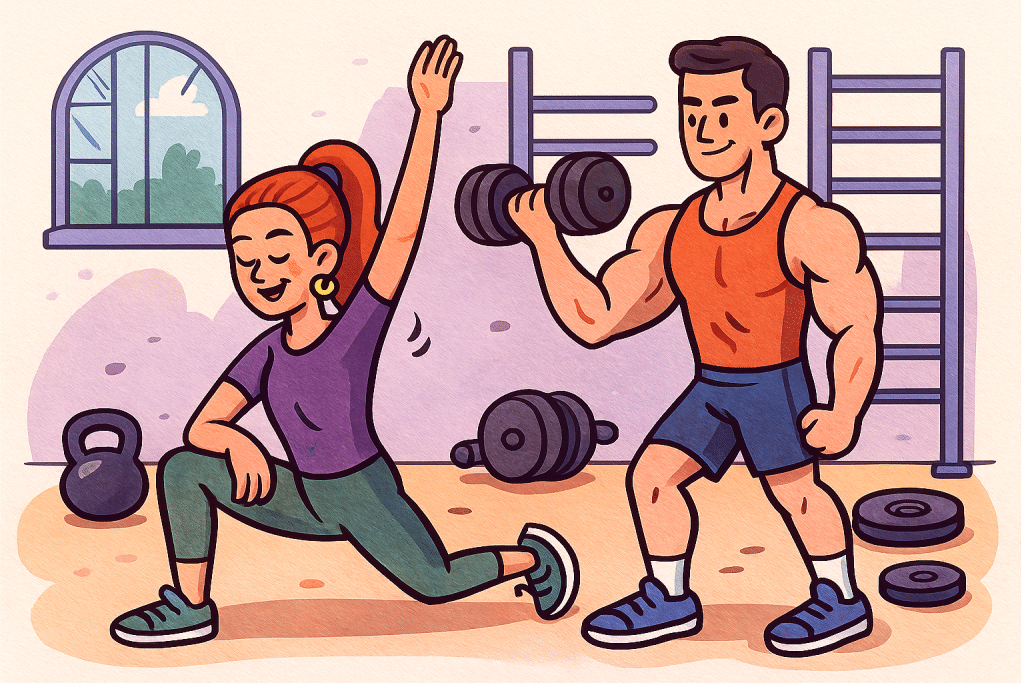
Why Strength and Mobility Matter More Than Ever
The old-school model of focusing only on lifting heavier weights is shifting. Today, experts emphasize functional strength and mobility—the ability to move freely without stiffness while still maintaining power.
- Strength keeps bones, muscles, and joints resilient.
- Mobility allows smoother movement, reducing injury risk and improving athletic performance.
According to the American College of Sports Medicine, mobility training is now ranked as one of the fastest-growing trends in fitness, reflecting the rising demand for workouts that support long-term health (ACSM 2024).
Emerging Trend: Hybrid Mobility-Strength Training
One of the biggest fitness trends in 2025 is hybrid training programs that blend resistance exercises with dynamic stretches. Unlike static stretching routines, these workouts build muscle while keeping joints supple.
Examples include:
- Kettlebell flows that combine squats, lunges, and presses with mobility drills.
- Animal flow workouts—ground-based movements that enhance core strength and flexibility.
- Functional circuit training with resistance bands and bodyweight drills.
Research shows that combining strength and mobility work reduces muscle imbalances and improves athletic performance (Behm & Chaouachi 2011).
Practical Guide: Daily Strength and Mobility Routine
Here’s a 15-minute functional routine you can incorporate into your schedule:
- Hip Openers (World’s Greatest Stretch) – 2 minutes
Improves hip mobility, essential for squats and running. - Goblet Squats with Pause – 3 sets of 12
Builds leg strength while encouraging deep range of motion. - Single-Leg Deadlifts – 3 sets of 10 each side
Boosts balance, posterior chain strength, and mobility. - Cossack Squats – 3 sets of 10
Enhances lateral mobility in the hips and knees. - Turkish Get-Ups – 3 each side
A total-body movement that trains stability, mobility, and strength in one exercise. - Spinal Mobility Drills (Cat-Cow and Thread the Needle) – 2 minutes
Reduces back stiffness and improves posture.
This mix ensures your workout is functional, time-efficient, and joint-friendly.
Hot Topic: The Rise of Longevity Training
Mobility-driven routines are no longer just for athletes. With aging populations worldwide, fitness programs designed to extend quality years of movement are trending.
- Gyms are adding mobility zones with foam rollers, bands, and mats.
- Apps like GOWOD and ROMWOD provide guided flexibility sessions.
- Older adults are turning to strength + mobility classes to maintain independence.
A 2023 study in the Journal of Aging and Physical Activity found that older adults who performed combined mobility and strength training improved balance by 25% and reduced falls by nearly 30% compared to those who only did strength training (Granacher et al. 2023).
Mobility Tools and Tech You’ll See in 2025
The fitness industry is innovating quickly, bringing smart mobility tools into mainstream gyms:
- AI-Powered Mobility Apps – Apps analyze your movement via smartphone cameras and suggest customized drills.
- Smart Foam Rollers – These vibrate at different frequencies to release tension more effectively.
- Wearable Sensors – Devices track range of motion and give feedback in real-time.
These tools make mobility training more engaging and personalized, helping users see progress in both flexibility and strength.
Strength MeStrength Meets Mobility: The Science Behind It
Why does combining strength and mobility matter?
Joint Health
Strong muscles protect your joints from strain, while mobility keeps them moving freely. Together, they make movement smoother and reduce long-term wear.
Performance
Athletes who train both not only recover faster but also move more efficiently. A strong hip is great, but if it’s too tight to allow full range, performance drops (Behm & Chaouachi 2011).
Injury Prevention
Poor mobility forces the body to compensate—hips shift stress to the back, or ankles push load into the knees. That’s when common injuries show up.
In short: strength without mobility locks you up, and mobility without strength leaves you unstable. Balance is where real progress happens.
Beginner-Friendly Strength and Mobility Workouts
If you’re new to fitness, the best place to start is with movements that build strength gradually and keep your joints healthy. These beginner-friendly options are effective without being overwhelming.
Resistance Band Workouts
Bands provide steady tension that strengthens muscles without heavy strain. Start with simple moves like rows for your back, side-steps for hip stability, and overhead presses to strengthen your shoulders. They’re light, portable, and easy to progress with as you get stronger.
Bodyweight Functional Drills
Your own bodyweight is often the best equipment. Flows like push-up to downward dog combine strength with stretching. Squat-to-stand drills loosen up tight hips and ankles, while bear crawls challenge your whole body and improve coordination.
Yoga for Strength
Yoga goes beyond flexibility. Power yoga sequences build lean muscle, while vinyasa flows improve endurance and joint mobility. Plus, the focus on breath and movement helps reduce stiffness and improve balance.
Pilates
Pilates uses controlled, low-impact movements to target your core and stabilizing muscles. Exercises like the hundred or leg circles help with posture, reduce stiffness, and make everyday movements feel smoother.
Advanced Approaches for Athletes
Athletes in 2025 are going beyond traditional training by adding mobility challenges into their strength routines.
- Loaded Carries with Rotation – Farmer carries while rotating the torso.
- Isometric Holds in Extended Ranges – Deep split squats held for time.
- Plyometric Mobility – Bounding drills with focus on hip and ankle flexibility.
These advanced methods improve explosiveness while maintaining movement efficiency.
Conclusion: The Future of Strength and Mobility
Fitness routines that improve strength and mobility are not just a trend—they are the foundation of long-term health and performance. Whether you’re an athlete, a busy professional, or an older adult, these workouts help you move better, stay stronger, and live longer.
Expect more gyms, apps, and trainers to shift toward this functional, mobility-first approach in 2025 and beyond.
References
- Harvard Health Publishing. (2021) The importance of stretching for strength and mobility. Available at: https://www.health.harvard.edu(Accessed: 29 September 2025).
- American Council on Exercise. (2022) Strength training and flexibility: A combined approach to mobility. Available at: https://www.acefitness.org (Accessed: 29 September 2025).
- Centers for Disease Control and Prevention. (2023) Physical activity basics: Benefits for strength and mobility. Available at: https://www.cdc.gov (Accessed: 29 September 2025).

 Interior Organization Hacks That Maximize Space