Fitness Challenges That Encourage Daily Movement
Emily Ward September 25, 2025
You’ve likely heard of step-count challenges, squat streaks, and “move every day” pledges. But in 2025, a new wave of fitness challenges that encourage daily movement is transforming how people stay active. These aren’t extremes—they’re smart, science-backed, and built to last. In this article, you’ll find what’s driving this trend, how to take part (or lead one), and how to keep it from fizzling out.
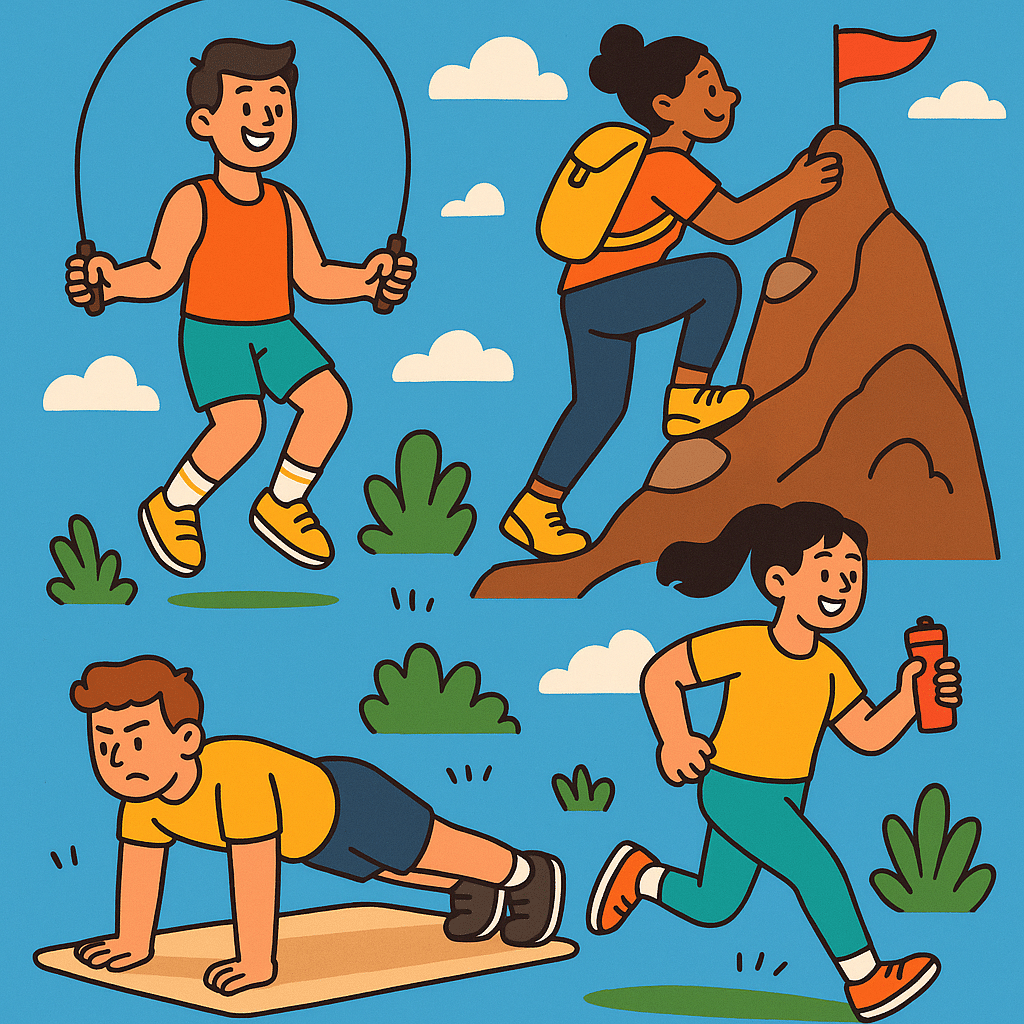
From wearable gamification to micro-movement hacks, the rise of daily movement challenges is more than social media hype—it’s a grassroots shift toward consistency over intensity.
The Science Behind Movement Over Exercise
Before diving into challenge ideas, it helps to understand why daily movement matters. Research is increasingly clear: more daily movement, even in small increments, yields measurable health returns.
- A meta-analysis of step count studies showed that an extra 1,000 steps per day was linked to lower all-cause mortality and reduced cardiovascular risk—benefits appear even below 10,000 steps.
- In a controlled trial, participants walking 10,000 steps daily over 12 weeks reported lower anxiety, depression, and improved mood versus baseline.
- Another study found a dose-response curve: more steps correlated with better survival, up to a point.
- Recent research suggests that even 7,000 steps daily may significantly cut the risk of major illnesses—implying that extreme goals aren’t always necessary.
Walking, the simplest form of movement, already yields benefits in heart health, joint load, and mood regulation.
These data provide the rationale: fitness challenges that encourage daily movement don’t have to demand long gym sessions. They can be light, consistent, and doable.
Why These Challenges Are Exploding Right Now
What’s fueling the sudden interest in daily movement challenges in 2025? Several trends converge:
1. Wearables + Gamification
Devices like smartwatches and fitness trackers are more common than ever. And when combined with gamification elements—leaderboards, badges, streak tracking—they push people to stay active daily. A study of Fitbit users found leaderboards caused sedentary users to add ~1,300 steps per day, though effects varied.
This is precisely the engine behind fitness challenges that encourage daily movement: small nudges made visible and competitive (or collaborative).
2. Shift from Intensity to Habit
High-intensity fitness programs (HIIT, CrossFit, etc.) remain popular, but many people find them unsustainable long term. The focus is shifting toward micro-habits—consistent, lower-effort movement. Challenges like 75 Soft (a gentler spin on the viral “75 Hard”) reflect this movement.
3. Social Media Virality
Simple challenges spread fast. The “100 kettlebell swings daily for 30 days” challenge went viral on TikTok earlier in 2025, drawing criticism and praise in equal measure.
When fitness content goes viral, people search “how to join,” “challenge tracker,” or “30-day movement challenge,” fueling further momentum around this category.
4. Workplace Wellness & Remote Culture
As remote or hybrid work remains common, organizations are injecting movement challenges into wellness programs. Ideas like “walk meetings,” stair challenges, or step leaderboards are increasingly common in offices.eed to counter sedentary work culture.
Top 5 Fitness Challenges That Encourage Daily Movement in 2025
Here are emerging or enduring challenge formats that push daily movement—and how to adapt them.
| Challenge | Description | Why It Works | Tips |
|---|---|---|---|
| Step Ladder (Progressive Step Increases) | Start at 5,000 steps/day in week 1, increase by 1,000 each week. | Gradual load builds buy-in. | Use a group app to visualize “step ladder.” |
| 30-Day Daily Movement | A daily minimum: e.g. 8,000 steps or 20 minutes of movement. | Simple, flexible, accommodates many fitness levels. | Allow participants to choose movement type (walk, yoga, dance). |
| Movement Streak (Every-Single-Day) | Commit to any movement (5 min, 1 exercise) every day for 30/60/90 days. | Builds consistency and eliminates “all or nothing” thinking. | Use a calendar / habit app to mark daily completion. |
| 6-6-6 Walking Challenge | Brisk walking 60 minutes daily with 6-minute warmup & cooldown, at either 6 a.m. or 6 p.m. | Time-based challenge (not step-based) appeals to many. | Split the 60 min into segments if needed. |
| 100 Kettlebell Swings / Bodyweight Moves | Perform 100 swings or bodyweight moves (squats, lunges) daily for 30 days. | Viral, focused, measurable. | Emphasize form and allow rest (split loads across the day). |
When you organize or join one of these, you’re entering the world of fitness challenges that encourage daily movement—not extremes, but daily consistency.
How to Build (or Join) a Daily Movement Challenge That Lasts
If you’re thinking of launching your own—or want to pick the right one to join—here’s a roadmap to do it well.
1. Define the Daily Minimum (Don’t Overreach)
Set a requirement that’s modest but meaningful. Overambitious goals cause burnout. For example:
- 5,000–8,000 steps
- 20 minutes of any movement
- 100 bodyweight reps total
Aim for “doable even on a bad day.”
2. Build a Simple Tracking Mechanism
Movement challenges live or die by ease of tracking. Options include:
- Shared spreadsheet or Google Sheet
- Habit-tracking app (Habitica, Streaks, or a challenge-specific app)
- Slack / Discord “done” check-ins
Gamification features (leaderboards, badges) help. Remember: leaderboards bring more benefit for those who start sedentary, but may frustrate already-active users.
3. Introduce Social Accountability
Challenges with community support outperform solo efforts. Social media sharing, group chat, weekly check-ins, and friendly messaging all help.
Adding a “buddy system” can double adherence.
4. Incorporate Variability & Recovery
Avoid monotony and overuse by:
- Rotating movement types (walk, yoga, mobility, strength)
- Allowing “light days” (e.g. gentle movement)
- Encouraging mobility/rest when needed
5. Reward & Reflect
Midway and end-of-challenge reflections help sustain momentum. Use small rewards (non-food) and ask participants for feedback on what feels doable or hard.
6. Encourage Habit Transfer
The real win is not completing the challenge—it’s keeping movement afterward. During the challenge, encourage participants to try:
- Walking meetings
- Sneaking mini-breaks for mobility
- Short “movement sprints” during tasks
Pitfalls & Countermeasures
Every challenge has risks. Here’s how to mitigate:
| Risk | Fix |
|---|---|
| Overuse / injury | Emphasize form, warm-up, rest days, or variation. |
| Burnout / dropouts | Keep minimum manageable; rotate movement types. |
| Comparison stress | Make leaderboards optional or segmented by tiers. |
| Lack of engagement | Use reminders, social prompts, and accountability. |
| Measurement fatigue | Automate tracking via wearables where possible. |
Example 30-Day Daily Movement Plan (Template)
Below is a sample for a 30-day challenge built around movement:
| Day | Daily Goal | Variation / Tip |
|---|---|---|
| 1 | 5,000 steps | Use a walking route you enjoy |
| 2 | 5,000 steps + gentle stretch | Do 5–10 min mobility afterward |
| 3 | 6,000 steps | Take a detour or extra lap |
| 4 | 6,000 steps | Walk during phone calls |
| 5 | 7,000 steps | Add one hill or incline |
| 6 | Rest light movement (e.g. stretching) | Active recovery day |
| 7 | 7,500 steps | Try a new route |
| … | … | … |
| 30 | 10,000 steps or 30 min movement | Reflect on the past month |
Participants track daily and submit “done” at end of day. Optionally, post about challenges, setbacks, and wins.
Why This Approach Beats “Go Hard or Go Home” Trends
Many fitness challenges lean toward extremes—high volume workouts, strict diets, all-or-nothing rules. These often burn people out or cause injury. Fitness challenges that encourage daily movement stand out because:
- Accessibility — they don’t require equipment, gym access, or elite fitness.
- Sustainability — small daily habits compound into long-term behavior.
- Consistency > Intensity — long-term adherence increases health more than occasional spikes.
- Data support — benefits accrue even with modest movement increases.
As interest in mental health, preventive health, and habit formation grows, these challenges align with the direction fitness is headed.
How to Pick the Right Challenge for You
If you’re browsing options, here’s a quick self-check:
- Current activity level: If largely sedentary, start with low thresholds (5–6K steps).
- Schedule constraints: Time-based challenges (e.g., 60 min walking) may suit flexible schedules.
- Community format: Solo or group? Choose what motivates you.
- Variability vs focus: Do you like daily variety (mobility, strength) or repetition?
- Duration: 15, 30, 60-day challenges differ in pace and expectations.
You might even combine: a base movement challenge with optional strength mini-goals.
Final Thoughts
Fitness challenges that encourage daily movement are more than trends—they’re a shift in how people view fitness. Instead of chasing extremes, the emphasis moves to every day, something, for the long term. By designing or joining challenges rooted in psychology, community, and research, you set yourself (or your audience) up to win—not just for 30 days, but for life.
Whether you start with 5,000 steps or 100 bodyweight moves, consistency wins. This is 2025’s fitness evolution: movement that becomes mode, not obligation.
References
- American Heart Association. (2022) The importance of daily physical activity for overall health. Available at: https://www.heart.org (Accessed: 25 September 2025).
- Centers for Disease Control and Prevention. (2023) How much physical activity do adults need? Available at: https://www.cdc.gov (Accessed: 25 September 2025).
- World Health Organization. (2022) Physical activity. Available at: https://www.who.int (Accessed: 25 September 2025).

 Travel Planning Tips for Budget-Friendly Experiences