Wellness Practices That Support Mental Focus
Emily Ward September 23, 2025
From Silicon Valley to wellness retreats, microdosing for mental focus has become one of the most talked-about trends of 2025. Advocates claim it sharpens attention, boosts creativity, and supports mental resilience without the side effects of high-dose psychedelics. But what’s hype, and what’s evidence?
What Is Microdosing for Mental Focus?
Microdosing involves taking sub-perceptual amounts of psychedelic substances—commonly psilocybin (magic mushrooms) or LSD—at doses typically one-tenth of a recreational amount. Unlike a “trip,” the goal is not hallucination but subtle improvements in clarity, creativity, and concentration.
Recent studies have begun to explore how these microdoses influence neural pathways. For example, research published in Nature: Scientific Reports found that psilocybin microdosing may enhance convergent and divergent thinking, both critical for focus and problem-solving (Prochazkova et al. 2018).
Why Is It Trending in 2025?
The rise of microdosing for mental focus is tied to several global shifts:
- Remote Work Burnout – As more professionals work digitally, there’s growing interest in cognitive enhancers that sustain productivity.
- Mental Health Crisis – With anxiety and ADHD diagnoses climbing, alternative therapies are gaining mainstream appeal.
- Tech-Driven Culture – Startups and creative industries, always on the hunt for performance hacks, have fueled microdosing’s popularity.
Mainstream media coverage and bestselling books on psychedelics have also normalized the conversation, creating demand for scientific validation.
How Microdosing May Support Focus
Emerging neuroscience provides clues as to why microdosing is associated with sharper focus:
- Neuroplasticity Boost: Psychedelics interact with serotonin 5-HT2A receptors, which may increase brain plasticity (Carhart-Harris and Goodwin 2017).
- Improved Attention Control: Sub-perceptual doses may strengthen prefrontal cortex functioning, enhancing executive control of attention.
- Mood Stabilization: Reduced anxiety and improved mood indirectly support concentration and cognitive endurance.
Comparing Microdosing to Traditional Focus Aids
Traditional options for enhancing focus range from common stimulants to lifestyle practices. Each has its own set of strengths and drawbacks:
- Caffeine – For many, coffee or energy drinks are the go-to solution for mental clarity. They deliver a quick boost in alertness, but the trade-offs are familiar: jitters, afternoon crashes, disrupted sleep, and the gradual build-up of tolerance that makes you need more for the same effect.
- Prescription Stimulants (Adderall, Ritalin) – These medications are highly effective in treating ADHD by improving concentration and impulse control. Outside of clinical use, however, they come with serious considerations. Side effects can include anxiety, irritability, and increased cardiovascular risk. They’re also tightly regulated, meaning access without a prescription is both unsafe and illegal.
- Meditation – Unlike stimulants, meditation doesn’t give you an instant jolt of focus. Instead, its effects build slowly. Regular practice has been shown in countless studies to enhance attention span, emotional regulation, and overall cognitive resilience. But it demands consistency and patience, which makes it less appealing for people who want results “on demand.”
Microdosing sits somewhere in between these options. Advocates suggest it can offer a gentle, sustained lift in creativity, clarity, and mood without the sharp spikes and crashes of caffeine or the dependency risks tied to prescription drugs. Unlike meditation, the potential effects may be noticeable within hours rather than months of practice. Still, the science around microdosing is young. While early findings and anecdotal reports are promising, there isn’t yet a broad medical consensus on long-term safety or efficacy.
Risks and Ethical Considerations
Despite its buzz, microdosing carries risks:
- Legality: Psilocybin and LSD remain controlled substances in most countries.
- Limited Data: Large-scale clinical trials are still rare, and placebo effects cannot be ruled out.
- Side Effects: Some users report anxiety spikes, sleep disturbance, or emotional sensitivity.
Health experts stress the importance of medical supervision and caution against self-administered regimens without research-backed protocols (Polito and Stevenson 2019).
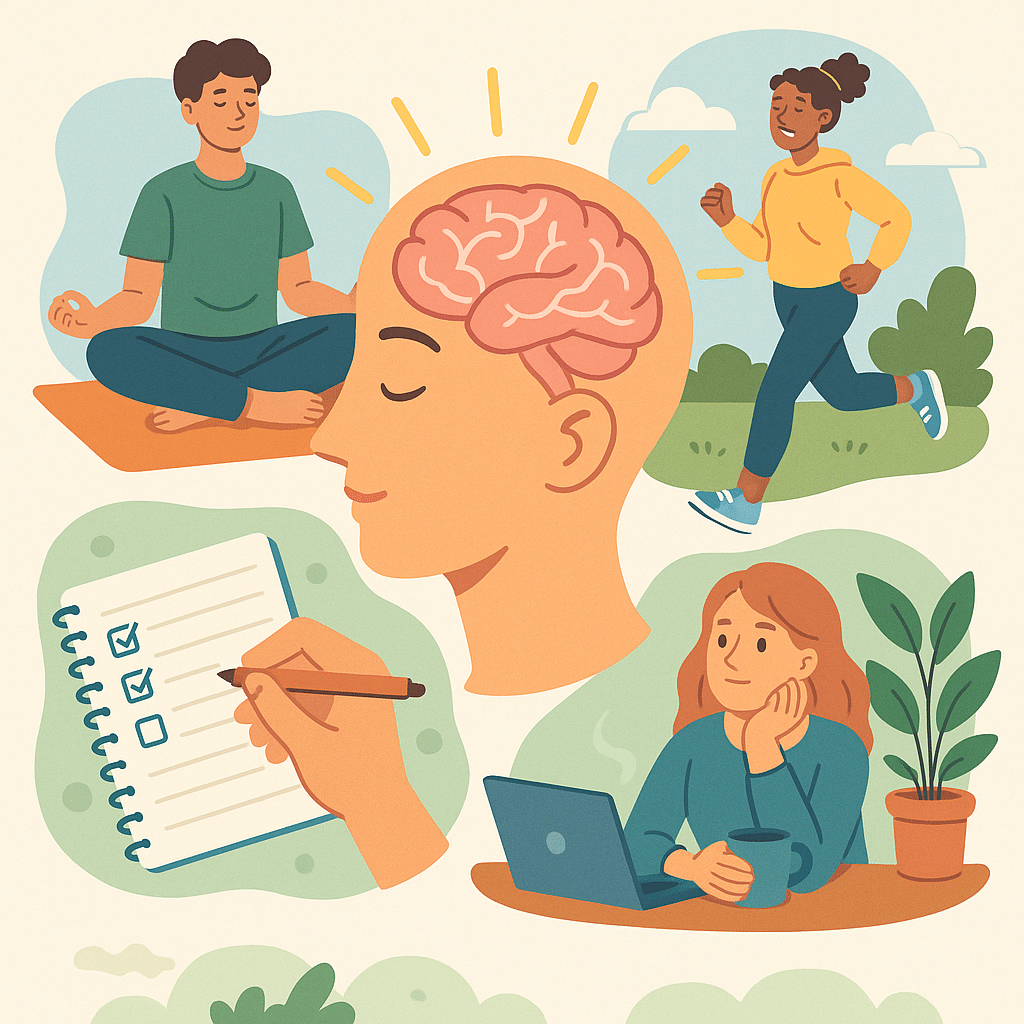
Wellness Practices to Combine with Microdosing for Mental Focus
Even if microdosing shows promise, it tends to work best when it’s part of a bigger routine. Think of it as one piece of the puzzle. Pairing it with other wellness practices helps strengthen the benefits and keeps your mind sharp over time.
Mindful Breathing & Meditation
Short sessions of mindful breathing or guided meditation can sharpen focus and calm racing thoughts. Microdosing may make it easier to settle into the practice, giving you a deeper sense of presence.
Digital Detoxing
Constant notifications and scrolling overload the brain. Setting aside device-free windows during the day helps restore balance and prevent mental burnout. This pairs well with microdosing by lowering the urge for constant stimulation.
Nootropic Nutrition
What you eat fuels your focus. Foods rich in omega-3s, magnesium, and flavonoids—like salmon, spinach, blueberries, and green tea—are linked to better memory and attention (Gómez-Pinilla 2008). Combined with microdosing, nutrient-dense meals can support clearer thinking and stable energy.
Structured Work Sprints
Heightened creativity is most useful when directed. Using techniques like the Pomodoro method or 90-minute work sprints helps channel sharper focus into real progress. This structure prevents scattered effort and turns ideas into finished tasks.
What Experts Are Saying
Dr. Robin Carhart-Harris, a leading psychedelic researcher, argues that low-dose psychedelics “open the mind to flexibility, which can be harnessed for focus and problem-solving” (Carhart-Harris and Goodwin 2017).
At the same time, researchers caution against overhyping early results. A 2019 study in PLOS One found many benefits of microdosing might be placebo-driven, highlighting the need for more controlled trials (Polito and Stevenson 2019).
The Future of Mental Focus Practice
Looking ahead, wellness practices like microdosing for mental focus will likely merge with personalized medicine. With AI-driven biomarkers and neurofeedback, individuals may soon tailor dosage and timing to their unique cognitive profile.
Countries like Australia and Canada are already advancing regulatory frameworks for psychedelic-assisted therapy. This suggests microdosing may transition from fringe to formalized wellness intervention within the next decade.
Key Takeaways
- Microdosing for mental focus is a rapidly growing wellness trend with strong cultural momentum.
- Early research shows potential in boosting creativity, attention, and mood—but placebo effects remain a factor.
- Risks include legal barriers, lack of long-term data, and possible side effects.
- Best results come when combined with holistic practices like meditation, nutrition, and structured work habits.
References
- Harvard Health Publishing. (2021) Mindfulness meditation may ease anxiety, mental stress. Harvard Medical School. Available at: https://www.health.harvard.edu/s (Accessed: 23 September 2025).
- Centers for Disease Control and Prevention (CDC). (2023) Physical activity and brain health. Available at: https://www.cdc.gov/physical-activity-basics/brain-health (Accessed: 23 September 2025).
- National Sleep Foundation. (2022) How sleep affects your concentration and memory. Available at: https://www.thensf.org/y (Accessed: 23 September 2025).

 How Digital Marketing Boosts Startup Success