Gardening Ideas That Encourage Eco-Friendly Practices
Thomas Blake September 22, 2025
Sustainable gardening not only benefits the environment but also promotes healthier plants and communities. Gardening ideas that encourage eco-friendly practices focus on reducing resource consumption, supporting biodiversity, and minimizing chemical usage. By integrating environmentally conscious strategies, gardeners can create beautiful, productive spaces while protecting the planet.
This article explores practical eco-friendly gardening techniques, from soil management and water conservation to native plant selection, organic practices, and sustainable landscaping.
1. Composting for Soil Enrichment
Composting transforms organic waste into nutrient-rich material for soil.
- Collect kitchen scraps, yard waste, and plant residues for composting.
- Maintain a balanced mix of greens (nitrogen-rich) and browns (carbon-rich) for effective decomposition.
- Turn piles regularly to promote aeration and accelerate nutrient cycling.
Journal of Environmental Quality (2022) highlights that composting enriches soil, enhances microbial activity, and reduces landfill waste, supporting eco-friendly gardening.
2. Water Conservation Techniques
Efficient water use is critical for sustainable gardening.
- Implement drip irrigation systems to deliver water directly to plant roots.
- Collect rainwater in barrels for garden irrigation.
- Use mulching to retain soil moisture and reduce evaporation.
Agricultural Water Management (2022) reports that these strategies conserve water, maintain healthy plant growth, and reduce dependency on municipal water systems.
3. Native and Drought-Resistant Plants
Selecting appropriate plants conserves resources and supports local ecosystems.
- Use native species that are adapted to local climate and soil conditions.
- Incorporate drought-tolerant plants to reduce irrigation needs.
- Avoid invasive species that disrupt local habitats.
Journal of Applied Ecology (2022) emphasizes that native plants promote biodiversity, support pollinators, and require fewer chemical inputs.
4. Organic Fertilizers and Soil Amendments
Natural fertilizers improve soil fertility while reducing environmental impact.
- Apply compost, manure, or organic plant-based fertilizers instead of synthetic chemicals.
- Test soil to balance nutrient inputs and prevent over-fertilization.
- Incorporate cover crops to naturally enrich soil and prevent erosion.
Frontiers in Sustainable Food Systems (2022) notes that organic amendments enhance soil structure, microbial diversity, and long-term fertility.
5. Mulching and Ground Cover
Mulching conserves moisture, reduces weeds, and supports soil health.
- Use organic mulches such as straw, leaves, or bark.
- Maintain a 2–4 inch layer around plants to maximize benefits.
- Replace mulch as needed to maintain nutrient contribution and protection.
Soil Science Society of America Journal (2022) highlights that mulching improves water retention, prevents erosion, and supports healthy soil ecosystems.
6. Integrated Pest Management (IPM)
Sustainable pest control reduces chemical reliance while maintaining plant health.
- Use beneficial insects, like ladybugs and predatory nematodes, to control pests.
- Introduce companion planting to deter harmful insects naturally.
- Apply organic pesticides selectively and only when necessary.
Agriculture, Ecosystems & Environment (2023) reports that IPM enhances crop protection while preserving environmental integrity and biodiversity.
7. Sustainable Landscaping Design
Eco-conscious landscaping reduces maintenance and resource consumption.
- Incorporate permeable paths to manage rainwater and reduce runoff.
- Design rain gardens or bioswales to absorb stormwater and filter pollutants.
- Use layered planting to maximize ground coverage and reduce soil erosion.
Journal of Environmental Management (2022) emphasizes that sustainable design practices enhance ecosystem services and garden resilience.
8. Encouraging Pollinators and Wildlife
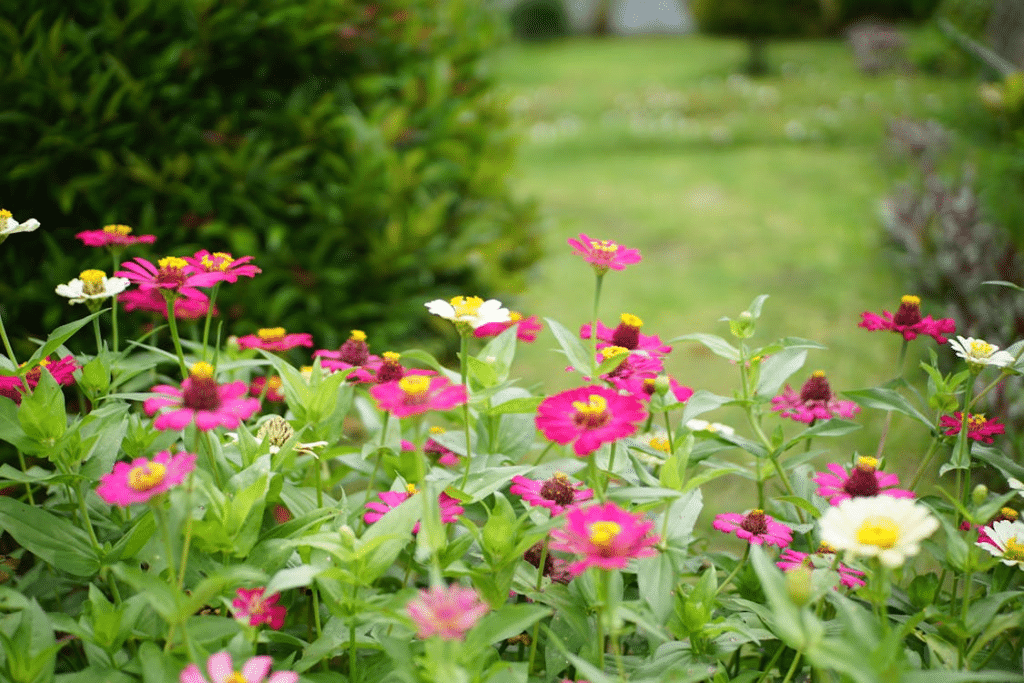
Supporting pollinators strengthens ecosystems and plant productivity.
- Plant pollinator-friendly flowers and shrubs.
- Avoid pesticides harmful to bees, butterflies, and birds.
- Create habitats such as bee hotels or birdhouses to support local wildlife.
Ecological Applications (2022) notes that pollinator-friendly gardens increase plant reproduction, biodiversity, and environmental sustainability.
9. Reuse and Upcycling in Gardening
Using recycled materials reduces waste and fosters creativity.
- Construct planters from reclaimed wood, tires, or containers.
- Use old pallets or crates for vertical gardening or shelving.
- Repurpose garden waste for mulch or composting.
Frontiers in Sustainable Food Systems (2022) emphasizes that upcycling promotes eco-friendly practices, reduces resource consumption, and supports sustainable gardening.
10. Education and Community Engagement
Sharing knowledge encourages broader adoption of eco-friendly gardening practices.
- Participate in community gardens or workshops to learn sustainable techniques.
- Teach children and neighbors about composting, water conservation, and biodiversity.
- Engage in local initiatives that promote environmental stewardship.
UNESCO (2022) highlights that community engagement fosters cultural and ecological awareness while amplifying the impact of sustainable practices.
Conclusion
Gardening ideas that encourage eco-friendly practices include composting, water conservation, native plants, organic fertilization, mulching, integrated pest management, sustainable landscaping, pollinator support, reuse and upcycling, and community engagement.
Implementing these strategies allows gardeners to reduce environmental impact, conserve resources, enhance biodiversity, and maintain productive, resilient gardens. Thoughtful application of eco-friendly techniques fosters sustainable living, ecological responsibility, and a connection with the natural world.
References
Journal of Environmental Quality (2022). Composting and Soil Health. Available at: https://www.journals.elsevier.com/journal-of-environmental-quality
Agricultural Water Management (2022). Efficient Irrigation Practices. Available at: https://www.journals.elsevier.com/agricultural-water-management
Journal of Applied Ecology (2022). Native Plants and Biodiversity. Available at: https://www.journals.elsevier.com/journal-of-applied-ecology
Frontiers in Sustainable Food Systems (2022). Organic Fertilizers and Soil Management. Available at: https://www.frontiersin.org
Soil Science Society of America Journal (2022). Mulching and Soil Conservation. Available at: https://www.soils.org/publications/sssaj
Agriculture, Ecosystems & Environment (2023). Integrated Pest Management Strategies. Available at: https://www.journals.elsevier.com/agriculture-ecosystems-and-environment
Journal of Environmental Management (2022). Sustainable Landscaping Techniques. Available at: https://www.journals.elsevier.com/journal-of-environmental-management
Ecological Applications (2022). Pollinator-Friendly Gardening. Available at: https://esajournals.onlinelibrary.wiley.com/journal/19395582
UNESCO (2022). Culture and Sustainable Development: Building Community Through Art. Available at: https://en.unesco.org/themes/culture-sustainable-development

 Wellness Routines That Support Mental Clarity