Smart Home Innovations for Energy Efficiency
Thomas Blake September 22, 2025
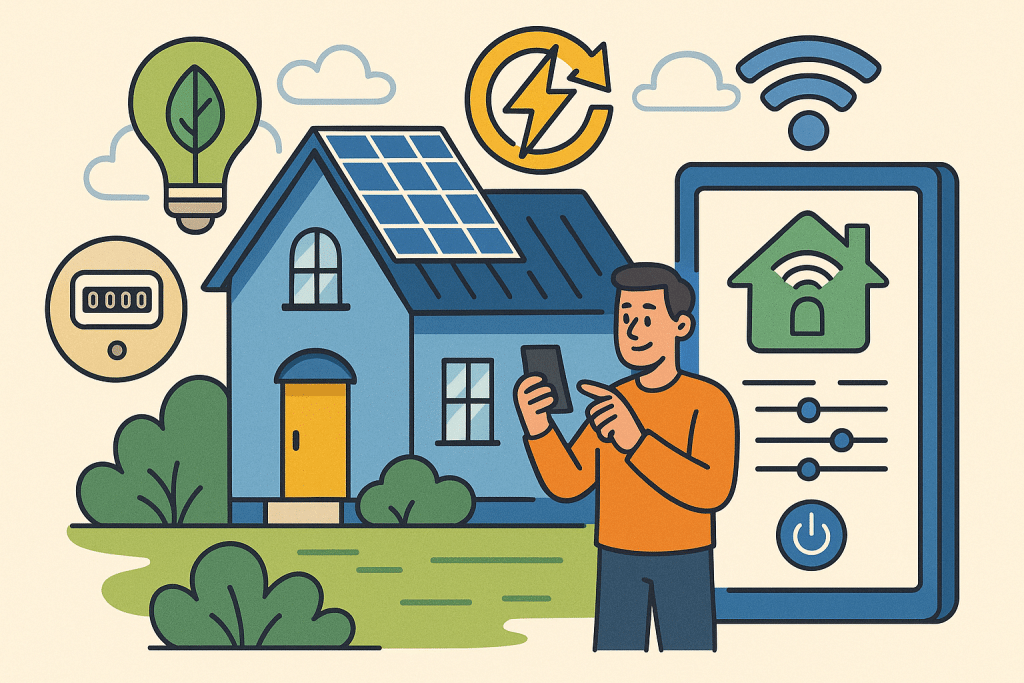
Smart home innovations for energy efficiency are reshaping how we live—cutting bills, reducing waste, and giving more control over resources. If you’re thinking of upgrading, money saved starts with the choices you make now.
What’s Driving the Shift
Before we look at innovations, it helps to understand why there’s a surge in demand for energy-efficient smart homes:
- Rising energy costs globally and increased awareness of climate change.
- Regulatory pressure & incentives (rebates, feed-in tariffs, dynamic pricing).
- Hardware & standards improving, lowering barriers for integration.
- Growing consumer desire for comfort plus sustainability.
These forces create a fertile ground for tech that does more than just automate lights or voice control—it has to optimize energy on multiple fronts.
Key Emerging Trends in Smart Home Innovations for Energy Efficiency
Here are some of the hottest trends right now. Each has practical implication, emerging products, and trade-offs.
1. Matter 1.4 & Improved Interoperability
What it is: Matter is a smart home standard (by the Connectivity Standards Alliance) that ensures devices from different brands can work together. Version 1.4 (in 2024-2025) is bringing enhanced support for energy management: heat pumps, electric water heaters, batteries, solar panels/inverters.
Why it matters:
- Devices can share usage and demand data and adjust based on grid signals, time-of-use pricing.
- Easier to build comprehensive home energy systems without having to stick to one brand or ecosystem.
Practical implications:
- If you’re buying new devices (thermostats, water heaters, or renewables), check for Matter 1.4 compatibility.
- Expect your system to be more future-proof, easier to expand.
2. Smart Thermostats + AI + Demand Response
Smart thermostats are nothing new, but the integration with AI, machine learning, and demand response programs is gaining momentum.
- Studies show that smart thermostats can manage about 9% of residential energy consumption.
- EcoBee’s eco+ platform users saved ~5 % more energy over summer than with just thermostat use alone; cooling-cost savings in some cases of 7-23 % for those on time-of-use pricing.
What’s new:
- IoT sensors detect occupancy, adjust automatically.
- Use of predictive algorithms to anticipate usage patterns.
- Participation in utility demand-response programs: at peak grid times, devices get signals to reduce load slightly (raising cooling setpoint, etc.), often in exchange for financial incentives.
3. Real-Time Energy Management & Entire Home Monitoring
More systems are offering dashboards, real-time usage, predictive forecasts, and load coordination:
- Example: the Homey platform introduced an energy management tab + dongle that can connect to smart meters to monitor energy, gas, water, EV charging, solar generation, etc.
- Load coordination strategies (managing flexible loads like washers, dishwashers, EV chargers) can reduce electricity cost by ~5 % vs baseline in simulated studies.
These help you see where energy is used, when, and shift consumption to off-peak times.
4. Renewables + Storage Integration at the Residential Level
The combination of rooftop solar + battery storage + smart inverters is becoming more accessible. With smart monitoring and optimization, homes can use their own generated power more effectively, reducing dependency on grid during high tariff periods.
- Matter 1.4’s expanded support for solar panels, inverters, and home batteries is key to this trend.
- Smart inverters and energy storage are now more often paired with load-shifting/curtailment functions.
5. Envelope Improvements & Passive Design Coupled with Smart Automation
Even as electronics get smarter, there is renewed interest in the fundamentals: insulation, air sealing, high‐performance windows, shading etc., but paired with smart control:
- Automatic shading (smart blinds) responding to sunlight and temperature.
- Ventilation systems that adapt based on humidity, CO₂ sensors to reduce energy wasted on over-ventilation.
These physical improvements help maximize results of the smart tech.
Practical Guide: How to Adopt Smart Home Innovations for Energy Efficiency
Here’s a step-by-step guide if you want to implement these trends in your home.
- Audit your current energy use
- Use your utility bills; install a smart meter if available.
- Identify biggest consumers: HVAC, water heating, EV charging, lighting.
- Set clear goals
- Reduce energy cost, reduce peak demand, move toward net zero, or all of the above.
- Consider timeline & budget.
- Prioritize devices & improvements
- Thermostat / HVAC control: replacing with a smart thermostat or upgrading current one to integrate AI / demand-response.
- Lighting: LED + smart lighting systems that dim/off automatically.
- Appliances: use more efficient washing machines / refrigerators / water heaters, especially those with smart scheduling features.
- Renewable generation & storage if feasible.
- Choose compatible & future-ready tech
- Matter 1.4 compliance to ensure interoperability.
- Energy management platforms that can work across devices.
- Devices that report their usage, respond to external signals (utility, grid, weather).
- Use dynamic pricing and demand response
- Enroll in utility programs if available: signals to shift load during peak.
- Program your systems (EV charger, HVAC, water heater) to work during off-peak.
- Monitor, adjust, maintain
- Use dashboards or apps to track savings.
- Adjust behavior: threshold settings, schedules etc.
- Maintain devices: firmware updates, proper insulation, etc.
Challenges & Considerations
- Upfront costs: High for solar + battery, good insulation, or full system overhauls.
- Interoperability issues: Even with Matter, not all devices or ecosystems adopt immediately. Some features may lag behind.
- Privacy & data concerns: More sensors, more monitoring—ensure security.
- Peak-load paradox: Smart thermostats may shift peaks to other times if not managed well.
- Geographical / climate differences: What works well in temperate climates may differ in tropical or desert zones.
Case Example: Real-World Savings
- A study of small office buildings using occupancy-based HVAC control and night-purge free cooling shows electricity savings between 8.9 % to 20.4 % depending on climate zone.
- Households using eco+ smart thermostat platform saved additional cooling energy (5 %) beyond typical smart thermostat alone.
What to Watch Over the Next 1-2 Years
- Wider deployment of forward-looking energy tariffs (time-of-use, dynamic pricing) globally.
- Further development in smart meter infrastructure, so homes can both receive signals from utilities and send data.
- More capable AI/ML in home systems for predictive control (weather forecasts, occupancy patterns).
- Growth of modular & scalable renewable + storage offerings — battery systems that integrate with existing systems.
- Better standards & regulation: building codes may begin mandating minimum smart energy performance.
Conclusion
Smart home innovations for energy efficiency are no longer niche: they are essential for cutting costs, reducing environmental impact, and future-proofing homes. The real gains come when multiple systems work together—smart thermostat, dynamic pricing, renewables, storage, envelope improvements—all orchestrated via interoperable platforms like Matter 1.4. Start with a baseline audit, prioritize what gives you the biggest return, and adopt future-ready tech. With attention to detail, you can see energy savings, improved comfort, and lower carbon footprint.
References
- U.S. Department of Energy. (2023) Smart Home Technology Can Save Energy and Money. Available at: https://www.energy.gov/energysaver/ (Accessed: 22 September 2025).
- International Energy Agency (IEA). (2022) Digitalization and Energy Efficiency in Homes. Available at: https://www.iea.org/reports/digitalisation (Accessed: 22 September 2025).
- Environmental Protection Agency (EPA). (2021) Energy Star Smart Home Devices for Efficiency. Available at: https://www.energystar.gov/ (Accessed: 22 September 2025).

 Interior Decor Ideas That Enhance Productivity