Fitness Routines That Fit Busy Schedules
Emily Ward September 22, 2025
Balancing work, family, and health is tough. But the rise of fitness routines that fit busy schedules makes staying active realistic—even if you only have 10 minutes a day. Here’s how to make it work.
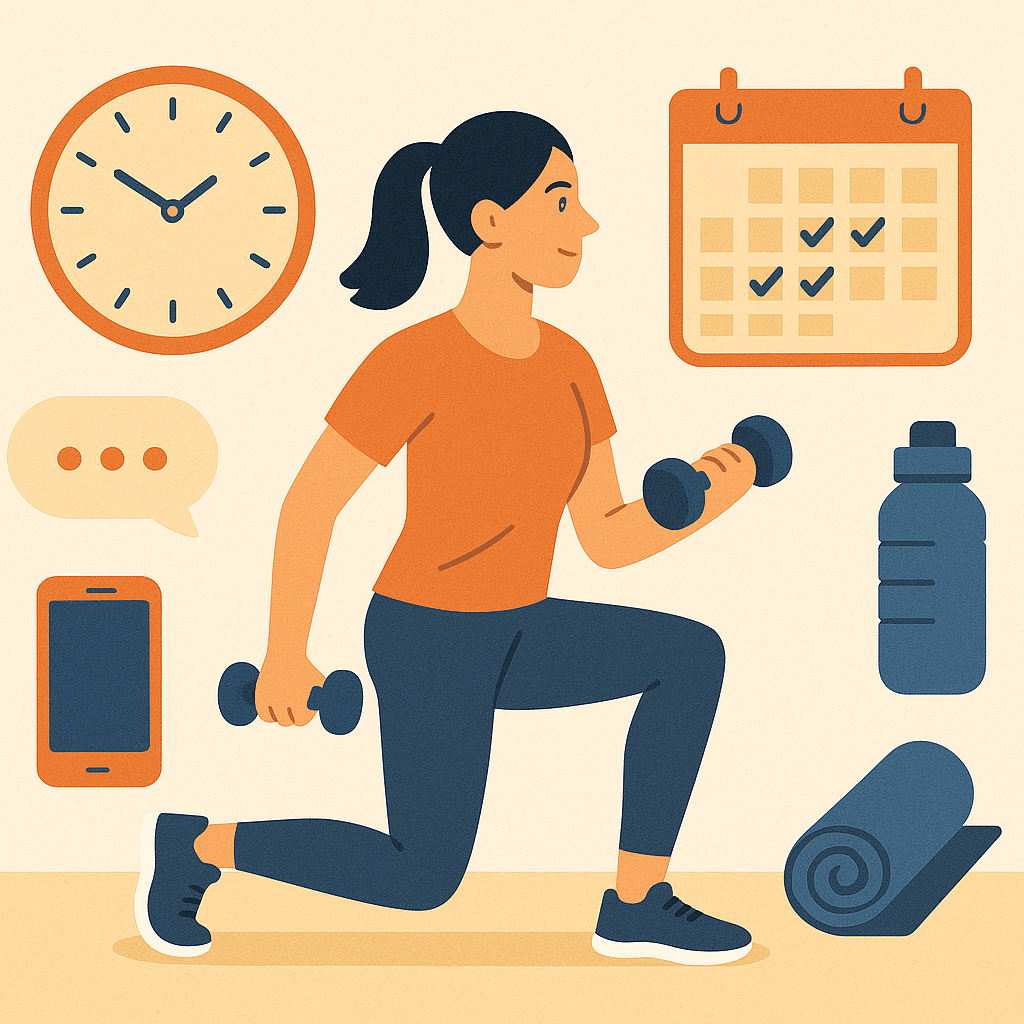
Why Short Workouts Are More Popular Than Ever
With hybrid jobs and always-on digital lifestyles, many people feel they have no time for exercise. That’s why micro-workouts—sessions as short as 7 to 15 minutes—are exploding in popularity.
A 2022 study in JAMA Network Open showed that just 11 minutes of daily activity, like brisk walking or bodyweight circuits, can reduce early death risk by nearly 20% (Ekelund et al., 2022). In other words: short workouts aren’t just convenient—they’re powerful.
AI-Powered Workout Apps
AI-driven fitness apps like Fitbod, Freeletics, and Apple’s Fitness+ now build routines based on your schedule and energy levels. Instead of committing to a 60-minute gym session, these apps design fitness routines that fit busy schedules in bite-sized blocks.
They adapt to:
- How much time you have (even 5 minutes)
- Available equipment
- Your past performance
According to Harvard Health, people using app-based guidance are 40% more likely to stay consistent compared to those going solo (Harvard Health Publishing, 2023).
Desk-Friendly Workouts
Fitness isn’t limited to gyms anymore. With the rise of remote and hybrid jobs, desk-friendly workouts are quickly becoming a workplace wellness trend. These simple yet powerful exercises can fit into even the busiest schedules and don’t require expensive equipment. Popular options include:
- Chair squats between Zoom calls to boost circulation and strengthen leg muscles
- Stretch bands for posture correction, helping reduce neck and back strain
- Mini cardio bursts like high knees, calf raises, or desk push-ups for quick energy
These micro-movements may feel small, but science shows they make a big difference. Research from the American Heart Association highlights that interrupting sitting time with just 2 minutes of light activity every 30 minutes helps improve heart health, lowers blood sugar, and reduces risks linked to prolonged inactivity (Diaz et al., 2017). Similarly, findings published in the Journal of Applied Physiology revealed that frequent light activity breaks can improve insulin sensitivity and circulation, which are critical for long-term metabolic health (Dempsey et al., 2016).
In other words, you don’t need an hour-long gym session to protect your health—consistent desk-friendly exercises can deliver powerful results over time.hat breaking up sitting time with even 2 minutes of light activity every 30 minutes helps improve heart health and lowers blood sugar (Diaz et al., 2017).
Functional Fitness Takes Over
Instead of spending hours on outdated bodybuilding splits, busy professionals are turning to functional training—a smarter, time-saving approach that builds strength for real life. Picture squats, push-ups, kettlebell swings, sled pushes, and resistance band pulls. These aren’t just “gym moves”—they mirror everyday actions like lifting, bending, carrying, and climbing.
The benefits are hard to ignore:
- Improved mobility for long workdays and travel
- Reduced risk of injury by strengthening stabilizer muscles
- A stronger core for lifting, sitting, or even chasing after kids
- Time efficiency, since one movement targets multiple muscles
Unlike traditional isolation routines, functional workouts focus on movements that work the body as a unit. This makes them not only more effective but also more practical for people short on time. Studies confirm that functional training increases balance, coordination, and muscular endurance far better than conventional machine-based routines (Behm & Sale, 1993).
What’s driving the shift? Professionals want results they can use outside the gym. Instead of looking strong but struggling with back pain while carrying groceries, functional athletes are training for long-term performance and resilience. Research shows that this style of training improves overall physical performance and reduces workplace-related musculoskeletal issues (Anderson & Behm, 2005).
For modern lifestyles packed with deadlines, travel, and family obligations, functional fitness is not a luxury—it’s survival. And the best part? You don’t need fancy equipment or endless hours. A set of resistance bands, a kettlebell, or even your own body weight is enough to unlock all the benefits.ce instead of isolating them.
Express Fitness Classes
Gyms are catching on. Instead of only offering 60-minute yoga or spin classes, many now host 20-minute “express” sessions at lunch hours. These sessions cater directly to professionals with packed schedules.
Popular express formats:
- High-Intensity Interval Training (HIIT)
- Power yoga flows
- Circuit training
Walking Meetings
Instead of sitting through yet another Zoom, many workers are turning meetings into fitness opportunities. Walking meetings not only boost steps but also increase creativity—studies from Stanford show walking can increase creative thinking by up to 60% (Oppezzo & Schwartz, 2014).
A 10Minute Daily Routine You Can Start Today
Here’s a simple yet effective fitness routine designed for even the busiest schedules. The best part? It requires no equipment, no gym membership, and no excuses. Just commit to 10 minutes, and you’ll boost your metabolism, improve endurance, and strengthen key muscle groups—all before your morning coffee.
The Routine Breakdown:
- 1 min – Jumping jacks (warm-up): Get your blood flowing, raise your heart rate, and prep your body for movement.
- 2 min – Squats + push-ups (30 sec each, alternate): Build lower-body power while working your chest and arms simultaneously.
- 2 min – Lunges (switch legs every 30 sec): Enhance balance, strengthen quads and glutes, and activate stabilizing muscles.
- 2 min – Plank + mountain climbers (alternate every 30 sec): Target your core while torching calories through cardio bursts.
- 1 min – High knees: Increase cardiovascular endurance while tightening your abs and improving coordination.
- 2 min – Stretch (hamstrings, chest, shoulders): Cool down, reduce stiffness, and promote flexibility for recovery.
Why This Works:
Short, high-intensity routines like this are scientifically proven to improve cardiovascular health and muscle strength while requiring less time than traditional workouts (Gillen & Gibala, 2014). Even a 10-minute workout can significantly raise your energy levels and metabolism throughout the day (Harvard Medical School, 2021).
Think of this as a “micro-investment in your health.” It’s only 10 minutes, but when done consistently, it compounds into real results. Whether you’re aiming to lose weight, tone up, or simply feel more energized, this circuit covers all bases—cardio, strength, and flexibility.
Pro tip: Pair this with a glass of water right before and after, and you’ll notice improved hydration, sharper focus, and better workout efficiency. No matter how hectic life gets, there’s always time for 10 minutes that can transform your body and mindset.
Conclusion: Fitness on Your Terms
The future of fitness isn’t about carving out hours in the gym—it’s about making health work around your lifestyle. With AI-powered apps, short express workouts, and functional training, fitness routines that fit busy schedules are not only possible but effective.
Even small bursts of movement add up. Start today with 10 minutes—you’ll thank yourself a year from now.
References
- Harvard Health Publishing. (2022) Exercising regularly when you’re busy. Available at: https://www.health.harvard.edu/exercising-regularly-when-youre-busy (Accessed: 22 September 2025).
- Mayo Clinic Staff. (2023) Tips for fitting exercise into a busy schedule. Available at: https://www.mayoclinic.org/fitness-busy-schedule (Accessed: 22 September 2025).
- American Heart Association. (2021) Workouts that work with your schedule. Available at: https://www.heart.org/workouts-for-busy-schedules (Accessed: 22 September 2025).

 Interior Design Hacks That Maximize Small Spaces