How Online Communities Enhance Education and Learning
Clara Mitchell September 18, 2025
The way we learn is evolving rapidly. Today, online communities enhance education and learning by transforming passive studying into interactive, collaborative experiences. From Reddit study groups to Discord classrooms, these communities are shaping the future of global education.
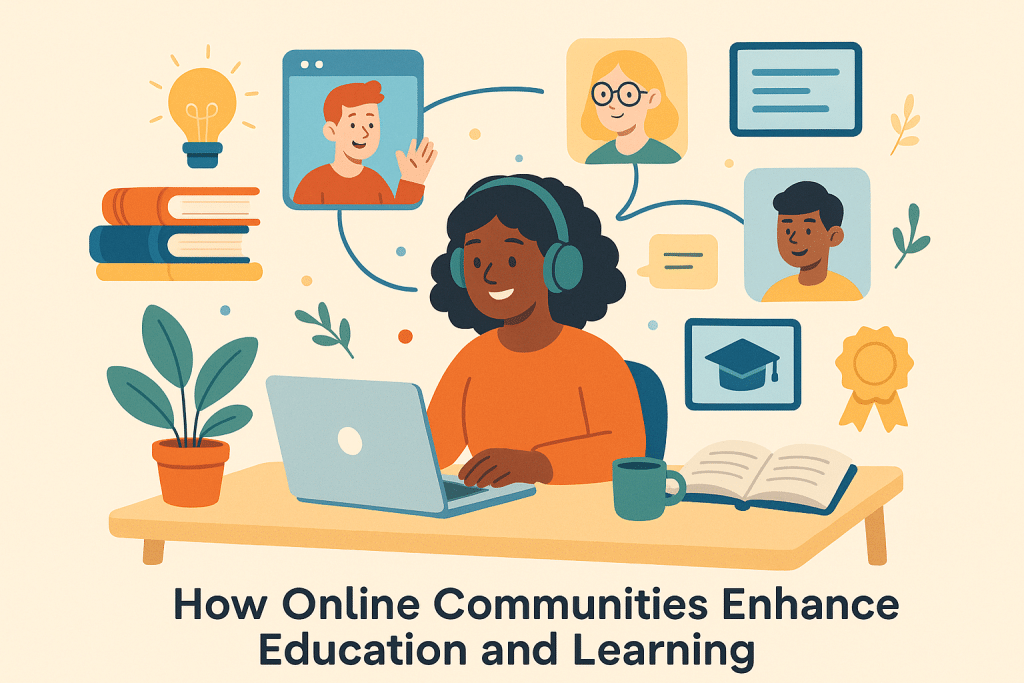
The Rise of Online Communities in Education
Education has shifted dramatically since the pandemic accelerated remote learning. Online forums, social media groups, and dedicated platforms now act as vibrant hubs where students, teachers, and professionals exchange ideas.
- Forums like Reddit’s r/AskAcademia allow learners to seek advice from global experts.
- Discord servers and Slack groups serve as 24/7 virtual classrooms where peers collaborate.
- Niche platforms like Stack Overflow and Coursera forums provide expert-backed knowledge-sharing.
A 2023 Pew Research study found that 68% of U.S. college students actively participate in online academic groups, citing collaboration and peer support as the primary reasons (Pew Research Center 2023).
Why Online Communities Enhance Education and Learning
1. Peer-to-Peer Support
Traditional classrooms often leave students isolated after school hours. Online communities bridge that gap. Students can discuss assignments, clarify doubts, and even share resources instantly. Research shows that peer learning improves retention by nearly 50% compared to individual study (Topping 2022).
2. Access to Global Perspectives
Unlike localized classrooms, online communities break down geographical barriers. A student in Brazil can collaborate with a programmer in India or a medical researcher in the UK. This global diversity enhances learning outcomes and fosters cultural awareness.
3. Real-Time Collaboration
Platforms like Notion, Slack, and Google Classroom-integrated forums allow for real-time document collaboration and threaded discussions. Instead of waiting for scheduled office hours, learners get answers instantly.
4. Motivation and Accountability
Being part of an active study community motivates learners. Seeing peers succeed, share progress, and post resources creates accountability. Many language-learning apps, for example, rely heavily on community-driven leaderboards to encourage consistency.
Emerging Trends in Online Learning Communities
1. AI-Powered Study Groups
Artificial Intelligence is now shaping how online learning groups operate. Platforms integrate AI tutors to answer FAQs, summarize discussions, and personalize resources. For example, Khan Academy’s Khanmigo AI acts as a tutor within its online community.
2. Gamification of Learning
Communities now use badges, points, and leaderboards to boost participation. This gamified approach enhances student engagement and creates a sense of achievement, similar to online gaming communities.
3. Hybrid Learning Models
Universities are increasingly blending traditional learning with online community participation. Students attend physical lectures but continue discussions in digital forums, ensuring ongoing engagement.
4. Micro-Communities for Specialized Fields
While large platforms like Reddit host broad discussions, niche communities are rising. Examples include:
- MedSchoolCoach forums for medical aspirants.
- GitHub communities for developers.
- PhD Slack channels tailored to specific disciplines.
These specialized spaces allow deep, high-quality engagement with experts.
Challenges of Online Communities in Education
While powerful, these communities are not without issues.
Misinformation risks:
Not all shared advice is reliable. In open forums, students may encounter outdated or biased resources, leading to academic confusion. For instance, studies show that false or misleading educational content can spread faster than accurate information on digital platforms, especially when presented by peers who seem credible (Thomas and Tian 2021). This emphasizes the urgent need for digital literacy, teaching learners to verify sources and critically evaluate content.
Accessibility barriers:
Equity is another concern. Learners in rural or underserved areas often struggle with poor internet connectivity, limiting their participation in these communities. This creates a digital divide where some students reap the benefits of global collaboration while others are excluded. A UNESCO report highlights that in low-income regions, up to 46% of households lack reliable internet access, making educational inclusion uneven (Nasta and Stein 2020). Without targeted policies, these students risk falling behind.
Burnout and overload:
The very inclusivity of online communities can also overwhelm students. Constant notifications, message threads, and group activities often blur the boundaries between academic work and personal time. This can lead to “cognitive fatigue,” where students feel drained by the pressure to stay constantly engaged. Research has linked this to reduced learning retention and even digital burnout, particularly among younger learners who lack time management skills (Ashbourn 2014).
Striking the balance:
To overcome these challenges, a balanced approach is key. Educators should not only encourage participation but also actively guide students on responsible engagement. This means teaching fact-checking, creating structured discussion guidelines, and promoting mindful online behavior. When managed effectively, online communities can empower students without exposing them to the risks of misinformation, inequity, or exhaustion.
Practical Ways Students Can Leverage Online Communities
If you’re a student looking to maximize online communities for education, here are actionable strategies:
- Join the Right Communities – Look for verified groups on LinkedIn, Reddit, or official course forums.
- Engage Actively – Don’t just lurk. Ask questions, share resources, and contribute.
- Set Boundaries – Schedule participation to avoid distraction or burnout.
- Verify Information – Cross-check academic claims with credible sources.
- Use Tools Wisely – Integrate apps like Notion, Zotero, or Mendeley with your community discussions.
Case Studies: How Online Communities Enhance Education and Learning
Example 1: Reddit Study Groups During the Pandemic
Reddit saw a surge in academic community growth during 2020–2021. Subreddits like r/ChemHelp and r/AskAcademia became lifelines for students stuck at home. Many students reported higher satisfaction levels compared to traditional study methods (Pew Research Center 2023).
Example 2: Discord-Based Bootcamps
Tech bootcamps now use Discord as their primary learning hub. Students attend live coding sessions, collaborate on projects, and receive instant mentor feedback—all within a single community.
Example 3: MOOCs and Global Forums
Massive Open Online Courses (MOOCs) such as Coursera and edX encourage students to join community forums. Data from Coursera shows that students who engage in forums are 3x more likely to complete a course compared to those who don’t (Coursera 2022).
The Future of Online Learning Communities
Looking ahead, we can expect:
- More AI integration for personalized support.
- Expansion of VR/AR learning spaces, where communities meet in immersive classrooms.
- Greater collaboration between universities and online platforms to ensure communities remain structured and fact-checked.
With these advancements, online communities will not just support learning—they will redefine it.
Conclusion
Online communities are more than just casual discussion spaces. They revolutionize the way education is delivered, making learning interactive, social, and global. By combining peer support, real-time collaboration, and emerging AI trends, they are creating the foundation for a future where education is accessible, engaging, and dynamic.
Whether you are a student, teacher, or lifelong learner, tapping into these digital ecosystems could be the key to staying ahead in today’s knowledge-driven world.
Reference
- Barab, S.A., Kling, R. and Gray, J.H. (2004) Designing for virtual communities in the service of learning. Cambridge: Cambridge University Press. Available at: https://doi.org/10.1017(Accessed: 18 September 2025).
- Hrastinski, S. (2008) ‘Asynchronous and synchronous e-learning’, Educause Quarterly, 31(4), pp. 51–55. Available at: https://er.educause.edu/articles(Accessed: 18 September 2025).
- Veletsianos, G. and Kimmons, R. (2012) ‘Assumptions and challenges of open scholarship’, The International Review of Research in Open and Distributed Learning, 13(4), pp. 166–189. Available at: https://doi.org/10.19173 (Accessed: 18 September 2025).

 Tips for Organizing Family-Friendly Outdoor Spaces