How AI Is Transforming Personal Finance Tools
Jonathan Reed September 29, 2025
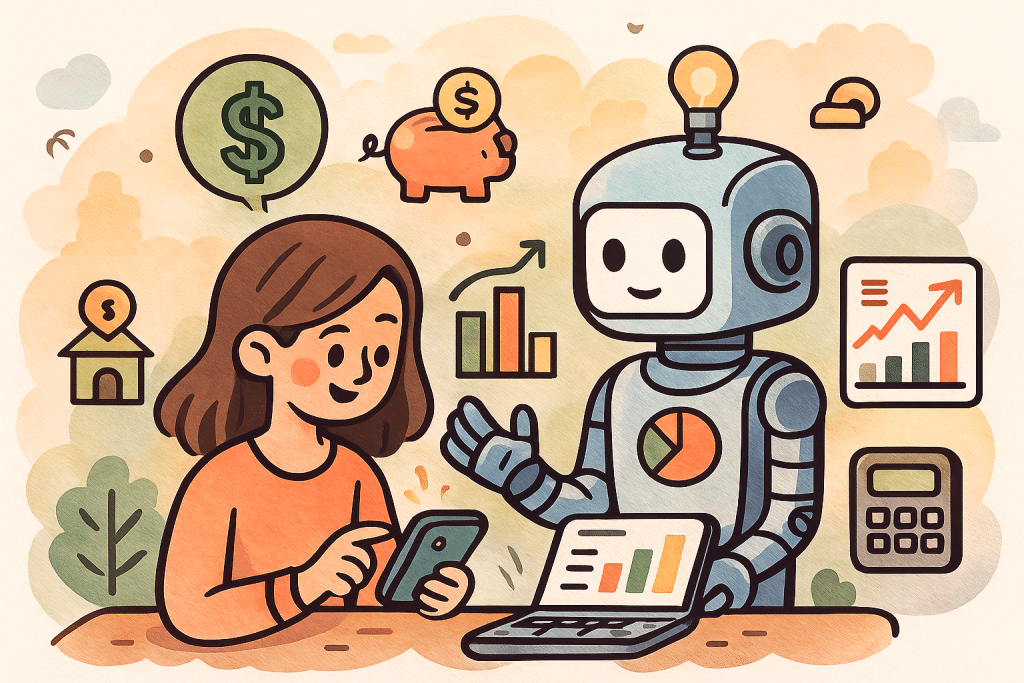
Artificial intelligence is changing how people save, invest, and manage money. From budgeting apps that predict spending to robo-advisors tailoring investments, AI is transforming personal finance tools into smarter, more personalized assistants.
AI in Personal Finance: Why It Matters Now
The financial technology sector is booming, with AI at its core. Global investments in AI-driven fintech are expected to surpass 40 billion dollars annually by 2030 (PwC 2022). The reason is clear: people want real-time insights, personalized recommendations, and security when dealing with money. AI offers all three.
Smarter Budgeting and Expense Tracking
Traditional budgeting apps once relied on manual inputs. Now, AI automatically categorizes spending, predicts future expenses, and alerts users before they overspend.
- Predictive analytics: AI studies patterns in spending and forecasts bills before they arrive.
- Personalized advice: Instead of one-size-fits-all charts, apps now tailor tips—suggesting subscription cancellations, grocery savings, or refinancing.
For example, Mint and Cleo use AI to provide financial “nudges” that help users cut unnecessary costs (Accenture 2023). This isn’t just convenience; it’s prevention against debt accumulation.
Robo-Advisors: Democratizing Investment
Robo-advisors are one of the biggest success stories in fintech. These AI-powered platforms manage investments at a fraction of the cost of traditional advisors.
- Low-cost investing: Annual fees often range from 0.25% to 0.50% of assets, compared to 1% or more for human advisors.
- Automated portfolio balancing: AI constantly rebalances portfolios to align with user risk tolerance.
- Accessibility: Some platforms allow users to start investing with as little as 5 dollars.
Companies like Betterment and Wealthfront now manage billions in assets using AI strategies once reserved for wealthy clients (Statista 2024).
This proves how AI is transforming personal finance tools by making wealth management accessible to everyone.
AI for Credit Scoring and Loan Decisions
Traditional credit scores are often rigid and exclusionary. AI is disrupting this by analyzing alternative data—like utility payments, rent history, or even social signals—to assess creditworthiness.
- Fairer access: People without traditional credit histories can now access loans.
- Real-time updates: AI can adjust credit scoring dynamically, instead of waiting months for score changes.
- Fraud detection: Machine learning spots unusual patterns in loan applications, reducing risk.
For instance, Upstart, an AI lending platform, claims its models improve approval rates by 27% compared to traditional methods (Upstart 2022).
Personal AI Financial Assistants
Beyond budgeting and investing, AI assistants are entering everyday money management.
- Voice-activated banking: Customers can ask virtual assistants to check balances, transfer funds, or analyze spending.
- AI chatbots: Banks like Bank of America (Erica) handle millions of queries monthly, giving users instant answers without human support.
- Financial coaching: AI now plays the role of “coach,” helping users stay on track with savings goals or retirement planning.
This personalization is reshaping customer experience and cutting costs for financial institutions.
Security: AI as a Shield Against Fraud
With digital banking rising, fraud attempts have grown. AI is now the frontline defense.
- Anomaly detection: Machine learning algorithms flag suspicious transactions within milliseconds.
- Behavioral biometrics: AI recognizes typing speed, mouse movement, or smartphone grip to confirm identity.
- Adaptive learning: As hackers evolve, AI models adapt faster than static rule-based systems.
According to McKinsey (2023), banks using AI-driven fraud prevention reduced false positives by 80%, saving millions annually.
Personalized Wealth Building with AI
Perhaps the most exciting development is AI’s ability to create personalized wealth strategies.
- Retirement planning: AI can simulate thousands of retirement scenarios instantly, helping users optimize savings.
- Tax optimization: Tools like TurboTax’s AI assistant suggest deductions based on personal spending data.
- Micro-investing: AI platforms like Acorns invest spare change automatically, turning small amounts into long-term portfolios.
This shift ensures that financial planning is no longer just for the wealthy—it’s becoming mainstream.
Ethical Challenges in AI Finance
Despite its promise, AI in finance raises ethical questions.
- Data privacy: AI needs massive amounts of personal data, sparking concerns about misuse.
- Bias in algorithms: If trained on biased data, AI can unintentionally discriminate.
- Over-reliance: Too much trust in automation may leave users vulnerable if systems fail.
Regulators worldwide are now drafting AI governance frameworks to ensure fairness and transparency (European Commission 2023).
Emerging Trends in AI Personal Finance
Several hot trends are shaping the future:
Hyper-personalization – Tools won’t just track spending. They’ll adapt to lifestyle, goals, and even health data—for example, adjusting budgets when fitness apps show you’re walking more and spending less on transport.
Generative AI advisors – Next-gen chatbots will move beyond tracking to full scenario planning, showing how small changes today impact debt, savings, or retirement tomorrow.
DeFi + AI – Decentralized finance platforms are starting to use AI for yield optimization and scam detection, making crypto investing safer for everyday users.
Sustainable investing – AI will help investors align portfolios with ESG goals by scanning companies for climate, labor, and ethical practices in real time.
AI in insurance – From lightning-fast claims processing to predictive policy pricing, insurers are rapidly adopting AI to cut delays and improve fairness.
The Future of Money Management
The adoption of AI in finance isn’t slowing—it’s accelerating. In the next decade, financial tools will evolve from being reactive (tracking past spending) to predictive and proactive (preventing financial mistakes before they happen).
Consumers will likely rely on one AI platform that integrates banking, budgeting, investing, taxes, and insurance into a single experience. This “all-in-one” approach could redefine personal finance, making it seamless and fully automated.
Conclusion
The integration of artificial intelligence is no longer a future vision—it’s here, shaping every aspect of money management. From smarter budgeting to robo-advisors and fraud detection, AI is transforming personal finance tools at a pace never seen before. While ethical and regulatory challenges remain, the benefits—accessibility, personalization, and security—are too significant to ignore.
As adoption grows, AI won’t just assist with money—it will fundamentally reshape how individuals interact with their financial lives.
References
- Marr, B. (2023) How Artificial Intelligence Is Changing The Way We Manage Money. Forbes. Available at: https://www.forbes.com1. (Accessed: 29 September 2025).
- PwC (2022) AI in Financial Services: How Artificial Intelligence Is Redefining Banking and Personal Finance. PwC Report. Available at: https://www.pwc.com/gx/en (Accessed: 29 September 2025)Accenture (2023) AI and the Future of Personal Finance: From Chatbots to Smart Investing. Accenture Insights. Available at: https://www.accenture.com (Accessed: 29 September 2025).

 Wellness Practices That Improve Emotional Balance