Steps to Launch a Successful Side Business
Jonathan Reed October 2, 2025
If you’re ready to launch a successful side business, 2025 offers more tools and pathways than ever before. From AI‑powered planning tools to micro‑business models and low‑cost digital infrastructures, the barrier to starting part-time enterprises is shrinking. This guide walks you through clear steps — with real trends and data — to turn your side hustle into something sustainable.
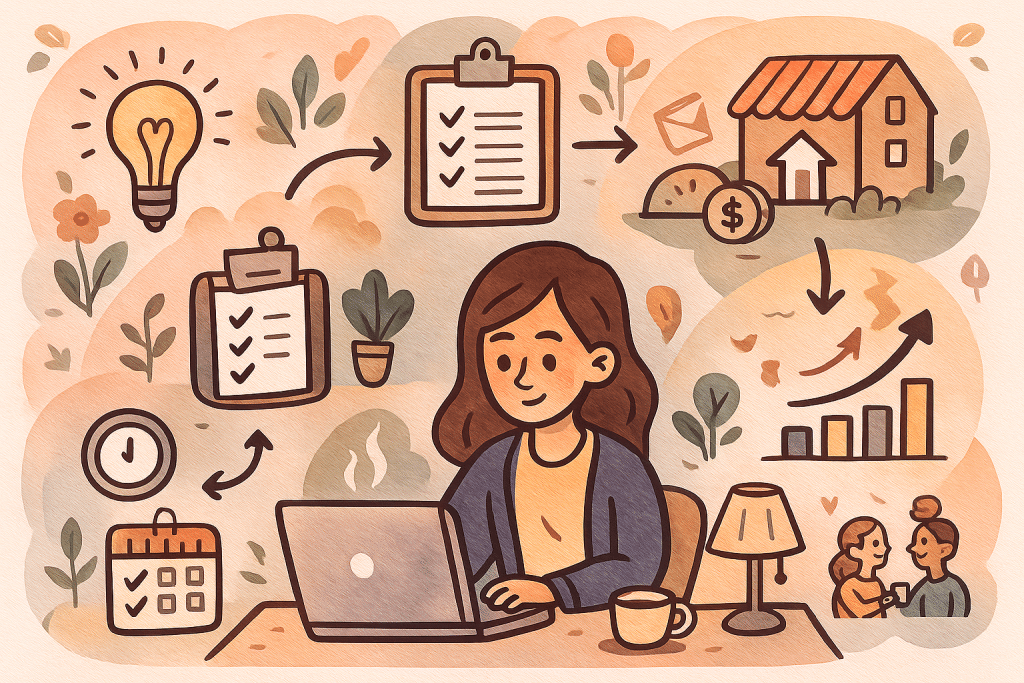
Why Starting a Side Business in 2025 Makes Sense
Before you begin, it’s helpful to see the landscape and why now is a promising time:
- According to LendingTree’s 2025 survey, side hustlers report average earnings of around 1,215 dollars per month, though the median is closer to 400 dollars.
- Research shows that 68% of side hustlers earned less than 500 dollars monthly, and only about 12% surpassed 1,000 dollars.
- The demand for flexible income sources is increasing: in many regions, inflation and rising living costs are pushing professionals to explore second incomes.
- Niche, AI-enabled side ventures are rising quickly — for instance, digital product sales, micro‑consulting, AI prompt engineering, and low-overhead service models are gaining traction.
These data points make clear: a side business is rarely a “get-rich-fast” scheme, but done thoughtfully, it can generate meaningful income, test new skills, and potentially grow into a primary venture.
Below is a step-by-step framework to launch a successful side business in 2025, with emerging trends baked in.
Step 1: Ideation & Niche Selection
a) Start with what you already know or enjoy
- Turning a hobby, skill, or expertise into a business lowers friction. Many side hustlers begin by monetizing what they’re already doing.
- Validate via low-cost experiments (polls, small test offers, freelancing) to assess interest before full launch.
b) Embrace micro‑niche & AI-enabled angles
- Broad fields (e.g. coaching) are crowded. Instead, define micro‑niches (e.g. “AI prompt auditing for solopreneurs,” “Instagram Reels editing for pet brands,” “micro gardens consulting”).
- Use AI tools to accelerate research and execution: generative AI can help you with content outlines, market research prompts, even draft marketing copy. The intersection of GenAI + entrepreneurship is gaining academic interest as a trend shaping business creation.
c) Check market indicators
- Use Google Trends, keyword planners, and social listening to see interest trends.
- For example, Forbes lists “selling digital products” and “AI-powered freelancing” among fastest growing side hustles in 2025.
- Ensure your niche aligns with your time, resources, and risk tolerance.
Step 2: Validate & Prototype
Validation prevents time wasted on ideas nobody wants.
- Pre-sell or pilot a minimal version: offer a small version of your service or product to early users at a discounted rate. Get feedback.
- Use surveys or landing pages to gauge demand before building full versions.
- Ensure your prototype meets a real pain point. Feedback from even 5–10 engaged users can steer your positioning.
This step reduces your risk and sharpens messaging before investing heavily.
Step 3: Build a Lean Infrastructure
One modern advantage in 2025 is the availability of lean, integrated tools:
- Use all-in-one no-code platforms (e.g., Webflow, Bubble, Carrd + Zapier) to launch websites, landing pages, and lead magnets quickly.
- Leverage AI tools for content creation, social media scheduling, and customer support (chatbots).
- For business planning, new AI‑powered tools like BizChat help small owners scaffold business plans and strategy, even with limited business experience.
- Use affordable hosting, domain names, and plugin ecosystems rather than custom-built solutions.
Focus on getting an MVP (minimum viable product) or service chain live with minimal expenses.
Step 4: Marketing & Customer Acquisition
You can have a good idea, but without buyer attention, it won’t go far. Here are emerging tactics:
a) Content + value-first strategy
- Create helpful content (short tips, problem-solution posts, case studies). Use AI to scale ideation and drafts, then polish for voice.
- Use microcontent (Reels, short video) and repurposing: a single blog post can generate multiple social clips and newsletters.
b) Community-based launching
- Instead of cold outreach, you can launch within niche communities (Discord, Slack, niché subreddits, industry forums) to gain initial users and feedback.
- Micro-influencer partnerships (smaller creators in your niche) tend to yield higher conversion at lower cost.
c) Paid testing (small bets)
- Run small ad tests (e.g. Facebook, Instagram, Google) with limited budgets to validate audiences and messaging.
- Track conversion funnels (ad → landing page → checkout) to identify friction points.
d) Referral / word-of-mouth loops
- Prompt delighted early users to refer others, offering incentives or discounts.
- Use social proof: showcase testimonials, case results, before/after.
Step 5: Operations, Systems & Scaling
Once you have traction, you need to scale without burning out.
a) Standardize workflows
- Document your core tasks (client onboarding, delivery, billing). Use templates or checklists.
- Automate repetitive steps via Zapier, Integromat, or internal scripts.
b) Delegate or outsource
- Hire freelancers or virtual assistants for lower-skill tasks (e.g. customer service, bookkeeping).
- Use platforms like Upwork, Fiverr, or niche agencies — start small and test for quality.
c) Monitor KPIs and financials
- Track metrics like customer acquisition cost (CAC), lifetime value (LTV), churn rate, profit per sale, hours spent vs revenue.
- Keep clean accounting — as your side business grows, mixing finances becomes dangerous.
d) Plan your pivot thresholds
- Decide in advance: if revenue passes “X” or workload exceeds “Y” hours, will you convert this side business to your full-time venture? Having these guardrails prevents burnout.
Step 6: Legal, Taxes, & Sustainability
You must protect yourself early, even in side mode.
- Register your business entity (LLC, sole proprietorship, etc.) in your jurisdiction.
- Track all expenses, receipts, and revenue. Use accounting software (e.g. QuickBooks, Wave).
- Understand tax obligations: in many countries, additional income triggers different filings or thresholds.
- Consider intellectual property (trademarks, copyrights), especially for brand names, logos, digital products.
- Reinvest profits wisely: allocate for marketing, tools, and emergency funds so growth is sustainable, not debt‑driven.
Step 7: Iterate, Learn & Expand
The journey never stops — repetition and refinement matter.
- Run “post‑mortems” monthly: what worked this month? What failed? What feedback did you get?
- Use customer feedback loops actively — surveys, interviews, usage data.
- Gradually expand offerings: add complementary services, upsells, subscription models.
- Always re-evaluate your time vs reward tradeoff — if a segment isn’t scaling, phase it out.
Example Side Business Paths in 2025
Here are a few side ideas that reflect current trends and fit lean models:
- AI prompt consulting / prompt auditing: help others craft effective prompts for ChatGPT or Midjourney.
- Digital product subscriptions: niche toolkits, templates, micro‑learning modules.
- Micro‑niche content creator: produce content for a narrowly defined audience (e.g. growth tips for solopreneurs in Ghana).
- Local mobile services: mobile car wash, pet grooming, or remote errands — which are showing fast growth per recent trend reports.
- Freelance skills bridging: design, UX, social media, programming — and package them into micro‑services or retainer bundles.
Common Pitfalls & How to Avoid Them
| Pitfall | Warning Sign | Mitigation |
|---|---|---|
| Overextending too early | You can’t keep up with demands or deadlines | Set realistic initial caps on clients or product production |
| Chasing too many ideas | Jumping between projects without finishing | Use the “one‑in, one‑out” rule — focus on one main product/service at a time |
| Ignoring customer feedback | You don’t know why people stop buying | Use surveys, interviews; iterate based on real user data |
| Relying solely on one channel | All leads come from one social media or platform | Diversify channels (content, referrals, ads, community) |
| Neglecting margins & costs | You think revenue = profit | Regularly calculate net profit, not just gross sales |
Bringing It All Together: The 7‑Phase Launch Timeline
Here’s a condensed timeline you can follow over 12–16 weeks:
- Weeks 1–2 (Ideation): Brainstorm 3–5 niches, pick one, test interest with simple surveys or landing page.
- Weeks 3–4 (Prototype): Create minimal version, offer to early users, gather feedback.
- Weeks 5–6 (Infrastructure Build): Build website, set up branding, integrate AI tools, prepare delivery method.
- Weeks 7–8 (Soft Launch / Marketing Tests): Run small ad tests, promote in communities, collect early sales.
- Weeks 9–10 (Refine & Automate): Clean up funnels, fix friction, automate repetitive tasks, document processes.
- Weeks 11–13 (Scale & Outreach): Amplify marketing, bring in referrals, partnerships, content push.
- Weeks 14–16 (Evaluate & Plan Growth): Review metrics, decide which segments to scale or pivot, plan next phase.
Conclusion
To launch a successful side business in 2025, you need more than hustle — you need structure, intentionality, and awareness of emerging opportunities. By choosing a precise niche, validating with real users, leveraging AI and lean tools, and scaling smartly, you can build a side venture that earns income, builds skills, and possibly transitions into something bigger.
Start small. Test. Iterate. Stay metrics‑aware. And don’t forget: many side businesses don’t explode overnight. What matters is consistent progress, listening to your market, and adapting.
Reference
Robinson, B. (2025) 10 Fastest-Growing Side Hustles Across the US and Canada in 2025. Forbes. Available at: https://www.forbes.com/sites/bryanrobinson/10-fastest-growing-side-hustles-across-the-us-and-canada-in-2025 (Accessed: 2 October 2025).
LendingTree (2025) Americans Are Earning an Average of 1,215 per Month From Side Hustles. Available at: https://www.lendingtree.com/debt-consolidation/side-hustle-income-survey (Accessed: 2 October 2025).
SurePayroll (2025) Is Your Side Hustle a Business or a Hobby?. Available at: https://www.surepayroll.com/resources/article/side-hustle (Accessed: 2 October 2025).

 Wellness Routines That Support Emotional Health