Gardening Techniques That Encourage Sustainability
September 29, 2025
We are entering a new era in gardening, where regenerative gardening techniques are becoming a benchmark — not optional. This article reveals how modern gardeners are shifting to methods that rejuvenate soil, conserve resources, and support resilient ecosystems.
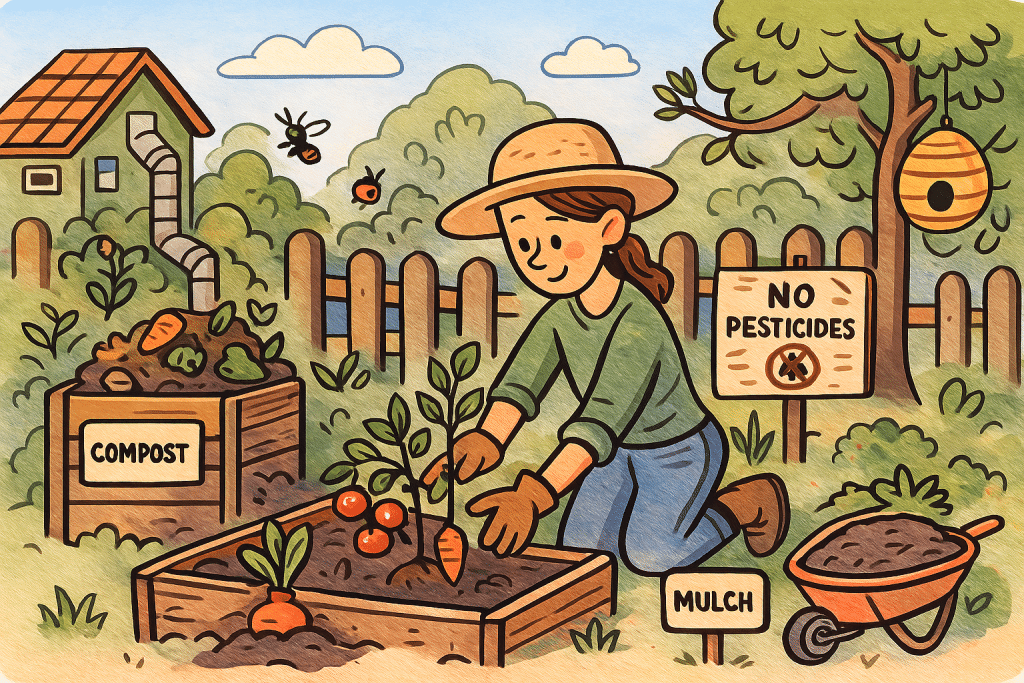
Why Regenerative Gardening Techniques Are Trending Now
Several forces are converging to push regenerative gardening into the spotlight:
- Climate stress and extreme weather make traditional, input-heavy gardening riskier. Gardens that rely heavily on watering, tilling, or synthetic treatments are under threat.
- Growing public awareness of soil health, carbon sequestration, and biodiversity has transformed gardens into micro-ecosystems, not just aesthetic patches.
- Scientific validation is mounting: regenerative practices improve water retention, soil organic matter, reduce erosion, and help buffer climate extremes
- Gardening trend forecasts for 2025 emphasize sustainability, native planting, low-water landscapes, and edible integration.
- Innovations in smart gardening tech and robotics are enabling fine-tuned monitoring of soil and plant health, making regenerative practices more accessible (see later section).
Put simply: gardeners are demanding more than pretty flowers. They want gardens that give back.
Core Principles Behind Regenerative Gardening Techniques
To understand the how, we need to grasp the why. Here are foundational principles many practitioners follow:
- Minimize soil disturbance
Avoid heavy digging or tilling to protect fungal networks, earthworms, microbial life, and soil structure. No-dig gardening (or low-till) supports a stable underground network. - Keep living roots in soil year-round
Whether with cover crops, perennial plants, or intercropping, maintaining roots prevents erosion and supports the soil food web. - Build organic matter and soil carbon
Compost, mulches, leaf mold, and decomposing plant matter are key. They feed microorganisms, increase water retention, and sequester carbon. - Promote biodiversity and polyculture
Plant mixes of flowers, herbs, vegetables, and beneficial natives (or “nativars”) that support wildlife and natural pest balance. - Close nutrient loops
Redirect garden waste (leaves, kitchen scraps, prunings) into compost or mulch rather than sending them to waste. - Capture and manage water smartly
Use rainwater, contouring, swales, drip irrigation, and greywater systems to reduce reliance on external water. Water net zero or minimal. - Use appropriate technology
Sensors, small-scale robotics, and automation can help monitor soil moisture, nutrient levels, and guide interventions.
These principles manifest in specific techniques. Below we’ll dive into some of the most promising and emerging ones.
1. No-Dig & Sheet Mulching: Let Soil Do the Work
What is No-Dig?
No-dig gardening is a method where you never turn over or plow your soil. Instead, you layer organic matter (compost, mulch, leaf litter) on top and let worms, microbes, and soil fauna do the integration.
Why It Works
- Preserves fungal hyphae and microbial networks
- Reduces disruption of soil structure
- Minimizes weed disturbance and germination
- Helps retain moisture under mulch layers
How to Implement
- Remove or suppress perennial weeds initially (e.g. with cardboard or light-excluding sheets).
- Apply a sheet mulch or layered “lasagna” approach: wet cardboard/newspaper → compost/leaf mold → wood chips/mulch.
- Plant directly through the layers—cut holes or slits in the top mulch to insert transplants or seedlings.
- Top off with fresh organic mulch each season to maintain coverage.
- Over time, the layers incorporate themselves naturally.
Tips:
- Start small (one bed) while you learn.
- Use varied carbon materials — straw, shredded leaves, wood chips.
- Keep the top layer moist but not saturated.
- Avoid introducing weed seeds via compost.
2. Cover Crops, Green Manures & “Living Mulch”
When the main grow season is over or between vegetable beds, cover crops or green manures (like legumes, clover, vetch) are grown not for harvest but to enhance the soil.
Benefits:
- Fix atmospheric nitrogen (especially legumes)
- Add organic biomass when cut and left as mulch
- Suppress weeds
- Prevent erosion and improve structure
In some gardens, these cover species become living mulch, interspersed with primary crops, creating a living cover rather than bare soil patches.
How to Use:
- Choose cover crops suited to your climate (e.g. buckwheat, clover, rye, hairy vetch).
- Sow after harvest or during fallow periods.
- At bloom, cut and leave residue as mulch or chop and drop.
- Avoid turning the soil—let the biomass decompose in place.
3. Polyculture, Permaculture & Edible Integration (Foodscaping)
Instead of monoculture beds, regenerative gardens increasingly adopt polyculture or permaculture guilds—plant communities that support each other. Also, foodscaping (edible landscaping) is becoming mainstream: blending beauty and function in one design.
Features:
- Companion plants (e.g. legumes beside borage, herbs with vegetables)
- Attract beneficial insects (flowering edges, native species)
- Layered planting: ground covers, shrubs, small fruit trees
- Combine aesthetics and yield
Example Guild:
- Fruit tree in center
- Nitrogen-fixing plants around
- Flowering herbs and pollinator attractors
- Ground-level edible herbs or greens
This design reduces pest pressure, increases yield per area, and fosters resilience.
4. Rainwater Harvesting, Swales & Microcatchment
Water is often the limiting resource. Regenerative gardens are turning to passive water capture and intelligent distribution.
- Rain barrels / cisterns to collect roof runoff
- Swales: shallow trenches on contour that slow water, let it infiltrate
- Keyline design: directing runoff into soil rather than away
- Microcatchment basins around plants
- Drip or soaker systems under mulch to reduce evaporation
These techniques reduce irrigation needs and create water self-sufficiency in dry seasons.
5. Xeriscaping and Drought-Adapted Planting
Xeriscaping, originally developed for arid landscapes, emphasizes water-wise plant choices, mulching, minimal turf, and designing for low-water consumption.
Key features:
- Use of drought-tolerant or native species
- Minimal or no lawn areas
- Mulch layers to suppress evaporation
- Planting in zones by water need
Increasingly, gardeners are combining regenerative practices with xeriscaping: e.g. no-dig beds built with drought-tolerant plants, capturing rain, and using local mulch.
6. Soil Sensors, Robotics & Smart Monitoring
One of the newer frontiers in regenerative gardening is the integration of smart technology to monitor and optimize conditions rather than apply interventions blindly.
- IoT sensors for soil moisture, temperature, nutrient levels
- Precision micro-irrigation systems
- Robotics to automate weeding, planting, or monitoring (e.g. PlantPal research)
- AI-driven analysis to guide compost additions or planting patterns
These tools are democratizing access to “precision gardening,” enabling small-scale gardeners to apply data-driven regenerative practices.
7. Carbon Sequestration & Climate Mitigation
One often underappreciated value of regenerative gardens: they can help sequester carbon. Practices like no-till, cover cropping, continuous organic matter addition, and biodiversity build soil organic carbon (SOC).
Multiple sources assert regenerative agriculture (and by extension regenerative gardening) plays a key role in both climate adaptation and mitigation.
The principle is simple: more carbon held in stable soil organic matter means less CO₂ in the atmosphere.
Trending Techniques & “Hot Topics” in 2025
Below are emerging or expanding techniques within the regenerative gardening space that are gaining attention:
Chaos Gardening
A loose, semi-wild planting style where seeds and plants are scattered in a more laissez-faire pattern. It intentionally embraces randomness and lets nature choose what thrives; it has become a social media gardening trend; it aligns well with regenerative ideals: lower maintenance, biodiversity, wild aesthetics, and resilience.
Native & “Nativar” Focus
Gardeners are requesting more native plants and breeder-engineered nativars (cultivars of native species) to combine ecological compatibility and garden performance.
Using natives supports local pollinators, less water, and fewer chemical inputs.
Lawn Alternatives & Pollinator Gravitation
The traditional turf lawn is under decline. Many gardens convert to clover, wildflower mixes, or pollinator meadows, reducing mowing and watering.
This is integral to regenerative gardens that aim to shift from maintenance-centric lawns to living ecosystems.
Micro-Urban Regeneration & Vertical Methods
In city settings, gardens are trending upward and inward: green walls, vertical planters, hydroponic beds, and container permaculture setups.
One project, PlantPal, envisions a robot-assisted gardening system for urban households.
Another advanced work uses multimodal data to support sustainable indoor gardening.
These approaches allow regenerative techniques even in tight urban footprints.
Step-by-Step Guide: Applying Regenerative Gardening Techniques
Below is a sample workflow you can adopt. You don’t need to apply all methods at once—incremental change yields results.
1: Assess Your Soil & Site
- Test pH, nutrients, organic matter content
- Map water flow, sun/shade patterns
- Identify problematic areas (erosion, compaction, runoff)
2: Plan Zones & Water Flow
- Use contour lines or slope to place swales, keyline features
- Decide plant zones: high-moisture zone, drought-adapted zone, shade zone
- Sketch guilds or clusters rather than rows
3: Begin No-Dig Beds / Sheet Mulch
- Suppress weeds with cardboard or sheets
- Layer compost, mulch, leaf mold
- Plant directly through layers
4: Introduce Cover Crops or Living Mulch
- After primary crops, sow appropriate cover species
- Or interplant living mulch species among cultivated plants
5: Plant Polycultures & Foodscapes
- Use companion planting, guilds, native plant inclusion
- Blend aesthetic and edible species
- Allow paths to meander, edges to blur
6: Install Water Capture Systems
- Rain barrels, cisterns
- Swales, infiltration basins
- Drip irrigation under mulch
7: Use Sensors & Monitoring
- Place soil moisture sensors and temperature probes
- Track data and adjust watering or amendments
- Consider robotics or automation solutions as budget allows
8: Maintain & Observe
- Replace mulch annually
- Monitor pest and disease balance (less chemical intervention)
- Prune, chop-and-drop, let natural processes dominate
9: Evaluate & Iterate
- Test organic matter after seasons
- Monitor plant health, yield, biodiversity
- Tweak guild designs, water zones, species composition
Challenges, Pitfalls & Mitigations
- Weed pressure in early years: Without tilling, weeds may emerge. Mitigate by thick mulching, initial suppression, and vigilant hand-weeding.
- Initial labor or materials: Establishing no-dig beds and installing water capture features takes effort upfront. But over time labor drops.
- Pest outbreaks (if biodiversity is too low early on): Promote beneficial insects, trap cropping, or use gentle interventions.
- Overreliance on tech: Sensors and robotics help, but they should inform—not replace—biological methods.
- Compost or organic inputs scarcity: Build community compost systems, leaf-collecting efforts, or local exchanges.
- Misfit plant choices: Always adhere to climatic suitability and native range for longevity.
Why This Matters Locally — A Note for Ghana / West Africa
While much literature is global, regenerative gardening techniques can be adapted to West African climates:
- Use local native species and drought-tolerant varieties.
- Leverage rainwater capture during rainy seasons to buffer dry spells.
- Use leaf litter, agricultural byproduct waste (e.g. husks, stalks) as organic matter.
- Integrate edible perennials (e.g. moringa, cassava, fruit trees) into guilds.
- Use cover crops suited to tropical climates (e.g. legumes like cowpea, mucuna) to fix nitrogen.
- Participate in community sharing of compost, seeds, and knowledge to spread regenerative approach scalability.
The core idea: a regenerative garden can be a resilient patch amidst climate unpredictability, rather than a fragile ornamental.
Measured Benefits & Evidence
- Gardens and farms using regenerative approaches show improved water retention, reducing drought vulnerability.
- Soil organic carbon gains have been documented in systems that minimize tillage and maintain continuous cover.
- Regenerative farming approaches in agriculture show higher yields under stress conditions compared to conventional systems.
- Regenerative gardens contribute to biodiversity, reduce external input needs, and create more fertile soil over time.
- Public gardening trend reports for 2025 highlight sustainable practices, native planting, and low-water landscapes as major shifts.
These demonstrate that regenerative methods are not speculative—they are grounded and increasingly validated.
Final Thoughts & Next Steps
If you’re ready to begin:
- Pick one technique (e.g. no-dig) and apply it to a single bed.
- Integrate compost and cover cropping gradually.
- Monitor local conditions and adapt design.
- Over time, expand to water capture, polycultures, and tech tools.
Regenerative gardening techniques represent a shift from control toward cooperation—working with nature instead of trying to dominate it. In a changing climate, your garden can become part of the solution: richer soil, resilient plants, habitat for wildlife, and even a minor carbon sink.
If you like, I can prepare a version of this article tailored for West African gardens (plants, climate, pests) or a shorter guide version for your blog. Do you want me to do that next?
References
- United States Environmental Protection Agency (EPA). (2022) Sustainable Management of Landscaping and Green Spaces. Available at: https://www.epa.gov/smm/sustainable-management-landscaping (Accessed: 28 September 2025).
- Royal Horticultural Society (RHS). (2023) Sustainable Gardening Practices. Available at: https://www.rhs.org.uk/advice/sustainable-gardening (Accessed: 28 September 2025).
- Food and Agriculture Organization of the United Nations (FAO). (2021) Urban Agriculture and Sustainable Gardening. Available at: https://www.fao.org/urban-agriculture/en (Accessed: 28 September 2025).

 Steps to Build a Resilient Entrepreneurial Mindset