Travel Experiences That Encourage Cultural Understanding
Thomas Blake September 30, 2025
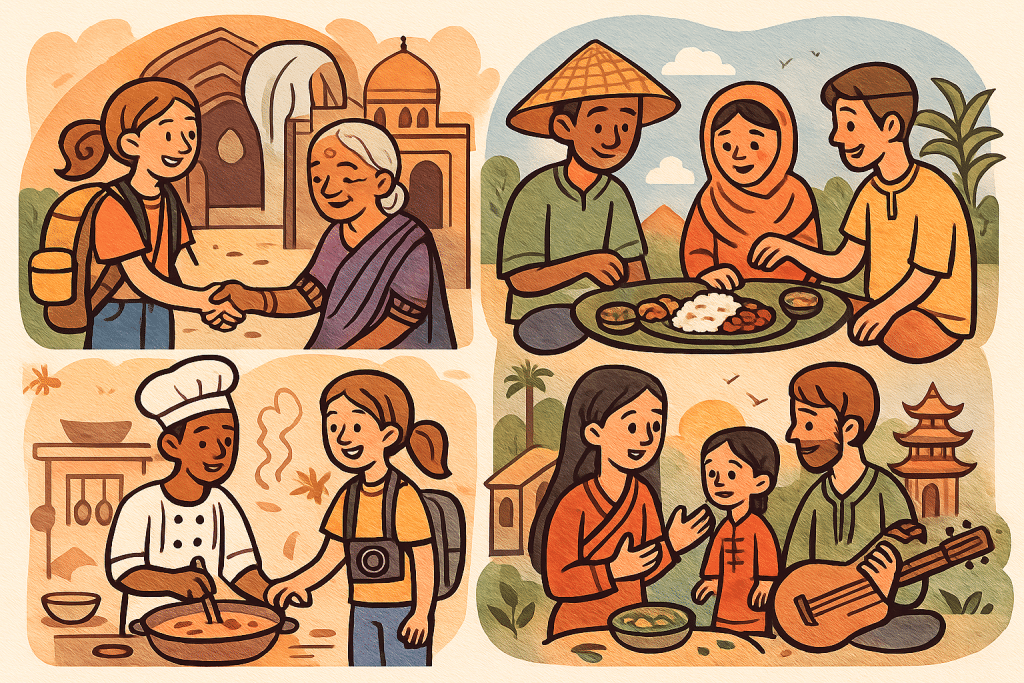
Cultural immersion travel is reshaping how we explore the world—moving past sightseeing to truly living local. In this article, we explore emerging trends in cultural immersion travel, highlight standout experiences, and offer concrete tips for planning journeys that foster deeper cross-cultural understanding.
You’ll learn:
- Why cultural immersion travel is trending
- Five innovative forms it’s taking in 2025
- How to plan ethically immersive travel
- Real-world examples you can replicate
Why Cultural Immersion Travel Is Trending Now
The shift from “tourist mode” to “participant mode”
Travelers increasingly reject superficial checklists in favor of meaningful engagement. The McKinsey/Skift report “The evolving role of experiences in travel” notes that consumers now expect “activities, attractions, and tours” to be more than just background—they want stories, depth, and connection.
Similarly, a report by Mountain (research.mountain.com) found that 70% of consumers expressed interest in cultural immersion on future trips, preferring experiences like cooking classes, village stays, or local workshops.
Luxury travel is following suit: luxury hospitality brands are repositioning themselves to emphasize cultural authenticity rather than just indulgence.
2025: Destination marketing embraces authenticity
With travelers demanding deeper connection, destination marketers are pivoting. According to Envision It Agency, “authentic travel experiences and genuine cultural connections are now more important than ever” when choosing where to visit.
Cultural tourism experts also forecast that the decade ahead will push intangible heritage (rituals, stories, languages) into the spotlight, and drive more tech-enabled storytelling overlays.
These shifts confirm that cultural immersion travel is no longer a niche—it’s becoming a mainstream expectation.
Five Emerging Trends in Cultural Immersion Travel
Here are some of the freshest, most compelling ways cultural immersion is evolving:
1. Narrative‑Driven Itineraries & Storytelling Frameworks
Rather than a list of sights, travelers now favor journeys structured like stories—with arcs, themes, and transitions. A recent paper introduced Narrative Guide, an AI-powered framework that builds itineraries rooted in geo-cultural scripts and narrative coherence. The result: trips that feel like a story unfolding, not a random list of visits.
This approach helps guide visitors from one experience to the next in a meaningful way—for example, moving from a mythology-focused temple visit to a folk-dance workshop, then into a local storytelling session.
2. Community-Hosted Stays & Cultural Homestays
Staying in local homes or community-run guesthouses (rather than impersonal hotels) enables guests to live daily life with hosts. It can mean cooking local meals, participating in chores, and hearing generational stories.
For example, Indigenous tourism initiatives worldwide aim to create cultural economic opportunities by hosting visitors through partnerships.
These stays can also counter over tourism by distributing economic benefits to smaller, less-visited places.
3. Pop-Up Cultural Experiences and Micro-Encounters
Not every immersive experience requires weeks of travel. Many destinations are experimenting with pop-up culture: temporary exhibitions, street performances in unorthodox spaces, or rotating artist residencies in local neighborhoods.
These micro‑encounters let even short‑stay travelers engage meaningfully without overly touristy veneer.
4. Culinary & Foodways Immersion
As one travel executive put it, “food has become the new passport to culture”—and that trend is proving real: 1 in 5 travelers now book trips primarily for culinary experiences.
Culinary immersion can take many forms: learning ancestral cooking methods, foraging local ingredients, joining communal feasts, or following food pilgrimage routes.
5. Regenerative Tourism & Cultural Conservation
More travelers demand that their journeys benefit—not burden—local communities. Regenerative approaches aim to restore cultural resilience, not exploit it.
This includes funding local heritage projects, supporting language revitalization, or designing experiences that strengthen, rather than distort, local traditions.
In practice, this might look like collaborating with artisans to co-create workshops rather than hosting pre-packaged craft displays.
How to Plan Ethical, Immersive Travel
Here’s your checklist and guide to designing respectful, meaningful trips:
Baseline Principles
- Seek reciprocity: Ensure communities gain lasting benefits (income, capacity, infrastructure).
- Avoid cultural commodification: Don’t turn sacred practices or rituals into performances.
- Respect agency: Let hosts shape what you participate in.
- Prioritize long-term relationships: Return, follow-up, and continue support beyond your stay.
Step-by-Step Planning Guide
| Step | Action | Tips |
|---|---|---|
| 1 | Research deeply | Use anthropology, ethnography, local blogs to understand context. |
| 2 | Find community-based operators | Look for cooperatives, locally owned experiences, non‑profit partners. |
| 3 | Co-design your itinerary | Ask hosts what they want you to experience (vs imposing your own list). |
| 4 | Balance structure and flexibility | Build narrative flow (see NarrativeGuide model) but allow serendipity. |
| 5 | Engage meaningfully | Participate in daily tasks, attend rituals (if invited), ask questions. |
| 6 | Reflect and respect | Debrief with hosts, offer feedback, and respect cultural boundaries. |
| 7 | Share thoughtfully | If posting on social media, center host voices—not just your own snapshot. |
Mistakes to Avoid
- Treating communities as attractions
- Staying only in luxury enclaves cut off from local life
- Over-scheduling and ignoring rest or reflection
- Appropriating cultural elements without context
Real-World Examples of Cultural Immersion Travel in Action
- In Marrakech, the revival of hikayat (oral storytelling) has become a draw: the annual storytelling festival pulls visitors into the ancient tradition under starry marketplaces.
- In the Alps, the Alpine Pearls network is promoting cross‑border eco-mobility tourism that weaves local culture with sustainable transport and itineraries.
- Indonesia’s rural initiatives invite visitors to stay with traditional weaver families, learn batik techniques, and participate in agricultural cycles. (Referenced in local cultural tourism trend reports)
- Pop-up museum installations in urban areas allow marginalized communities to temporarily reclaim public space for cultural expression—ideal for travelers who want short immersive engagements.
Final Thoughts
Cultural immersion travel promises something rare in our hyperconnected world: the chance to slow down, listen, and see the familiar through unfamiliar eyes. But like any powerful tool, it demands responsibility.
The trends of 2025 (narrative itineraries, pop-up cultural spaces, regenerative tourism) show that immersive travel is evolving. For travelers who care not just to see but to understand, these experiences offer paths toward empathy, connection, and shared humanity.
If you liked this guide, I can also help you design a cultural immersion itinerary for a specific region (Africa, Southeast Asia, Latin America, etc.). Would you like me to build one for you?
References
- Richards, G. (2018) Cultural tourism: A review of recent research and trends. Journal of Hospitality and Tourism Management, 36, pp.12-21. Available at: https://doi.org (Accessed: 29 September 2025).
- Smith, M.K. and Robinson, M. (2021) Cultural tourism in a digital age: Global challenges and local opportunities. Tourism Management Perspectives, 40, 100890. Available at: https://www.sciencedirect.com(Accessed: 29 September 2025).
- UNESCO (2020) Cultural heritage and sustainable tourism. UNESCO. Available at: https://en.unesco.org (Accessed: 29 September 2025).

 Fitness Practices That Support Healthy Aging