Travel Destinations That Inspire Reflection
Thomas Blake October 2, 2025
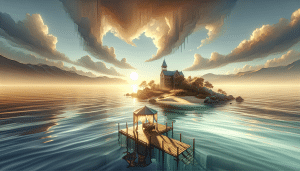
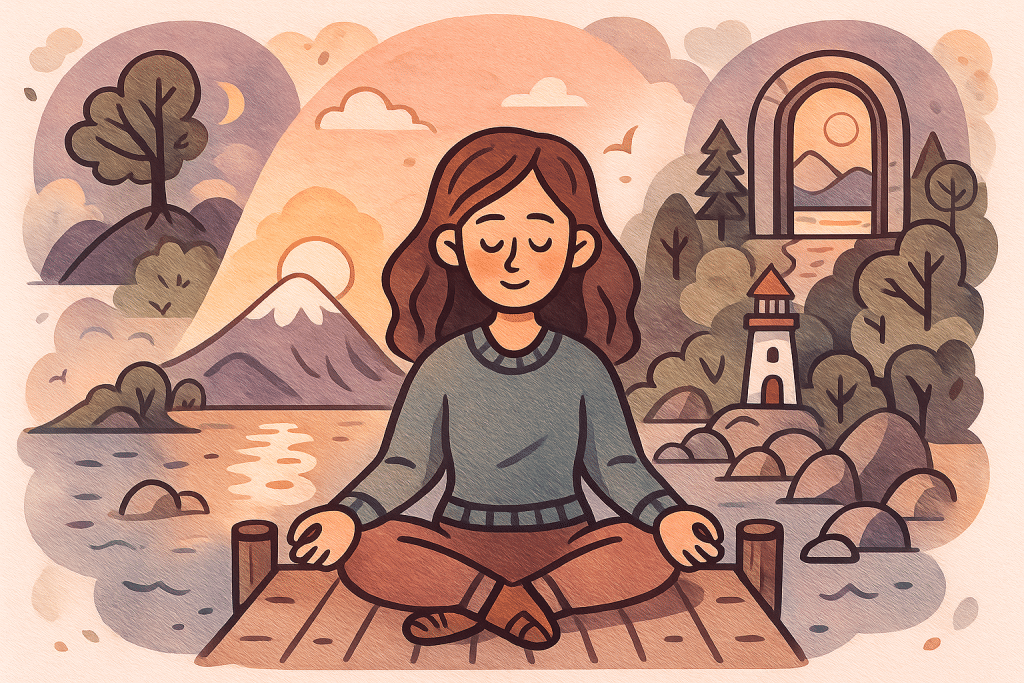
If you’re searching for travel destinations that inspire reflection, 2025 offers new pathways to travel more mindfully—not merely to see, but to pause, process, and transform. As wellness, sustainability, and deeper experiences rise in traveler priorities, certain locations are becoming havens for introspection and renewal.
The Shift Toward Reflective Travel in 2025
Before diving into specific destinations, it’s worth noting why reflective travel is trending now.
- Travelers are increasingly drawn not only to aesthetics, but to meaningful experiences that offer emotional respite, cultural grounding, and time to think. Reports from tourism analysts regard meaningful, personalized travel as a key consumer trend in 2025.
- Wellness tourism continues to expand, but is evolving into what some call “experience wellness” — integrating place, purpose, and presence rather than just spas or fitness.
- The popularity of agritourism and regenerative farm stays reflects a desire for connection to land, cycles, and grounding practices.
- Another uptrend is noctourism, or travel that centers nighttime and dark-sky environments—walking under stars, night silence, and cosmic perspective.
Thus, destinations that already offer solitude, ecological connection, dark-sky settings, or cultural immersion are becoming hotspots for travelers seeking pause rather than spectacle.
Below are seven destinations (or destination types) that in 2025 are emerging as especially powerful for reflection, with tips for how to experience them deeply.
1. Dark‑Sky and Astro‑Retreat Sites
Why they inspire:
Being under a truly dark night sky—away from city light pollution—gives perspective. The stars reappear, the Milky Way arches overhead, and the silence after dusk can quiet internal noise.
Where to go & how to reflect:
- Aoraki Mackenzie Dark Sky Reserve, New Zealand – one of the world’s largest protected dark zones. Join stargazing tours, astronomy talks, or silent night walks.
- Atacama Desert, Chile – remote, high altitude, minimal light pollution. Some lodges offer astronomical observatories and night meditation sessions.
- Namibia’s NamibRand Nature Reserve – a “star sanctuary” where nights are profound and accommodation is ultra low-impact.
Reflection prompts / practices:
- Bring a journal and write under the Milky Way.
- Schedule a night hike with minimal gear and light—a “walk in the dark” exercise.
- Use cosmic vantage as metaphor: what feels small, what feels vast in your own life?
Tip: Reserve star‑focused accommodations early—many of the best stargazing lodges limit human light at night.
2. Regenerative Farm Retreats & Agritourism Estates
Why they inspire:
These spaces blur the boundary between human and natural cycles. You can see soil health, plant growth, water cycles, and seasonal rhythms firsthand. The slower pace encourages contemplation.
Places to consider:
- Southall Farm & Inn (Tennessee, USA) — merged hospitality with soil restoration, guest garden walks, farm meditations.
- Heckfield Place (UK), São Lourenço do Barrocal (Portugal) — examples of luxury farm hospitality combining design, biodiversity practices, and human-scale experiences.
- Rustic lodges in places like Tuscany or Andalusia that are rewilding parts of their land and offering guest involvement in garden/farm work.
Reflection strategies:
- Volunteer for short tasks (watering, compost, planting) as contemplative action.
- Walk the land at “planting dawn” or dusk with a sensory focus (soil, wind, birds).
- Join farm-hosted “eco‑talks” or storytelling sessions on regeneration and land memory.
This kind of travel tends to slow you from “visitor mode” into “participant mode,” which deepens emotional connection.
3. Sacred Landscapes and Pilgrimage Routes
Why they inspire:
Many spiritual traditions have sacred lands, pilgrimage trails, or holy mountains. Walking or being in them often awakens interior motion and reflection.
Notable routes / sites:
- Camino de Santiago (Spain, Portugal, France) — centuries‑old pilgrim trail with varied terrain and many reflection stops.
- Mount Athos (Greece) or Koyasan (Japan) — monastic landscapes where silence and ritual are built into the environment.
- Peruvian Sacred Valley or Nepal’s mountain valleys — combining sweeping vistas with sacred heritage.
Guidance for reflection:
- Walk sections of the route with light gear, focusing on each step as meditative.
- Use the time for silent intervals—no reading, no music, just breathing and noticing.
- Journal nightly about internal “questions” or emotional currents that emerged.
These travels leverage journey as metaphor. Your internal pilgrimage moves in tandem with your feet.
4. Remote Nature Islands & Oceanic Silence
Why they inspire:
Surrounded by water, isolated from mainland bustle, you’re cradled by horizon, tides, and sky. The rhythmic pulse of sea, wind, and sky prompts internal rhythms too.
Potential destinations:
- Faroe Islands or Shetland Islands (N. Atlantic) — dramatic cliffs, isolation, wild wind.
- Fogo Island (Newfoundland, Canada) — remote artist residencies, nature‑immersive stays.
- Haida Gwaii (British Columbia, Canada) — cultural depth and coastal solitude.
Reflection ideas:
- Sit on a shore at dawn or dusk; watch tide and waves align with your breath.
- Take silent kayak or paddleboard journeys during calm hours.
- Explore beach-combing or tidal observation; notice shifting sands, shells, driftwood as metaphors.
Isolation doesn’t mean loneliness—it can mean spacious presence.
5. Remote Mountain Valleys & High‑Altitude Refuges
Why they inspire:
Altitude forces slowness. Mountain air, thinner breathing, quiet trails, and big skies make your inner landscape expand or contract, depending on what you bring.
Top picks:
- Gimmelwald / Mürren region, Swiss Alps — car-free, high meadows, reflections in snowmelt streams.
- Bhutan’s Paro Valley / Taktsang Monastery — spiritual and visual height combine.
- Patagonia’s off-grid refuges (e.g. Torres del Paine) for glacier views and luminous skies.
How to reflect:
- Try “altitude journaling”: write after each ascent about internal shifts.
- Bring a simple walking mantra: “step, breathe, notice.”
- Combine with silent camping nights or bivouac where permitted.
Mountains often ask you to pause—not in urgency, but in humility.
6. Temperate Forest Sanctuaries & Wellness Forest Residences
Why they inspire:
Forests are known to calm the nervous system—“forest bathing” (shinrin-yoku) is more than metaphor. The whisper of leaves, filtered light, and mossy hush foster inwardness.
Destinations:
- Yakushima (Japan) — ancient cedar forests, deep humidity, quiet trails.
- Hoh Rainforest (Olympic Peninsula, USA) — thick green, dripping moss, meditative paths.
- Forest wellness lodges in Scandinavia or Central Europe that are designed for silence and reflection.
Reflection practices:
- Schedule guided forest bath walks with certified nature therapists.
- Bring a “sit-spot” practice: choose a tree or clearing and return daily, noticing change.
- Use a 5-4-3-2-1 sensory exercise: note five things seen, four heard, etc.
The forest holds you in gentle attention.
7. Micro‑Retreats in Quiet Historic Villages
Why they inspire:
Sometimes reflection doesn’t require grand wilderness—it thrives in small, timeless places with slow rhythms, human scale, history, and gentle pace.
Examples:
- Matera, Italy (ancient cave cities within calm hills).
- Giethoorn, Netherlands (canal hamlet, no roads).
- Rothenburg ob der Tauber, Germany — medieval walls, evening quiet.
- Kashubian villages, Poland, or similar remote European hamlets.
Ways to reflect:
- Walk narrow alleys at dawn.
- Sit in local cafés with no agenda; observe local routines.
- Seek small local stories—old houses, slow workshops, elder conversations.
These are “pause towns”—places offering mental breathing room, not spectacle.
How to Plan Travel That Supports Reflection
To make a retreat truly reflective (not just Instagrammable), consider a few guidelines:
1. Travel Slowly
Avoid cramming many stops. One or two locations stretched over time give space to absorb, process, and quiet your thoughts.
2. Limit Connectivity
Choose accommodations that limit WiFi or offer “digital-free hours.” Let your mind be offline while your body is on site.
3. Align with Local Rhythm
Ask local guides or retreat hosts when dawn, dusk, silence hours, or quiet times occur—and lean into them.
4. Bring Minimal Tools
A small journal, pen, simple walking shoes—avoid gear overload. Your interior is your tool.
5. Use Narrative-Based Itineraries
Recent research explores narrative-based travel planning—where routes are built around story, emotional arcs, and local culture—not pure efficiency.
This approach factors in time for reflection, transition, aesthetic pauses. When an itinerary tells a story, you’re more likely to feel and reflect.
Sample 7‑Day Reflective Journey Template
Below is a flexible outline you might adapt:
| Day | Focus | Activity Suggestions |
|---|---|---|
| 1 | Arrival & grounding | Light walk near lodge, orient to land, early dinner, journal |
| 2 | Morning forest or nature walk | Midday rest, optional night sky walk |
| 3 | Farm or land immersion | Volunteer task, evening reflection circle |
| 4 | Silent hike / pilgrimage leg | Minimal talk, take images or sketches |
| 5 | Dark-sky or stargazing night | Guided astronomy, night journaling |
| 6 | Creative processing | Write, draw, discuss with locals or small group |
| 7 | Return & integration | Gentle walk, journaling, closing ritual |
You could compress this into a shorter trip or expand it—what matters is having both motion AND stillness designed in.
Challenges & Tips
- Emotional discomfort can emerge. Silence may bring up unexpected feelings. That’s part of the process.
- Altitude, weather, logistics must be considered (especially in mountains or deserts).
- Solo vs group: solo trips deepen introspection; small trusted groups can offer mirrors and companionship.
- Respect local culture and ecology: choose low-impact stays, support local guides, stay on trails.
- Reentry care: after a reflective trip, allow buffer time back home—not jumping immediately into chaos.
Why These Destinations Work for Reflection
- They reduce stimuli—fewer distractions, less noise, fewer crowds.
- They connect you with elemental forces—light, night, land, seasons, stars.
- They offer cultural or ecological depth, not just surface tourism.
- They nudge you into rhythm shifts—quiet hours, slower movement, seasonal pace.
If you focus on travel destinations that inspire reflection, you’re choosing travel as an internal journey as much as an external one.
Conclusion
In 2025, the strongest travel stories might not be those of nonstop thrills, but those moments of stillness, openness, and inner conversation. Reflective travel is here not as an escape, but as a practice: to travel not away, but inward.
Reference
- Friedman, V. (2024) Why luxury travelers are swapping resorts for regenerative farms. Vogue. Available at: https://www.vogue.com/article/agritourism-regenerative-farm-stays (Accessed: 2 October 2025).
- Allegri, S. (2024) Noctourism is set to soar in 2025 — here’s why travelers are splashing out to see the Northern Lights and go star bathing. New York Post. Available at: https://nypost.com/2024/12/31/lifestyle/noctourism-is-set-to-soar-in-2025-heres-why-travelers-are-splashing-out-to-see-the-northern-lights-and-go-star-bathing (Accessed: 2 October 2025).
- IGES (2025) 2025 US tourism trends to watch. International Gift Exposition in the Smokies (IGES). Available at: https://iges.us/us-tourism-travel-trends-2025 (Accessed: 2 October 2025).

 Emerging Trends in Entrepreneurship Education