Travel Experiences That Encourage Cultural Awareness
Thomas Blake September 26, 2025
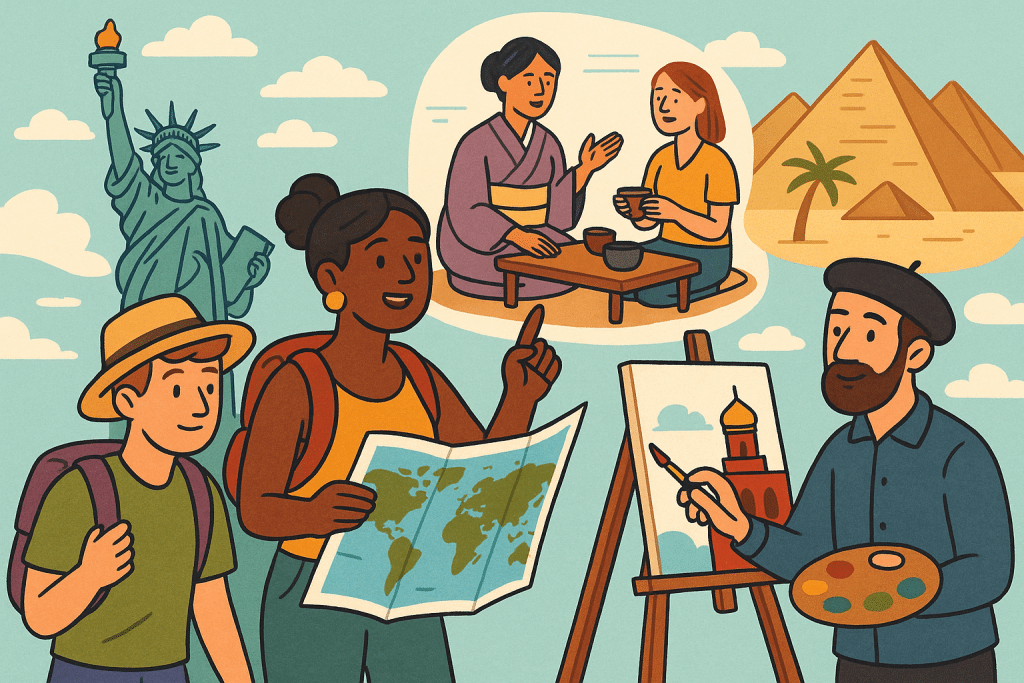
Travel is no longer just about ticking landmarks off a list—it’s about meaningful connections. Today, immersive travel experiences that encourage cultural awareness are emerging as one of the hottest trends shaping how we explore the world. Travelers are seeking not just destinations, but genuine human stories, traditions, and perspectives that expand their understanding of global cultures.
Why Cultural Awareness in Travel Matters
Cultural awareness in travel goes beyond sightseeing. It involves acknowledging, respecting, and engaging with local traditions, values, and social dynamics. According to the United Nations World Tourism Organization (UNWTO), sustainable tourism is deeply tied to preserving cultural heritage while fostering cross-cultural dialogue (UNWTO 2022).
When done right, these experiences create a two-way exchange:
- Locals benefit economically and socially.
- Travelers gain empathy, knowledge, and transformative personal growth.
The Rise of Immersive Travel Experiences
A growing number of travelers are turning away from mass tourism toward experiences that feel authentic and participatory. This shift has been accelerated by:
- Post-pandemic awareness – People value meaningful connections after global isolation.
- Younger travelers leading demand – Millennials and Gen Z increasingly seek “purpose-driven travel.”
- Responsible tourism – Sustainability and ethical considerations are top of mind.
A 2023 Booking.com report found that 73% of global travelers want experiences that are “authentic” and help them better understand other cultures (Booking.com 2023).
Key Cultural Travel Trends in 2024 and Beyond
1. Homestays and Community-Based Tourism
Rather than hotels, travelers are booking stays with local families. This offers an inside look into daily life, from cooking meals together to learning family traditions.
- Example: Rural villages in Peru offer homestays where visitors learn Andean weaving techniques.
- Benefits: Direct income to hosts and an intimate cultural exchange.
2. Culinary Travel as Cultural Exchange
Food is one of the most powerful gateways to culture. Culinary tours, farm-to-table experiences, and cooking classes with locals allow travelers to explore identity through taste.
- In Vietnam, travelers learn to prepare pho with families who explain its cultural symbolism.
- Food festivals worldwide now highlight indigenous practices and sustainability.
3. Voluntourism with Cultural Awareness
Volunteering abroad has evolved. Programs now emphasize cultural reciprocity, not just “helping.” Travelers participate in community projects while learning about local history and values.
- Example: Conservation projects in Costa Rica combine environmental education with indigenous knowledge-sharing.
4. Heritage Trails and Storytelling Tourism
Walking tours guided by local storytellers are gaining popularity. Rather than polished scripts, guides share oral histories and personal perspectives.
- Example: Black heritage tours in the U.S. spotlight stories of resilience often missing in mainstream narratives.
5. Digital Nomadism with Local Engagement
With remote work booming, digital nomads are settling longer in one place. Many co-living spaces encourage integration with local communities, offering language lessons and cultural exchanges alongside work facilities.
Practical Ways to Experience Cultural Awareness While Traveling
Stay Longer in One Destination – A week or more in one place lets you notice local routines instead of just tourist highlights.
Learn Basic Local Phrases – A simple “thank you” or “how much?” in the local language shows respect and often sparks friendlier interactions.
Support Local Artisans – Handmade crafts carry cultural stories and directly support families, unlike factory-made souvenirs.
Participate in Festivals – Join respectfully in local or religious celebrations to see traditions and community spirit up close.
Choose Local Guides – They add personal stories and cultural insights that big tour companies usually overlook.
The Role of Technology in Cultural Travel
Interestingly, technology is both a bridge and a barrier. Platforms like Airbnb Experiences connect travelers to local hosts, while VR and AR can introduce cultural heritage virtually before a trip. However, experts warn that over-digitization risks diluting authenticity if not paired with real human interaction (Richards 2021).
Challenges and Criticisms of Cultural Tourism
While cultural travel offers promise, it also carries risks:
Cultural exploitation – Traditions can lose meaning when they are staged or sold without community consent. A sacred dance, for example, may become a daily show for visitors instead of a cultural ritual.
Overtourism – Fragile heritage sites can be damaged by high visitor numbers. Temples, historic towns, and even local markets sometimes struggle to cope with the pressure, leaving residents frustrated.
Power imbalances – Tourism often raises questions of who benefits. In many cases, outside tour operators capture the profits while local communities receive little.
Cultural homogenization – To meet visitor expectations, communities may adapt or simplify their traditions, slowly eroding authenticity. Crafts, foods, or performances may shift toward what “sells” rather than what is genuine.
These criticisms explain why frameworks like the UN’s Global Code of Ethics for Tourism stress mutual respect, community participation, and fair distribution of benefits (UNWTO 2022).Tourism, emphasize mutual respect and fair distribution of benefits (UNWTO 2022).
FuFuture Outlook: Where Cultural Travel Is Headed
Cultural awareness in travel is set to grow in three main directions.
Personalization. AI tools will move beyond generic lists and recommend experiences that match individual interests—like neighborhood festivals or family-run craft workshops—so trips feel more authentic.
Cross-cultural education. Schools and universities will team up with tourism initiatives, blending study with hands-on cultural exchange. A language course, for example, may include time spent learning directly from local communities.
Policy and certification. Expect stronger labels and standards that guarantee tours and stays are genuinely ethical and community-led, similar to how “fair trade” works for food.
The result is a shift in mindset. Future travelers won’t just consume experiences—they’ll take part in preserving culture and building global understanding.
Conclusion
Immersive travel experiences that encourage cultural awareness are more than a trend—they’re a transformation in how we see the world. By engaging with people, not just places, we move from being tourists to global citizens.
As cultural exchange becomes the heartbeat of modern travel, the next question is no longer “Where will you go?” but “Whose story will you learn?”
References
- Smith, M.K. (2022) Issues in cultural tourism studies. 4th edn. London: Routledge. Available at: https://www.routledge.com (Accessed: 25 September 2025).
- Richards, G. (2021) ‘Cultural tourism: A review of recent research and trends’, Journal of Tourism Futures, 7(3), pp. 227–240. Available at: https://doi.org/ (Accessed: 25 September 2025).
- UNESCO (2020) Cultural diversity and intercultural dialogue. Available at: https://unesdoc.unesco.org (Accessed: 25 September 2025).

 Fitness Routines That Improve Posture and Mobility