Smart Home Devices That Improve Efficiency
Thomas Blake September 26, 2025
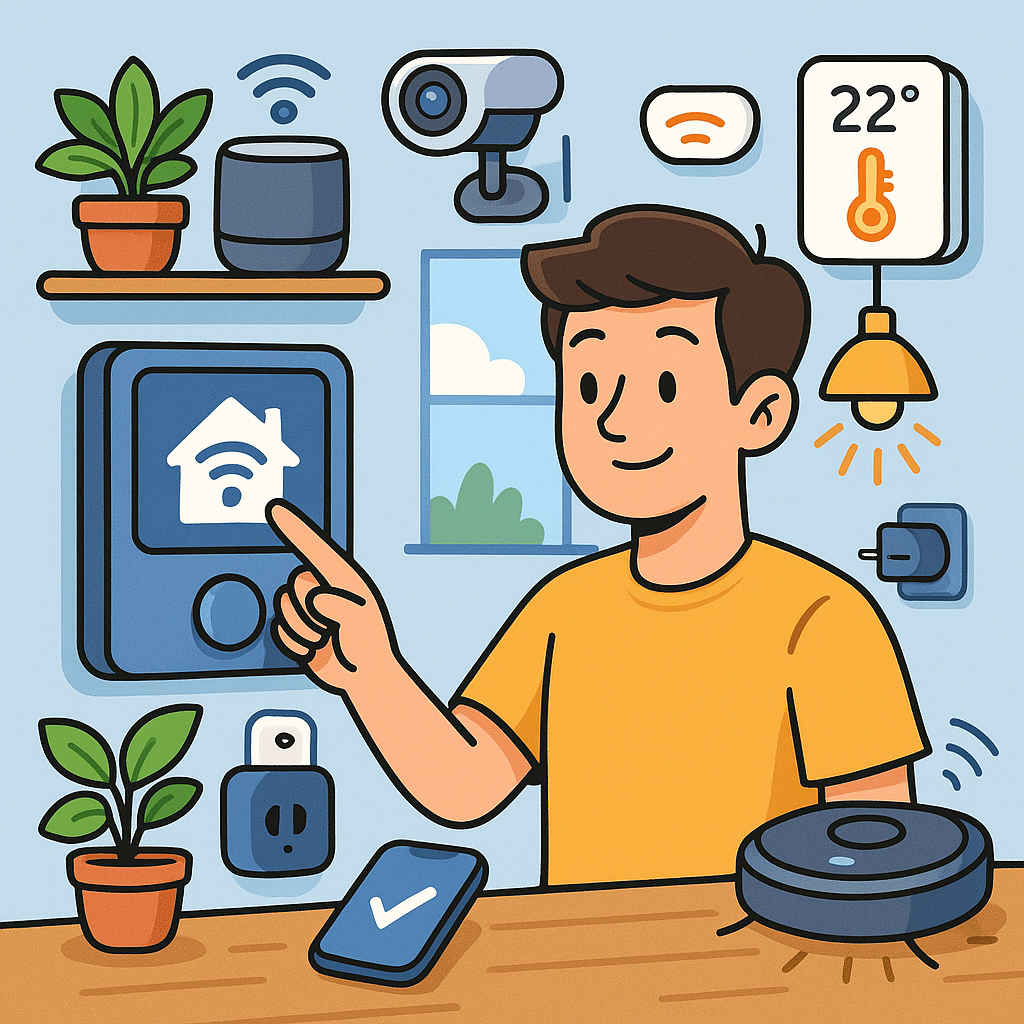
In 2025, smart home devices that improve efficiency are no longer niche gadgets—they’re central to how we lower bills, manage energy, and make daily routines smarter. In this article, we explore the emerging trends and best devices that deliver both efficiency and functional value.
Why Efficiency is the Next Benchmark for Smart Homes
Smart homes have long been about convenience and connectivity, but the shift now is toward efficiency and sustainability. As energy prices climb and carbon awareness spreads, homeowners want devices that do more than just respond to voice—they must optimize.
- 56 % of smart home adopters report lower energy bills after installing connected devices.
- Smart thermostats alone can cut heating and cooling energy use by ~18 %.
- Analysts project that energy efficiency, automation, and AI-driven control will drive the smart home market in the next 5 years.
- Interoperability standards like Matter 1.4 are expanding to include energy devices (water heaters, heat pumps), enabling coordinated efficiency across more home systems.
In short: the future of smart homes is not merely “smart,” but also efficient, adaptive, and cooperative.
Key Trends in Smart Home Efficiency for 2025
1. AI-Driven Control & Predictive Optimization
Artificial intelligence is increasingly embedded in smart home devices—learning from your routines, anticipating patterns, and adjusting devices ahead of time.
- Tado’s new “AI Assist” for thermostats adds adaptive heating, preheat-before-arrival, and Energy IQ modules to manage energy usage more granularly.
- Appliances will talk to one another, shifting loads or initiating tasks during low-tariff hours (for instance, a washing machine waiting until solar generation is high).
2. Matter 1.4 and Cross-Device Energy Coordination
The Matter standard—designed to unify smart home ecosystems—has expanded in version 1.4 to support energy devices.
This means things like water heaters, heat pumps, and battery storage can be better orchestrated in a unified energy strategy, regardless of brand. For example, your thermostat can talk to your solar battery or heat pump about when it’s optimal to operate, reducing waste.
3. Granular Monitoring & Load Segmentation
Old-school smart plugs are evolving. Newer energy monitors can distinguish usage by appliance (e.g. fridge vs. HVAC), identify phantom loads, and help you time appliances more smartly.
- Devices like Sense, Shelly EM, or Wiser Energy platforms let you see which devices draw energy at which times.
- Academic research on “micro-moment smart plugs” shows they can collect contextual data (temperature, room occupancy) and give fine-grained usage per appliance.
4. Smart HVAC, Cooling & Air Systems
HVAC remains one of the largest energy draws in the home. Innovations are targeting this:
- Smart thermostats and radiator valves that respond in real time.
- Smart air conditioners with presence sensors and auto-adjusting airflow (e.g. Hisense’s AI-enabled unit shown at IFA 2025).
- Integrated HVAC control under Matter or proprietary ecosystems, allowing heating/cooling to work in harmony with other devices (e.g. shading, windows).
5. Smart Lighting & Photovoltaic Integration
Lighting advances also contribute to efficiency:
- Motion-, daylight-, and room‐aware lighting systems that dim or shut off automatically.
- Smart bulbs or panels connected to solar+battery systems, where lighting is prioritized during solar surplus.
These systems may cut lighting-related energy by up to 30 %.
6. Water & Leak Management Systems
Efficiency isn’t just about electricity. Smart water systems are gaining traction:
- Leak detection sensors that shut off valves automatically.
- Smart irrigation and fixtures that adjust flow based on use, weather, or leak detection.
- Integration of water heating into energy-management routines (shift heating when excess solar is available).
Emerging reports highlight that smart water systems are among 2025’s trends.
Best Smart Home Devices That Improve Efficiency & Functionality
Below is a selection of real devices (or classes thereof) that exemplify the current trend toward efficiency + functional value. Each serves a clear purpose, helps reduce waste, and adds convenience.
| Device / Class | Functionality + Efficiency Features | Ideal Use Cases |
|---|---|---|
| Smart thermostats / radiator valves | Learning algorithms, geofencing, demand-response integration | HVAC control, zoned heating |
| Appliance-level energy monitors | Real-time monitoring, multi-device segmentation | Identifying high-use devices, scheduling loads |
| Smart HVAC / AC systems | Presence sensing, auto airflow, humidity control | Cooling/heating in large homes or climate-stressed areas |
| Smart plugs & smart outlets | Monitor usage, schedule on/off, cut phantom loads | TVs, computers, chargers, small appliances |
| Integrating systems with Matter 1.4 support | Unified energy orchestration across devices | Coordinated heating, solar, storage, appliances |
| Water sensors & smart valves | Leak detection, shutoff, usage monitoring | Bathrooms, basements, outdoor plumbing |
Example Device Highlights
- Tado Smart Thermostat + AI Assist: Adds predictive heating control and adaptive logic.
- Hisense U8 S Pro Air Conditioner: Uses presence-aware sensors to auto-adjust output, avoiding cooling empty rooms.
- Sense Energy Monitor (and similar platforms): Offers actionable insights at the appliance level.
How to Build an Efficiency-First Smart Home (Step-by-Step)
Here’s a guide to structuring your smart home around the principle of “efficiency + functionality.”
- Establish strong network & compatibility baseline
Ensure your Wi-Fi, mesh system, or hub supports Thread, Wi-Fi 6 / 6E, and Matter. A robust network minimizes latency and coordination issues. - Start with a smart thermostat + HVAC control
This often gives the highest ROI. Use zoning or multiple valves if your system allows.
Activate AI or learning modes when possible. - Add appliance-level energy monitors
Identify which devices hog power. You’ll be surprised what the data shows (e.g. standby loads, inefficient old devices).
Use insights to create schedules or retiring/refurbishing appliances. - Integrate your devices under a common protocol (Matter, or unified ecosystem)
This lets devices coordinate—thermostat, water heater, solar, battery, etc.
If using Matter 1.4, you get support for energy devices like heat pumps and water heaters. - Expand with smart AC, lighting, water systems
Use presence-aware lighting, sensor-driven control, and timed routines.
For water systems, detect leaks and automate shutoff. - Enable demand-response / utility integration
Enroll in programs where your devices can reduce draw during peak periods in exchange for incentives.
For example, Samsung’s Flex Connect program actively shifts SmartThings device usage during high grid demand. - Fine-tune via dashboards & AI insights
Use dashboards to see long-term trends.
Let AI features (like predictive load shifting) run in the background once configured.
Challenges & Considerations
Even though this trend is promising, several challenges remain:
- Interference & connectivity constraints: As more devices crowd the network, interference is a real concern. Adaptive communication protocols and interference management frameworks are being studied to mitigate this.
- Privacy & security risks: More sensors means more access points. Devices must be secured properly (firmware updates, encrypted communication).
- Upfront cost vs. payback timelines: Some devices have longer payback periods, especially in areas with low electricity costs.
- User adoption & complexity: Many users find setup and configuration difficult. Simplified interfaces and automation defaults will be crucial.
- Legacy system compatibility: Some homes use older appliances or wiring systems incompatible with smart upgrades—bridging those gaps (e.g., smart load nodes for non-smart loads) is a research area.
Future Possibilities & What to Watch
- Edge AI and on-device learning: As AI models shrink, more processing can happen locally, improving responsiveness and lowering latency.
- Integration with smart grids: Homes may become active participants in grid management, selling stored energy or shifting loads intelligently during peak hours.
- Ambient sensing & predictive behavior: Homes will detect patterns (e.g. presence, mood, weather) and make anticipatory adjustments.
- Tighter water-energy coupling: Appliances like heaters, irrigation, and plumbing systems will operate synergistically based on overall energy state.
- Standard-driven adoption: As Matter and other standards mature, consumer friction will fall—more “it just works” devices.
References
- Statista. (2023) Smart home market worldwide – statistics and facts. Available at: https://www.statista.com(Accessed: 26 September 2025).
- Energy.gov. (2022) How smart home devices help save energy. U.S. Department of Energy. Available at: https://www.energy.gov/energysaver/smart-home (Accessed: 26 September 2025).
- Forbes. (2024) The future of smart home technology: Efficiency and convenience. Available at: https://www.forbes.com(Accessed: 26 September 2025).

 Nutrition Practices That Boost Energy and Focus