How Digital Marketing Supports Small Business Growth
Jonathan Reed September 19, 2025
Digital marketing supports small business growth by providing affordable, data-driven tools that help them compete with larger competitors. From AI-powered personalization to social commerce, digital strategies are reshaping how small companies attract and keep customers.
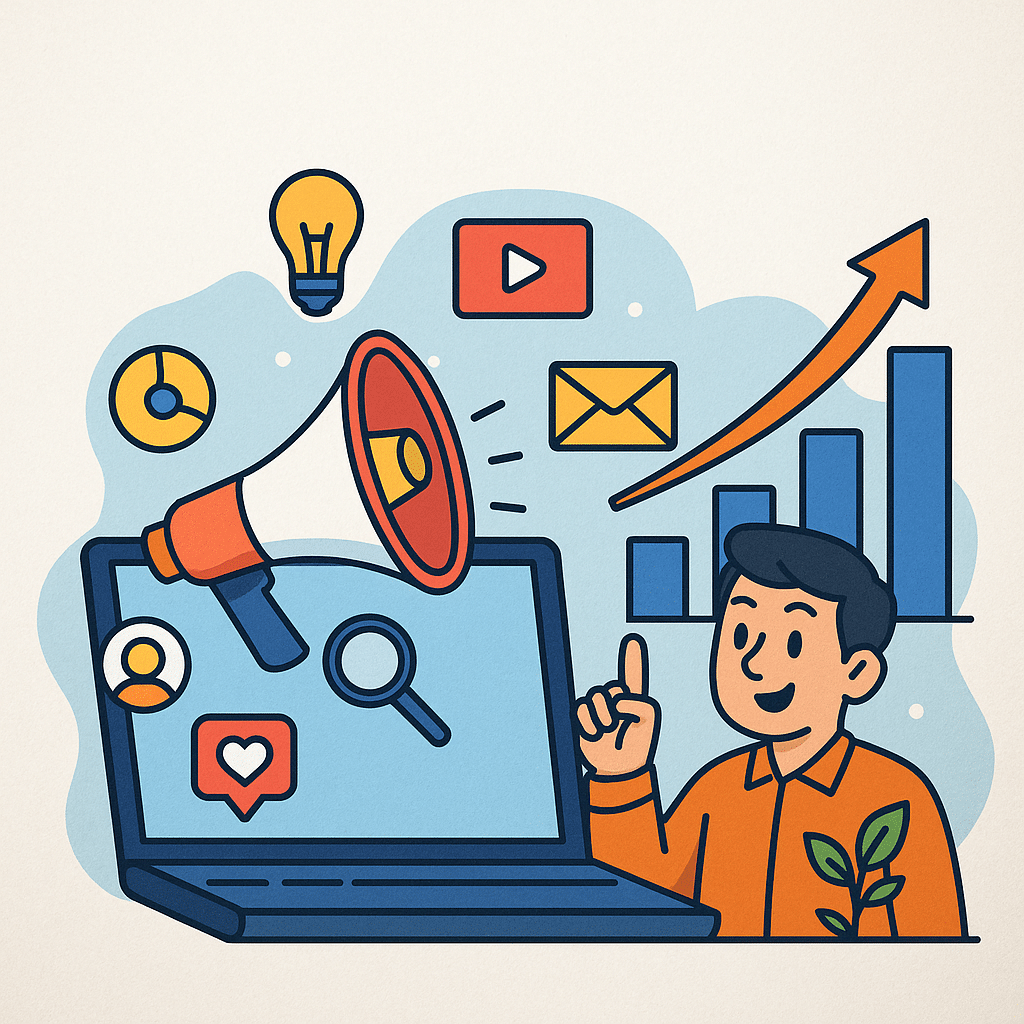
The New Reality for Small Businesses
Running a small business has never been tougher—or more promising. Inflation, changing consumer behavior, and global competition create daily hurdles. Yet, small businesses that adopt digital marketing grow two to three times faster than those that don’t (McKinsey 2023).
Today’s landscape is no longer about whether small businesses should go digital. It’s about how fast they can adapt. Digital marketing provides access to strategies once reserved for large corporations—targeted ads, AI analytics, and global reach—all at a fraction of the traditional cost.
Key Trends Driving Small Business Digital Growth
1. Social Commerce is Booming
Platforms like Instagram, TikTok, and Facebook are no longer just for brand awareness. They’re turning into full-scale shopping platforms. By 2025, global social commerce sales are projected to reach 1.2 trillion dollars (Accenture 2022). For small businesses, this means instant storefronts without the heavy costs of building complex e-commerce sites.
A local bakery, for example, can sell custom cakes directly through Instagram Reels, reaching thousands of nearby customers without needing expensive web development.
2. AI-Powered Marketing Levels the Field
Artificial intelligence once felt out of reach for small players, but that has changed. Tools like ChatGPT, Jasper, and HubSpot AI allow even a two-person shop to create tailored ad campaigns, generate blogs, and respond to customer inquiries automatically.
According to Deloitte (2023), 63% of small businesses using AI tools reported higher revenue growth compared to those who did not. This is not about robots replacing humans—it’s about smarter efficiency. AI reduces workload while improving targeting and personalization.
3. Local SEO as a Growth Engine
Search engines remain a lifeline. “Near me” searches grew by over 500% in the last five years (Google Trends 2024). Small businesses that optimize their local SEO—Google Business Profile, reviews, maps—dominate local markets.
Imagine a family-owned plumbing service. By using local SEO, they ensure when someone types “emergency plumber near me,” they appear on top. That’s the difference between surviving and thriving.
4. Influencer Collaborations for Small Budgets
Gone are the days when influencer marketing was only for Fortune 500 brands. Micro-influencers (with 5k–50k followers) often drive 60% higher engagement rates than celebrity influencers (Forbes 2023).
For small businesses, partnering with local micro-influencers can produce a huge return on investment. A 200 dollars campaign with a local TikToker can outperform a 20,000 dollars TV ad by targeting a precise audience.
5. Data-Driven Decision Making
One of the biggest advantages of digital marketing is access to real-time analytics. Unlike traditional advertising, which leaves small businesses guessing, platforms like Google Analytics, Meta Ads Manager, and Shopify dashboards provide instant feedback.
Businesses can see:
- Which ads drive the most sales
- What time customers are most active
- Which products need more promotion
This agility helps small businesses cut waste and double down on strategies that actually work.
Why Digital Marketing Is Essential for Survival
Small businesses that fail to adopt digital tools risk being invisible. A BrightLocal study (2023) found that 98% of consumers read online reviews before buying locally. If your business isn’t online, it may as well not exist.
Furthermore, digital marketing is cost-efficient. Running Facebook ads for 50 dollars a week often drives more qualified leads than a 1,000 dollars billboard. For a small business, the return on ad spend (ROAS) matters more than brand prestige.
Practical Steps Small Businesses Can Take
Claim and Optimize Google Business Profile
A Google Business Profile is a completely free tool that can dramatically boost local visibility. When optimized with accurate hours, photos, and keywords, it helps small businesses appear in local searches and on Google Maps—right where potential customers are looking. According to BrightLocal, 98% of consumers used the internet to find information about local businesses in 2022 (BrightLocal 2022). That means if your profile isn’t set up, you’re losing out on real customers.
Start with One Social Platform
Instead of spreading yourself too thin, focus on the platform where your target audience spends the most time. For example, restaurants often thrive on Instagram, while service providers may gain better traction on Facebook. By starting small, you can master one platform before scaling up—saving time and maximizing ROI.
Invest in Content Marketing
Content remains one of the most cost-effective marketing strategies. Blogs, how-to guides, short videos, and FAQ pages can establish your business as a trusted expert. HubSpot research shows that companies publishing consistent blogs generate 55% more website visitors compared to those that don’t (HubSpot 2023). Even posting one well-researched article per month can position your brand as the go-to solution in your niche.
Run Small Paid Campaigns
Paid ads don’t need to break the bank. Even a modest budget of 10 dollars/day on platforms like Facebook, Instagram, or TikTok can put your brand in front of thousands of local customers. These platforms allow for precise targeting based on age, location, and interests—ensuring your dollars go further. Testing different ad creatives and headlines can quickly show what resonates best with your audience.
Encourage Customer Reviews
Positive reviews are the lifeblood of local businesses. Studies show that 88% of consumers trust online reviews as much as personal recommendations (BrightLocal 2022). Encourage satisfied customers to leave reviews on Google, Yelp, or Facebook. Offering small incentives, like a discount on their next visit, can dramatically increase review volume—and in turn, boost sales.
Adopt Affordable AI Tools
Artificial Intelligence is no longer reserved for big corporations. Today, small businesses can leverage AI-powered tools to automate email campaigns, chat with customers, and analyze sales trends—saving both time and money. Platforms like Mailchimp, Jasper, and ChatGPT offer small-business-friendly pricing, often starting free or at low monthly costs. Automation frees up your time so you can focus on growth, not repetitive tasks.
Case Study: A Coffee Shop’s Digital Transformation
A small coffee shop in Austin, Texas, faced declining foot traffic post-pandemic. Instead of relying on traditional flyers, they:
- Optimized their Google Business Profile with photos and updated menus.
- Launched Instagram Reels showcasing latte art and local events.
- Partnered with a micro-influencer foodie in Austin.
- Ran 15 dollars/day geotargeted ads on Facebook.
Within 6 months, their revenue increased by 35%, foot traffic grew, and catering orders doubled. Digital marketing didn’t just support their growth—it saved their business.
Looking Ahead: The Future of Small Business Digital Marketing
The next wave is about personalization at scale. Customers expect businesses to know their preferences, recommend relevant products, and provide instant support. AI chatbots, predictive analytics, and voice search optimization are quickly becoming essentials rather than luxuries.
For small businesses, this means continuously adapting. The beauty of digital tools is their scalability: what works for a solo entrepreneur can also work for a 50-person company.
Conclusion
Digital marketing supports small business growth by making powerful tools affordable, accessible, and effective. Whether through AI, local SEO, social commerce, or influencer partnerships, small businesses now have the ability to compete with giants.
The choice is simple: adapt and grow—or remain invisible.
References
- Statista. (2023) Digital marketing spending worldwide from 2020 to 2027. Available at: https://www.statista.com/statistics (Accessed: 19 September 2025).
- Chaffey, D. (2022) How small businesses can benefit from digital marketing strategies. Smart Insights. Available at: https://www.smartinsights.com/ (Accessed: 19 September 2025).
- U.S. Small Business Administration (SBA). (2021) The impact of digital tools on small business performance. Available at: https://advocacy.sba.gov/di (Accessed: 19 September 2025).

 Fitness Challenges That Encourage Consistency